



Roy's Blog: Entrepreneurs
June 20, 2022
Why being an outside-of-the-box thinker really isn’t good enough

Why being an outside-of-the-box thinker really isn’t good enough.
Let me start by saying that I would take an out-of-the-box thinker over someone who ‘colours inside the lines’ any day.
But unfortunately, if the only thing that happens out-of-the-box is thinking, it amounts to mental gratification only.
Let’s face it, the mind is only one ingredient to achieving greatness.
You need it to imagine doing extraordinary things but imagination on its own doesn’t go very far.
How many amazing ideas are left dying on the vine because they remained as ideas with no implementation?
That’s the startup reality and the challenge of making any new idea successful.
The death rate of new businesses and new ideas is painfully high because bright, imaginative individuals can’t turn their ‘brave new idea’ into a ‘crude deed’ that people are willing to pay money for.
They may be incredible at off-wall-thinking but can’t monetize what’s in their head.
What we need are ‘out-of-the-box DOERS’ who are capable of taking a ‘just about right’ idea and turning it into mind blowing success.
I’d put my money on someone who has a slightly flawed idea with an amazing ability to execute their ‘imperfect notion’ pristinely.
Here are some outside-the-box doer tips for you that I learned over my career as an executive leader with an operations bent.
#1. Have a plan the is ‘built to execute’; a plan to do!
The doers ethic is to have a plan that can be effectively executed, and this is where my Strategic Game Plan—SGP—comes in. The SGP is a simple and audacious way to simply and quickly create a strategy for your organization in literally 48 hours and begin executing in the 49th hour.
The SGP is created by answering 3 questions:
HOW BIG do you want to be — 24 month revenue growth goal?
WHO do you want to serve — Customer groups to target?
HOW will you COMPETE and win — The ONLY Statement: “by being the ONLY ones who…”
Check out the above referenced links to learn more about SGP.
#2. ’Cleanse-the-inside’ of the organization
You can’t DO anything if the inside of the organization is clogged up with stuff preventing people from executing your plan, so try these tactics to make things run smoother:
▪️Eliminate the Dumb Rules, policies and processes that don’t make any sense to customers and do nothing but create painful experiences for them. If people aren’t willing to engage with you and your inside reality, your imagined future evades reality.
▪️Cut the CRAP or grunge that makes it extremely difficult for people to do their jobs and deliver expected results. This is the bureaucratic bullsh*t that slows things down while some power pusher gets their ego assuaged.
How do you identify CRAP? Just ask the people doing the job and they’ll tell you in no uncertain terms what’s preventing them from doing their job.
Eliminate CRAP = EXECUTE BETTER
#3. Assign a Strategy Hawk
Doers need someone—the Strategy Hawk—to drive the execution process, someone whose entire existence in the organization depends on how well the SGP is implemented in terms of meeting the objectives of the plan within the expected timeframes.
The Hawk must be a leader who is well respected by the employee group, is tenacious and who has a high tolerance for ‘pain’ (changing the course of any organization is difficult; it requires someone who has the energy and perseverance to push through all internal roadblocks and resistance).
#4. Focus on the frontline
The employees on ‘the bottom’ of the organization need to receive priority attention from everyone who has their fingerprints on the SGP.
If the frontline doesn’t perform well, the SGP doesn’t get executed. Period.
Focussing on the frontline requires actions like:
— leaders holding Bear Pit Sessions with frontliners to determine what help they need to execute better.
— leaders reorienting their calendars to spend more time ‘serving around’ in the workplace.
— recognizing and rewarding frontliners for behaviours that lead to superlative execution.
— changing the internal communications emphasis on such things as technology and products and services to add the frontline component and why they are so critical to the organization.
#5. Clarify everyone’s role in executing the strategy
This is where most organizations fail.
Leaders don’t spend the time translating the SGP into what it means specifically to every function (and every individual) in the organization. What each person has to give up and what new actions, activities and behaviours they need to take on.
If employees don’t have a direct line of sight to the SGP, they decide on their own what actions are needed to implement it, which results in internal dysfunction (as everyone takes a different approach to executing the Plan) and results fall short of Plan execution.
Leaders must take on the role of SGP translation to ensure the right actions are taken in harmony by everyone in the organization to ensure flawless Plan execution.
Takeaway
Out-of-the-box Doers are the most valuable assets of any organization.
Out-of-the-box thinking will get you only so far; without morphing intellectual intent into action, thoughts have little value.
Cheers,
Roy
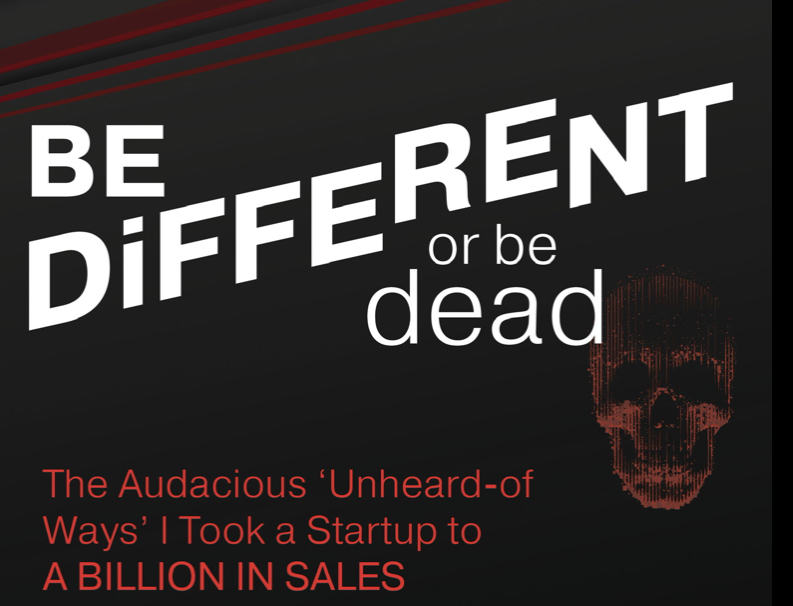
Check out my BE DiFFERENT or be dead Book Series
‘Audacious’ is my latest…
- Posted 6.20.22 at 04:20 am by Roy Osing
- Permalink
May 9, 2022
Why rare qualities in people result in amazing careers

Why rare qualities in people result in amazing careers.
Ever asked yourself these questions?
— “Am I intelligent?”
— “Am I qualified?”
— “Am I skilled?”
— “Am I competent?”
— “Am I good enough?”
— “Am I capable?”
Probably, at some point in your working life, one of these questions has crossed your life.
But have you ever asked yourself “Am I rare”?
You may not have, and yet this is the most important question of all to ask.
RARE people are:
▪️The ONLY ones who do what they do
▪️Special
▪️Unique
▪️Memorable
▪️Unforgettable
▪️One of a Kind
▪️Distinctive
▪️Stand outs in a crowd
▪️Weird in an amazing way
All the qualities of someone who is noticed in the crowd.
Someone who will attract attention.
Who others will notice.
Who will have a chance to show what they’ve got BEFORE others more commonplace.
BE RaRE.
BE the topic of conversation and object of someones attention.
BE the ONLY one who offers unique solutions to problems.
BE contrarian.
BE creative not a copycat.
RaRE is the prerequisite to success.
Cheers,
Roy
Check out my BE DiFFERENT or be dead Book Series
‘Audacious’ is my latest…
- Posted 5.9.22 at 04:11 am by Roy Osing
- Permalink
April 18, 2022
The 5 most important decisions a leader must make

Source: Unsplash
The 5 most important decisions a leader must make.
As a leader, you do have a choice as to how you spend your decision-making time; there are numerous possibilities when it comes to which decisions to make yourself and those that you leave for others.
How do you determine the ‘my decision’ areas?
The criteria I used was payback. Where could I add the greatest value to the organization?
It’s not about what you enjoy doing or where your strengths are; it’s about where others will realize the maximum benefit if you focus your decision-making time there.
You may be amazing at financial analysis and enjoy dabbling in numbers, but if marketing is a critical element of the organization’s strategic plan, for example, you need to leave financials to someone else and re-vector your decision making efforts.
Make the call on these strategic issues; they must be owned by the leader and no one else.
#1. The business plan
The strategic game plan for the organization.
Leadership value starts with deciding on the organization’s future.
And it should be created by the leader and not chosen from a number of options submitted by management.
What business you intend to be in and how you intend to differentiate yourself from your competition can only be decided by the leader who is directly accountable to ownership. It’s not something that can be delegated to business development folks.
#2. Values
The values that shape culture.
Values describe how employees behave with each other on the inside of the organization and externally with customers.
The leader must decide on the values critical to their strategic success and they must make the call on eliminating the traditional values that are no longer appropriate.
#3. The talent in the organization
The talent that gets recruited.
Strategy and values are the determinants of the people you recruit.
The leader must have their fingerprints on the people strategy. They must decide if it will do the job; it can’t be delegated to human resources.
The wrong people in critical roles will drive your strategy to fail. I used to participate in candidate interviews; a great way to monitor how your expectations are being met, as well as a great learning experience for the other managers in the room.
4. Architecting the customer ‘moment’
The customer moment architecture.
If the leader isn’t personally involved in defining what the customer transaction with the organization looks like, dysfunction results; everyone does their own thing and offers up their own version of serving the customer in an exemplary manner.
The truly great leaders don’t delegate the architecting of the customer moment; they own how customers are to be served.
The leader must decide what the moment looks like at the frontline level where customer perception is controlled. Leaders generally don’t like to engage at this level of detail, but this micromanaging is essential.
5. Aligning activities to strategy
Aligning activities to the strategic game plan of the organization.
This is where most things go wrong. The strategy says one thing but the people in the various functions behave in a manner inconsistent with the chosen direction.
The leader must decide on an alignment plan developed by every department in the organization; it’s the only way synergy is guaranteed.
Strategy, values, people, customers and organizational synergy. What could be more important to decide on for a leader?
Cheers,
Roy
Check out my BE DiFFERENT or be dead Book Series
‘Audacious’ is my latest…
- Posted 4.18.22 at 04:11 am by Roy Osing
- Permalink
April 4, 2022
How your great new idea can avoid becoming a loser

Source: Pexels
How your great new idea can avoid becoming a loser.
How many times have you heard someone say ‘right idea!’ when there is an execution blip that nullifies success and an otherwise brilliant notion bites the dust.
You hear it in kids’ sports all the time, particularly soccer, where an attempt to pass the ball to a mate is intercepted by an opposition player. The right intent was there but execution fell short of an awesome outcome. ‘Right idea’ is intended to support the right behavior and encourage the player to try it again and again until it works.
But it’s deflating. You can see they have a picture in their mind of what the result should be, but it’s shattered when it doesn’t play out the way it was envisioned.
The situation has a parallel in the startup world.
Startups have a ‘Right idea!’ when they develop their strategic game plan. It represents their solution to a common customer problem which should on paper be a raging success.
Right ideas are plentiful; new business ideas are constantly streaming from brilliant entrepreneurs. The thing is, the percentage of right ideas that make it through the successful implementation funnel are few and far between — as I’ve said before, roughly half of startups fail in the first 5 years.
The failure to execute on a great idea is beyond disappointing, it hurts.
In my experience people just don’t spend enough time determining exactly what has to be done to bring the new idea to life. The idea may be borne in an instant but more time is required on what to do with it to see it to a successful conclusion.
If you can’t implement, you’re done. It’s the end of your story.
These four essentials will increase the odds of your amazing idea crossing the finish line.
#1. Double down on implementation
Be prepared to dive deep on determining how to execute your idea and spend an overwhelming amount of time to figure out the details of making this sucker live.
Unfortunately the idea has no life on its own; it’s a figment of your imagination; a mere possibility. It needs to be transformed into something practical before it has any value.
The idea to prevent a driver of a vehicle from using their mobile device while driving is an easily understood solution to the distracted driving problem, but unless it can be delivered to the market it remains on the entrepreneur’s wish list.
The idea emerged 24 months ago in an insightful moment; implementation is 2+ years in and counting. It’s not a simple process and it’s certainly not easy.
Be overly disciplined in thinking about your implementation plan; the devil’s in the details so you want it to be as complete as possible, covering all possible actions that are necessary to get this puppy to market.
#2. Focus on a couple of really important things
Don’t try to boil the ocean; focus on a handful of actions that you believe will result in successfully seeing your idea come to fruition.
There are many actions you could take to implement your idea — usually a result of brainstorming — but the challenge is to define the few critical moves you should make.
You don’t have sufficient time or money to pursue numerous approaches at the same time; narrow them down to one or two that you believe are essential to moving the implementation yardsticks fast.
In business, one effective way of achieving this is to select one target market to attack rather than spraying your efforts across several potential ones.
Rather than focusing on a consumer segment, for example, which is complicated and often expensive to penetrate, target a specific business application which is more easily reached.
Or, go after a confined geographic area — a province or state —rather than a broader one like a country.
#3. Don’t chase cars
I talk a lot about ‘Yummy’, but it’s worth repeating here because I see too many startups held back due to their meandering. Stay focused; resist the temptation to stray from your action plan when new possibilities descend on you.
It’s all very well to be open to new avenues to explore but it can end up with you chasing anything that comes along. Chasing makes you busy, but is unlikely to achieve the results you want.
Every entrepreneur faces this issue. They no sooner lock their launch plan down and a new possibility comes over-the-transom and hits them — an application, a partner, a technology change.
Yummy might satisfy your immediate hunger but it won’t quell your appetite.
Yes, this Yummy incoming should be considered and examined thoughtfully, but not chased. Thoughtful consideration of these new possibilities must be given and should have overwhelming benefits before you decide to give up your initial execution plan.
#4. Change on the fly
Make changes on the run in the face of setbacks that question your idea.
It is a rare event when your original implementation plan plays out the way you had intended — not because of Yummy, but due to your planned actions not achieving the results you expected and because of unpredicted events — like COVID, sales channel failure, pricing problems, revenue shortfall — that slam you.
Be in touch with how implementation is progressing and be alert to any deviations from your game plan that require you to modify your direction.
Make the required tweaks and keep going.
Having a brilliant idea is a great place to start, but unless you put on your execution hat, it will never see the light of day.
Cheers,
Roy
Check out my BE DiFFERENT or be dead Book Series
‘Audacious’ is my latest…
- Posted 4.4.22 at 05:56 am by Roy Osing
- Permalink