



Roy's Blog: Business Success
April 27, 2015
Why it’s bloody crazy trying to keep competitors out

Source: Unsplash
Why it’s bloody crazy trying to keep competitors out.
Traditional marketing strategy spends a copious amount of time focusing on how to erect barriers to competitive entry.
Unfortunately in my experience this doctrine doesn’t go far enough and it certainly doesn’t create a sustainable competitive position for an organization.
Worrying about the competition is not where energies should be spent.
Worrying about the competition is misplaced — Here are important reasons why this traditional business approach doesn’t work:
1. It’s not a particularly unique approach to the market — Most organizations seem to follow this approach to minimize competition in their business; if everyone pursues the same strategy, how can it result in a differential advantage for any one of them? The truth is, it’s a business school course and every student takes it and typically tries to apply IT when there are other strategies that work much better.
The notion is rooted in a more theoretical perspective and falls short of the practical need to show business people how to do it. It’s all very well to salute a strategy that is rooted in strong theory, but if it can’t be practically implemented in the real world, it’s of little value.
2. It’s a distraction — While an organization is consumed with trying to find ways to keep the competition out, it’s not spending enough time to ensure their existing base of loyal customers is taken care of.
And it spawns an unhealthy culture that is preoccupied with preventing market activity rather than doing whatever is required to beat the competition in the trenches where the customers are. Earning their business everyday should be the priority rather than erecting barriers to others coming in to compete with you.
3. It diverts marketing attention — Away from investing in value based offers for the existing customer base. Rather, marketing resources are employed on other activities — regulations, patents and government restrictions — designed to keep competition away.
4. It creates an illusion — That competition can be restricted. It’s futile in the long run because a hungry competitor will always find a way to gain access to your markets and your customers. You will never keep them out or restrict their natural market activities.
5. It tends to focus on artificial non-market tactics — To prevent more competition such as regulation and law rather than beating them by providing amazing customer service and unmatched value.
6. It’s an ineffective use of valuable resources — With an outcome that is inevitable. Back in the day, the incumbent telecom carriers spent an enormous amount of money trying to prevent competitive entry into traditional monopoly markets through a time-consuming and expensive regulatory process.
The competitive tsunami wasn’t deterred, however, and they should have been paying more attention to creating better customer service and a marketing engine that provided compelling and unique value.
I am not suggesting that you shouldn’t pay attention to the competition, existing and potential.
But don’t get obsessed about preventing them from doing what is reasonable given free market conditions.
If they have an opportunity with your customers, expect them to make a play and respond by shielding your loyal customers from the onslaught of their competitive value proposition.
If you feel that a certain non-market response is necessary, go ahead and do it. But don’t let it be all-consuming. Don’t let it gobble up all of your resources. And don’t let it drain the effort in executing a customer response to the threat.
Observe your competitors but ACT for your customers.
Make it so difficult for your competition to attract your customers away from you - by providing them with constant unmatched value - they will be frustrated and will have to endure so much pain, they will decide it’s not worth it. And they will retreat.
How can you hold them? — What are some of the actions you can take to keep your customers close to you and prevent them from leaving?
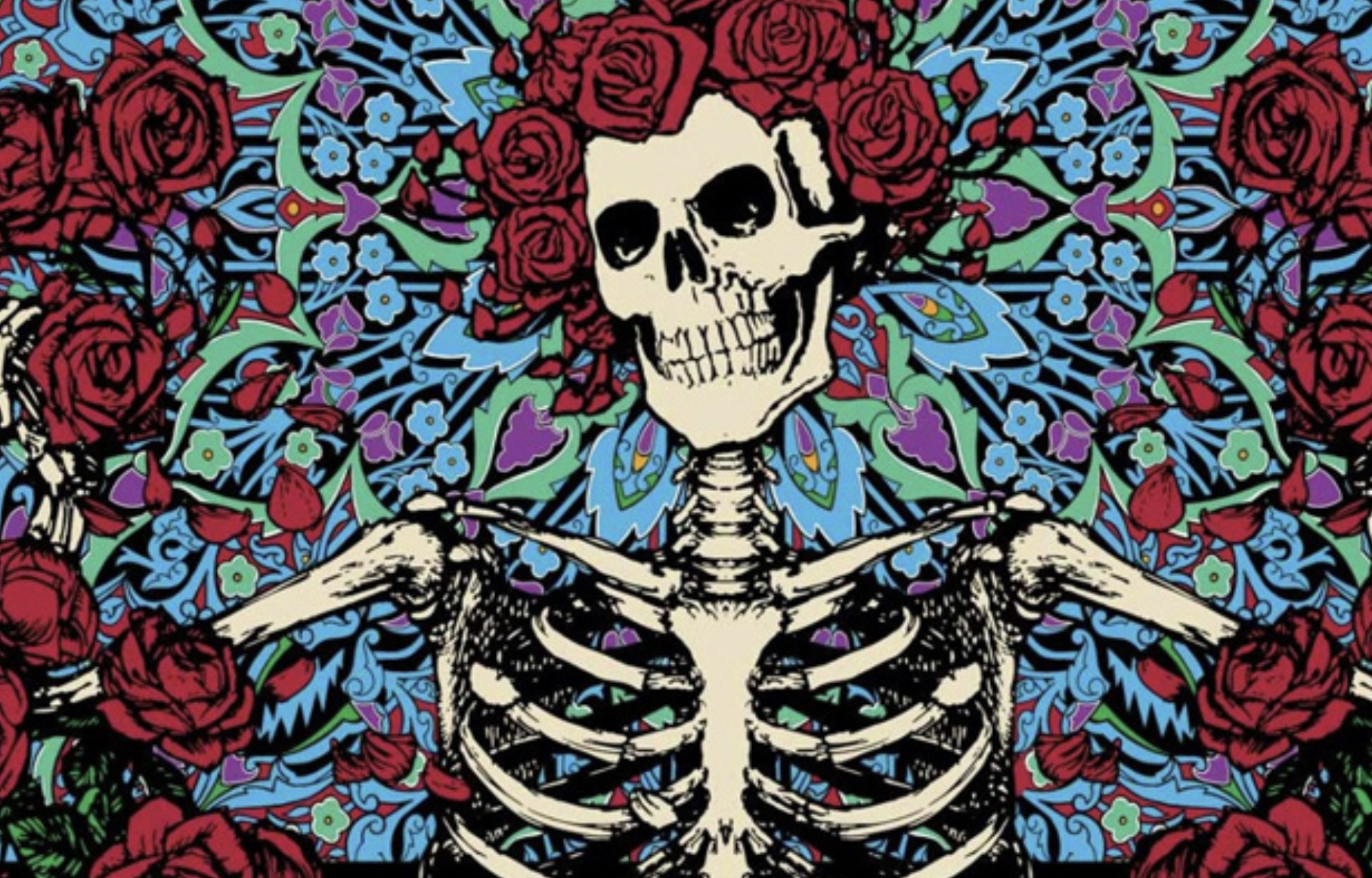
Music is a great teacher.
The Grateful Dead informed us on how to create a unique competitive claim.
You don’t want merely to be the best of the best. You want to be the ONLY ones who do what you do — Jerry Garcia, The Grateful Dead
And The Eagles’ Hotel California declares the impossibility of patrons leaving.
You can checkout anytime but you can never leave — The Eagles
The message is cool. It’s mysterious. It’s haunting. It’s foreboding. It’s dramatic. It’s scary. It’s suggestive of a clandestine move.
Here are 8 actions you can take to prevent customers from ‘leaving your hotel’:
▪️Don’t be concerned about what the competition is doing; focus on the action that YOU need to take to enrich the stickiness of your products or services;
▪️Action to prevent leaving must be taken quickly. The time it takes to get to check-out and leave the building is short; rapid innovation of offerings your customers love is mandatory;
▪️Abandon the conventional; take risks with out there solutions;
▪️Give ‘em something more. Move ‘em to ‘another room’ with added value. Transform them into another world where a new reality intrigues them to stay;
▪️Intercept them as they make their way to check-out. Don’t follow up after they have left. Have your spider senses ready to know they intend to leave and disrupt their intentions;
▪️Give them a new experience that makes them want to stay. Give them something so dramatic that it will take their emotions to a new level;
▪️Make it personal Speak to them specifically. What works for Mr. Smith won’t work for Mr. Jones;
▪️SURPRISE! SHOCK! JOLT! AMAZE! FRIGHTEN! them to stay. Do whatever it takes.
Too much attention is given to the threat of others taking guests from our hotel.
If you want to worry about something, worry about the door closing behind them
Cheers,
Roy
Check out my BE DiFFERENT or be dead Book Series
- Posted 4.27.15 at 04:34 am by Roy Osing
- Permalink
March 30, 2015
How your business plan can be better and more awesome

Source: Pexels
How your business plan can be better and more awesome.
Many leaders, particularly of small to medium sized businesses, are challenged to take their organization to another level.
They are tired of stagnant growth. They see potential that is not being realized. They see opportunities wasted. They feel abused by their competitors.
Here are three proven actions you can take to realize extraordinary gains fast:
1. Determine your source of uniqueness — The herd is replete with organizations that look the same. Similar products. Similar service levels. Copycats in every way. To break away, you need to determine your ONLY Statement.
It’s not about being the best or #1. It’s about carving out something you do that no one else does.
“You don’t want merely to be the best of the best. You want to be the only ones that do what you do.” — Jerry Garcia, The Grateful Dead
Many say they aren’t unique. If this is true, the future will be excruciatingly painful and most likely short.
2. Focus your efforts — Bear down on the few critical things that have acceleration power — Ignore the many possibilities you could chase. You have neither the time nor the resources to try and boil the ocean. Concentrate on 3 critical things and do them well.
3. Be really clear on the customers you intend to go after — Pinpoint the customer groups that have growth potential; ignore the rest. Find the target segments that like who you are and what value you offer.
This is a ME world, not one where you can successfully flog your wares to the masses. If you build it, they are not likely to come.
Get traction on a small scale.
Create your next level by overachieving at your current one.
Cheers,
Roy
Check out my BE DiFFERENT or be dead Book Series
- Posted 3.30.15 at 07:08 am by Roy Osing
- Permalink
January 26, 2015
Why your amazing customers should get awards like employees do
Source: Unsplash
Why your amazing customers should get awards like employees do.
Many organizations have Employee of the Month awards.
I have no issue with employee recognition; it’s important to shout out those people who go the extra mile and make a solid contribution over time.
But what about customers who go the extra mile? Those who go above and beyond the call to help the organization carry on business successfully?
Don’t they deserve special recognition?
I’m not talking about customer appreciation events that cater to the masses and serve little but to quench the thirst of looky-loos.
I’m referring to individual recognition just like employees are afforded.
Do the same for customers.
Mr Smith of 110 Cedar Drive, Boston, Massachusetts deserves customer of the month if he excelled in delivering benefits to your organization. It may be new sales revenue, a testimonial to your service or it could be referrals.
It really doesn’t matter.
Set out the criteria and make a BIG splash about honouring the special people who contribute to your well being.
In fact how about taking it one step further and celebrate employee-customer teams who create magic together?
Too over the top?
Don’t think so. Anything you can do to involve one of your loyal customers in a recognition scheme is more than a good thing.
Cheers,
Roy
Check out my BE DiFFERENT or be dead Book Series
- Posted 1.26.15 at 04:14 am by Roy Osing
- Permalink
December 15, 2014
Why the best business to start is ‘creating experiences’ for people

Source: Unsplash
Why the best business to start is ‘creating experiences’ for people.
What if you didn’t think of your business as:
A restaurant
A bank
A car dealership
A wireless company
A hardware store
A ski resort
A cocktail lounge
An airline
A computer repair company
What if you decided you were in the experience creation business and then plug in your product or service into the experience?
This means that your product would play into an experience frame rather than be the singular product or service focus.
The experience creation process would be architected and then a product or service would be inserted into the mix.
The number one priority would be the experience; products come second.
Back in the day, The Grateful Dead had the objective of creating mind blowing experiences for their fans. Everything they did was aimed at enhancing their fans’ experience. And along the way, they sold (and still sell) millions of records and memorabilia.
Richard Branson created a customer service culture and applied it to a number of businesses: music, travel, broadcasting, personal financial services, cosmetics, communications and the list goes on.
It’s a powerful notion. It’s different.
It’s not something the herd does.
Must be something to it…
Cheers,
Roy
Check out my BE DiFFERENT or be dead Book Series
- Posted 12.15.14 at 05:15 am by Roy Osing
- Permalink