



Roy's Blog
December 16, 2020
4 really easy actions to take to get more sales

4 really easy actions to take to get more sales.
We all wish to kick start a successful business. After all, who doesn’t want to be the next Steve Jobs or Bill Gates?
According to Wealth X, 62 percent of US billionaires are classified as “self-made” individuals. In 2019 alone, the Fortune 500 companies generated 13.7 trillion USD worth of revenue, as per the Corporate Finance Institute.
While such figures may seem promising, it is also essential to see the other side of the picture. Medium reports that over 90 percent of all startups fail. And 22.5 percent of businesses fail within their first year of operation.
How do you ensure that your business isn’t among them? By generating enough sales to keep the firm afloat because cash flow issues are the top reason why companies go under.
As crucial as it is, generating sales isn’t an easy task. Here is what you must do in case your business’s sales are lackluster.
1. Focus on current customers
Yes, you should always strive to increase your market share. However, in this battle, you must not forget about your current customers.
As per Small Business Trends, approximately 80 percent of profit is generated from 20 percent of existing customers of a business.
Not to mention that the probability of repurchase stands at 70 percent while attracting a new client has a probability of at most 20 percent.
To improve your sales, don’t just try and cater to new customers. Instead, focus on your current consumer base. Create campaigns specifically for them. This can include email marketing efforts, loyalty programs, and offering impeccable customer service.
Trader Joe’s is known for treating its customers immensely well. Each of its employees on the ground is hyper-focused on each customer that enters the business. Whether it be quick checkout, friendly customer service, or apt product recommendation, the chain managed to instill loyalty through its service.
2. Optimize your online presence
According to research by Think with Google in 2019, a whopping 51 percent of the shoppers said that they use Google to research a product before purchasing it. And 92 percent of the total traffic for a given query goes to links on the first page displayed.
Hence, unless your business has a robust online presence, you won’t be able to generate enough leads, and thus sales. In today’s world, you just cannot underestimate the power of digital media.
Begin by optimizing your website and social media platforms. Boost your site’s load speed, revamp its content, and add the right keywords to your website to ensure that it attains a high ranking on the search engine.
While you are at it, take help from experts who specialize in your niche.
For instance, a general SEO company will not be a perfect company for an industry like the automotive sector. Instead, quality automotive SEO companies will be a better choice. This is because they will be better versed in the nuances of the industry and what works best for your consumers.
3. Launch limited-time offers
Sometimes customers need an extra push to sway them into purchasing from your business. Here, you can leverage their feeling of FOMO. Not only is this feeling real, but when targeted correctly, it helps in improving sales for a business as well.
As per Trust Pulse, 60 percent of shoppers end up purchasing items because of FOMO. Use this by launching limited-time offers.
There are two facets to this: Discounts and products.
You can offer exclusive discounts to certain customers or announce flash sales. The fact that the discount is only valid for a small period of time encourages people to act now. For instance, look at this promotion by Pura Vida Bracelets.
You can also launch limited-edition products. The fact that there is only a handful of these products urges people to purchase them – sometimes even at a premium.
Coca-Cola came up with an excellent campaign for this in 2017.
Following the demand for Marriage Equality in Australia, the beverage company released coke bottles that feature the word love. However, two cans had to be combined to produce the word and display a heart. This boosted the sales of the drink by 80 percent.
Incorporate either type of promotions in your marketing campaigns for a better revenue stream.
4. Use email marketing
According to Statista, as of 2019, there are over 3.9 billion email users, hence email marketing is an effective way to convert customers. DMA reports that a dollar spent on email marketing leads to a return in investment of 42 dollars!
When your sales are decreasing, it is time to address customers to ensure that they don’t forget about your brand.
Whether it be cart abandonment emails or specific campaigns, there are various strategies you can use. However, make sure not to overdo it. Or else, it may seem like spam.
You can also use emails to gain feedback from your customers. This will help you to gain insights about the elements you can improve upon to boost your sales.
Often, a company is lacking in some way, but it doesn’t know it. Consumer feedback can be a real eye-opener for businesses. It can tell you what grievances a customer may have with the company and what they wish it would do better.
Airbnb does a great job of asking for feedback via its email campaigns. They make the content personalized and pithy to grasp and retain customer attention. The company also brands its communication consistently for optimum awareness and recognition.
Generating enough sales for the success of your business is not an easy task. However, it is not impossible either. With the right strategies and tactics, you can surely improve the performance of your business.
Prior to implementing different measures, make sure that your team is motivated, and your product is of top-quality. Without competent resources selling your product and the item being actually worth the money, no hack will be able to help.
— Alma Causey is a mother, wife, logophile and a professional blogger by choice. She has completed her masters in English literature from the University of Groningen. With her unique approach towards content marketing, she brings worth a second read blogs to life. Oh, Alma is incomplete without cats. Find her on Twitter: @Almacausey. And you can check out some of her past work at Muckrack.

- Posted 12.16.20 at 05:51 am by Roy Osing
- Permalink
December 14, 2020
Why special marketing deals for new customers are dishonest

Source: Unsplash
Special marketing deals for new customers is dishonest. Period.
I think one of the travesties of today’s marketing is the special promotion designed to bait or attract new customers. I believe it’s a dishonest marketing tactic which works against customer loyalty.
Most companies use special offers or promotions to bait or attract new customers with the belief they will kick sales up a notch and increase revenue.
For the most part, special deals use price as the hook and are time based to encourage people to make a fast purchase decision.
“For the next three months subscribe to our wireless service and get a free LED TV” is a common promotion offered by many as a way to acquire new wireless customers.
These offers are dangled in the face of a potential NEW customer; THEY receive the free TV.
On the other hand, someone who has been a loyal wireless customer for 10 years gets NADA even though they have supported the company to the tune of thousands of dollars.
This is crazy.
There are two main issues I have with this bait marketing approach.
1. It’s lazy marketing
First, it’s lazy marketing. The easiest thing to do is to give stuff away with the mistaken belief that if you do, the recipient of the gift will somehow feel obligated to enter your loyalty tent and remain dutiful henceforth.
What a joke.
Despite the studies marketers trot out, people value what they pay for, and if they pay nothing to move from another supplier to you they laugh under their breath and wait for the next juvenile marketer who comes along and makes you a better offer. And when they find one, bye-bye.
2. It’s intellectually dishonest
Second, bait marketing is not only an insult to the loyal customers who have given themselves to your organization for years, it’s also intellectually dishonest.
Existing customers rarely qualify for the bait deal. The free TV is NEVER offered to the customer who has been loyal for 5 or 10 years!
They have steadfastly paid their bill on time every month. They have put up with the odd price increase and policy change but their loyalty has been resolute.
And they have rarely been offered a deal on anything. They may have been thanked for their loyalty with words or an annual free calendar, but certainly nothing as substantial as the person being baited.
And when they discover that a special promotion is being offered to new customers and ask for the same deal they are told “I’m sorry you don’t qualify for this promotion”.
How do they feel? Second rate? Third rate? Don’t rate?
Special offers should be placed at the feet of your loyal customers fIrst. Reward or retention marketing may not be as sexy as its bait cousin, but special deals should be extended to existing customers FIRST!
It’s an awesome way to thank people for their ongoing support and return the favour with a token of your appreciation. Think about it as re-investing (in them) some of the revenue they have generously given you over the years.
But companies rarely use promotions this way.
They’re afraid of losing money.
They actually believe that if they offer the new customer deal to an existing loyal customer they will lose money; they don’t want to take the revenue hit from current customers taking advantage of the savings.
They don’t feel it is necessary to offer the promotion it to loyal customers to encourage them to stay. And if an exiting customer takes the deal they don’t believe it stimulates new sales.
These are bogus arguments for a number of reasons:
Offering something special to your loyal fans will surprise and delight them
They will stay loyal to you as long as you serve them well. And they will act as your best advertisers by telling the story to others about how great you are. Revenue will grow as a result.
Ever done a Net Present Value calculation on a customer who has been with you for 10 years? Is it a big number or small number. Right!
If you don’t include them they will find out
They will know that they are not included in the deal and they will be angry and feel neglected. They might leave you, but for sure they will talk you up to their friends and family as a selfish organization that does not care about their loyal customers. They will slander your brand; shouting out your lack of integrity and honesty.
If your special deal attracts someone because of their thirst for your low price, what makes you think they won’t leave you for a better offer?
A special targeted at ‘switchers’ is also fuel for more switching. Then you have realized zero return on your promotion investment and you have given your current customers reason to leave.
Investing in your loyal customer base always makes sense
You’re not reducing your margins by offering them the special deal, you’re reinvesting some of your margins in them to maintain their loyalty. Why do companies buy back their own shares?

(Read the fine print. This offer is for ‘new subscribers only’. As a customer for many years, this reduces their brand value in my eyes…)
It’s time organizations re-think the strategy behind ‘the special deal’ which is unethical and dishonest.
Any way you cut it, the deal strategy for new customer acquisition is risky.
Smart marketers go for the sure thing in the long run.
Show customers why they should stay with you.
Cheers,
Roy
Check out my BE DiFFERENT or be dead book series
- Posted 12.14.20 at 06:30 am by Roy Osing
- Permalink
December 10, 2020
How to improve decision making with technology
Source: Pexels
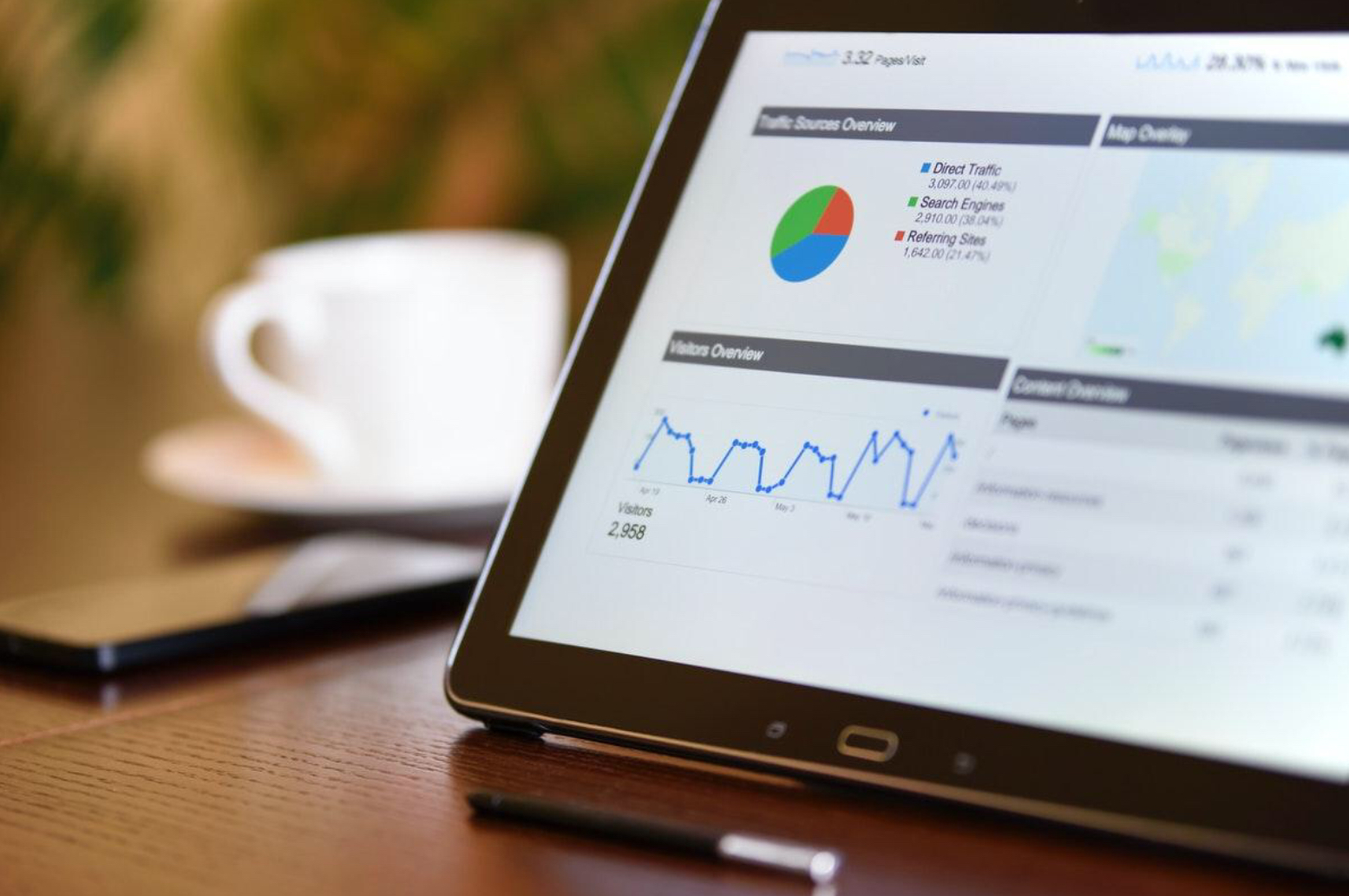
For a business to grow in the right direction, keep staff on track, and customers happy, business leaders have to make tough decisions daily.
“How much do I allocate toward marketing and product development?”.
“Who’s the best person to lead this team?”
“Should I purchase new equipment or rent?”
“Is now the right time for expansion?”
These important decisions determine everything from day-to-day operations to what direction your company will take in the future.
When being tone-deaf can mean the death of your business, you need mechanisms to make informed, data-driven decisions.
Implementing the right technology and deploying it strategically will take the guesswork out of the decision-making process.
The result is cost and time savings, greater efficiency, and keener insight into a company’s health and growth potential at any given moment.
How technology impacts business decisions
Here are some benefits of using technology to make better business decisions:
● Tracking and monitoring employee and process efficiency. This will let you know when bottlenecks are being created, prevent fraud, and identify areas of concern;
● Improving customer service by helping you analyze market response, develop new ideas, collect and respond to customer feedback, and conduct field testing;
● Improving product development and service delivery by streamlining processes and providing added value;
● Enabling insightful asset management will tell you at a glance what assets are available, where they are, and how they can be better utilized.
Decision-making is a process that runs through several distinct phases. Data collection, sorting, and analysis is required at each phase.
Here are ways that technology can be deployed at any phase to make the process more accurate and transparent.
1. Information gathering
Before you decide where you want to go, you first need to know where you are.
This applies to your internal processes and conditions, and to knowing how you fare compared to your competitors.
Therefore, you need to gather all the information you can.
Businesses require data to analyze trends, predict customer behavior, manage finances, and keep up with the competition. Using automation and other data collection technologies allows your business to gather massive amounts of information quickly.
Rapid access, often in real time, enables insightful decision making. You can use information-gathering tools to create competitor and customer profiles or analyze market trends.
This will help you make decisions that will propel your business forward without relying on biased or incorrect assumptions about the state of your business.
2. Data collection
The amount of data collected by companies is staggering. Marketing stats, historical trends, business financials, and customer histories are among the numerous types of information to sift through.
Technologies like AI and Big Data allow you to segment, analyze, and refine huge amounts of data in a fraction of the time that a human team could manage the same feat. What’s more, these technologies eliminate human error, which means a greater degree of accuracy.
For example, a lawyer could deploy technology to analyze millions of documents and case histories in seconds when that kind of research would take a team of paralegals days to conduct.
Financial management companies could have stock histories and market trends at their fingertips, providing deeper insight for client portfolio management and buy/sell recommendations.
An entirely new industrial era is being ushered in by technologies that rely on gathering, analyzing, and exchanging data. Data tools are an essential component of Industry 4.0 to better use the data available across all aspects of a business. Among the most useful are:
3. Customer relationship management (CRM)
Customer relations technologies provide better insight into consumer requirements and improve service. Software and applications include inventory control and management systems, mobile apps, and order processing systems.
CRMs enable you to make granular decisions about approaching a client based on their history with your company.
Your marketing messages will be more targeted, and you’ll be able to spot upselling opportunities faster.
They can also inform you about the state of your customer service so you can take steps toward either increasing availability or working on removing common bottlenecks.
4. IoT
Internet of Things (IoT) is an interconnected network of devices, appliances, control systems, and apps that can run autonomously and remotely. It’s made up of different technologies that include robotics, sensors and data processing applications.
These networked systems can be accessed and controlled by staff and team leaders from any location, at any time. This leads to greater efficiency and less downtime.
IoT devices can also play an essential role in determining customer behavior and developing tailored customer propositions using the gathered data.
5. Machine monitoring and maintenance tools
These technologies oversee a lot of manufacturing processes. They can troubleshoot problems, calibrate and optimize production equipment, and conduct repairs to prevent disruptions.
Gathering this information can provide insights into business aspects you may otherwise not be able to see firsthand.
Be it identifying energy waste or monitoring equipment health before it breaks down and brings operations to a standstill, IoT devices have a wide range of applications in making better business decisions.
6. Mobile apps
Mobile apps can provide extra value to customers in the form of discounts and order processing, keep remote teams in the loop, and allow you to conduct business on the go. They enable real-time access to data and improve overall communications.
Having a mobile app for your business means that you can literally live in your customers’ pockets. The amount of data generated through apps ensures that your offerings are as relevant as possible instead of stabbing in the dark.
7. Information processing tools
Now that you have all of this data collected and collated, what do you do with it? Information processing tools, such as inventory control software, help you manage large amounts of data and put concise reporting into action.
By processing raw data more efficiently, you prevent creating a disconnect between business functions and information technology. It helps users and analysts make sense of the data and put it to use for the company’s benefit.
Modern BI tools allow organizations to monitor performance, compare historical data, optimize supply chains, and more. They enable users to select and manipulate data into whatever form is needed to make sense of the information at any phase of the decision-making process.
8. Business collaboration
Even before current circumstances forced many businesses to operate solely in the digital realm, remote work and collaboration were becoming the norm.
There is a wide range of tools available for remote teams to keep everyone on the same page and streamline otherwise cumbersome processes. This could entail using simple cloud-based collaboration tools like Google Workspace or project management tools like JIRA, Basecamp, Asana, and others.
It’s important to choose a customizable tool so businesses can simplify the decision-making process by zeroing in on aspects that matter most for their unique circumstances.
Using technologies connects scattered personnel and makes information available when and where it is needed most. This creates cohesion and supports a unified approach to meetings, strategy sessions, and other forms of remote collaboration.
Conclusion
Technology is about more than just convenience. It makes companies more efficient and productive by generating and processing precise, timely information that’s relevant and meaningful.
By choosing the right tech and deploying it in crucial areas, you stand a better chance of staying ahead of trends and riding them to success. In today’s more competitive, digitized global economy, that edge can mean the difference between helming a leading enterprise or going down with the ship.
— Heather Redding is a content manager for rent, hailing from Aurora. She loves to geek out writing about wearables, IoT and other hot tech trends. When she finds the time to detach from her keyboard, she enjoys her Kindle library and a hot coffee. Reach out to her on Twitter

- Posted 12.10.20 at 06:38 am by Roy Osing
- Permalink
December 8, 2020
How to have an incredible social media and branding presence
How to have an incredible social media and branding presence.
Are you contemplating using social media to engage your customers? Do you know how to best utilize social media to build trust and connect consumers with your brand? Which social media platform is best for your product or service?
Do you have a well-thought-out strategy for social media marketing? These are questions all businesses and brands should be asking themselves.
The infographic below, Boost Your Branding with Social Media Engagement, presents some telling statistics and facts about overall social media use, specific media platforms, and the relationship between social media use and brand engagement. It is designed to help companies customize their marketing and advertising campaigns to their specific audience so they can improve brand awareness, increase revenue and profitability, and, ultimately, grow their business.
Great small business tool
Why is this important? Social media is one of the best ways to reach customers, especially for small businesses. Even if your company could afford to advertise on network TV, the viewing audience is so fragmented today — with young people choosing online streaming over cable TV — that marketing through social media may be the most effective strategy to reach your audience.
Unlike TV and radio ads, social media marketing allows you to do so much more than simply announce sales!
Social media platforms are ideal for posting messages that can strengthen customer relationships and increase brand awareness and loyalty.
You can post product content, images, games, videos, links, testimonials, stories … and even ask questions! Social media allows you to interact directly with consumers, something that is not possible with television, radio or print ads — consumers value this two-way communication and often reward the company with purchases and recommendations.
Which social media platform is best for you?
The infographic offers facts about the number and generation of users for various platforms. Further, the infographic tells you why consumers follow and unfollow brands on social media, and it lists the types of posts that people like and share. All this should help you come up with a targeted and effective social media branding plan.
Creating your ideal strategy requires a deep analysis of your unique brand identity, your target audience, the type of content that is most relevant for your brand, consistent “voice of the brand” messaging, and your brand design.
Even after you assemble all the pieces into a coherent whole, remember that social media marketing is forever changing. Your brand must stay active on social media by posting engaging new content regularly, responding to customers who reach out to you, and continually assessing the results so you can update your strategy as needed.
Read on to start — or improve — your social media branding today!
— Rebecca Purrington is a Promotional Products Expert with Crestline Custom Promotional Products. She has more than five years of consultative sales experience in the industry and holds degrees in both Social/Behavioral Sciences and Business Management.


This infographic was created by Crestline, a provider of PPE gear
- Posted 12.8.20 at 05:25 am by Roy Osing
- Permalink