



Roy's Blog
December 7, 2020
How to be amazing at learning about your customers

Source: Pexels
Customer learning is an essential component of ‘customerization’, the practice of creating packages of value for a select targeted group of customers as opposed to the more traditional marketing approach of pushing products and services to mass markets.
Customer learning is beyond common periodic market research studies that are still conducted by many organizations, even though digital marketing technologies are now very effective in obtaining customer feedback with each customer engagement.
Real time technology-enabled customer feedback notwithstanding, there are still significant opportunities to gather valuable information on the people you do business with, using employees.
In fact I would argue that AI information gathering systems still have a long way to go to be highly effective marketing tools for one simple reason: at this point in their evolution, they are unable to probe like a human; to use the answer to one question to ask another.
Programmers do their best to develop algorithms that anticipate the detailed requirements of customer engagement, but they simply cannot accurately program what humans do naturally.
How was yours last experience with a Chatbot? Were you able to get your needs satisfied? My experience is that if you only want to provide information with little or no interaction then this tool isn’t bad.
But the moment you need some personal attention rather than the attention programmed into the Chatbot from the behaviour of a population you’re in trouble.
AI doesn’t work and you go looking for…….. a human to take care of you.
Customer learning is a continuous process of learning about customers and therefore a combination of tools should be used. Sure, use AI as best you can, but ALWAYS have your human platform ready to step in and finish the job.
Build your customer learning platform with humans as its foundation with AI as the entry point. As AI gets better at creating the right engagement experience with people, let it take on more responsibility.
Employees should be used as the primary instruments to do the learning work.
To implement customer learning in any organization, these activities are designed to create the appropriate behavior:
Communications — constantly communicate to employees the strategic importance of continually learning about what customers desire.
And while you’re at it, distinguish learning from traditional market research to stress why learning is a strategic matter while research is a tactic.
Core competency — build customer learning as a core competency of the organization that will determine its success or failure.
Strategy sessions must confirm that the way you intend to differentiate your organization from the competition is to be the ONLY one that captures customer secrets on a real time basis and use the information to build relationships and create unique offers.
Performance management — incorporate the learning responsibility into the performance management program of the organization.
Clarify the expectation that learning what people - fellow employees and customers - is an integral part of everyone’s job. If people ‘on the inside’ learn about one another on a consistent basis then you can bet they will practice the behaviour consistently with customers.
Develop specific learning objectives to be a critical component of the annual performance plan for every employee. I used to include an objective like ‘Roy will make customer/colleague learning an integral part of his daily duties and will document and report on his learning results every 6 months.’
Recruitment — hire individuals with the intrinsic ability to relate to people and develop credible relationships with them.
This is critical because if people don’t naturally understand the importance of learning it will be tougher to convince and train them to do it.
Look for people who have had some experience in gathering information on people ‘on the run’ and who appreciate its strategic value. Revise the interview questionnaire to include questions that expose their learning competence.
Recognition — constantly recognize those who perform their learning responsibility in an exemplary manner.
Customer learning ‘heroes’ should be honored in front of the entire organization; it’s a great way to reinforce the strategic importance of the learning activity and the behaviours expected of everyone.
Learning events — hold regular employee learning events for employees to share what they have learned about customers and to discuss how the learnings have been turned into marketing opportunities for the organization.
This is another key idea. It’s one thing to learn something about someone but it’s another thing to leverage the information and convert it to added economic value for the organization. It’s what you do with the learning that’s the real important thing; the intelligence itself is merely the means to the end.
Learning about your customers continually is a critical element of the organization’s strategic game plan and, particularly, in determining how to achieve sustainable differentiation in a highly competitive world.
Cheers,
Roy
Check out my BE DiFFERENT or be dead book series
- Posted 12.7.20 at 05:17 am by Roy Osing
- Permalink
December 6, 2020
5 steps to build a tremendous email marketing campaign that actually works

Source: PeppyBiz
5 steps to build a tremendous email marketing campaign that actually works.
Almost every person has an email account these days, and most of them have cluttered inboxes with unread or spam emails.
This does not mean that there are no quality emails at all. In fact, there are instances when some emails grab our attention. It can be an email newsletter or some valuable content which you might even want to share with others.
Considering the crazy competition on the web, how do you set up a unique brand identity that invites people to engage with you?
None of this happens if you don’t have an amazing marketing strategy that separates you from the crowd.
And one of the simplest and most effective tactics to achieve this goal is an email marketing campaign that ‘jumps out’ at the receiver; it is not only unique, but eccentric.
Email marketing still tops the list for every marketer. What’s even more astonishing is that it has a better ROI as compared to social media.
There are several reasons for this, and one of them is its ease of use and affordability. Whether you are just starting out with your business, or have a well-established one, it works wonders for all. When implemented well, it helps you have an excellent place in the community.
Even though there are incredible benefits from email marketing, it’s rarely given the attention it deserves. Why does this happen? What’s the backstory?
Let us help you sort that, and, with these 5 steps, help you build an email marketing campaign that actually works.
Quality email list and types of email marketing campaign
Are you churning our high-quality content, regularly updating the subscribers and building a brand presence and still not getting a good response? Did you check on your subscriber list? Is it authentic and reliable? All the efforts go in vain if the audience is not interested.
The way to do this is to build a quality email list. But, before that, you need to understand your target audience. Then, attract them to subscribe to your emails. If the users visit your site, ensure that you attract and engage them well. This will make them subscribe to your site with interest.
Once you have a good email list, focus on the content you are sending to your audience.
There are several types of campaigns which you can work for. Some of these include:
Newsletters
Announcements of new products or services
Marketing offers
Invitation for online or offline events
There are several other strategies you can work on depending on your business.
1. Personalization of emails
Source: PeppyBiz
“This is to inform you regarding the launch of our product.”; “Hey John, let us introduce you to our newly launched product.”
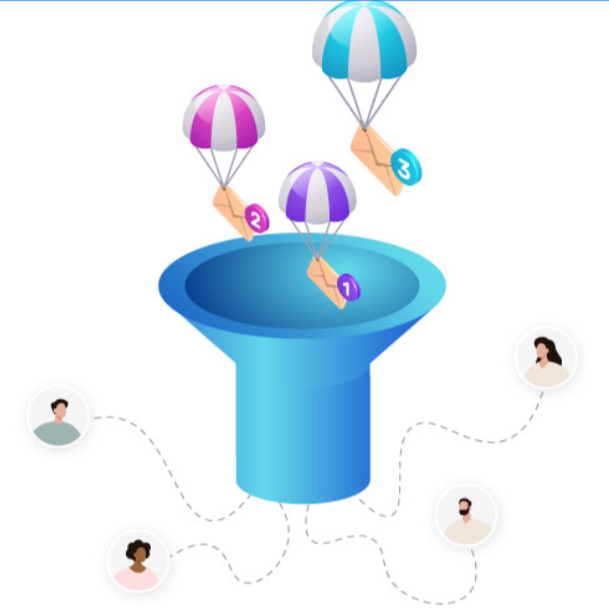
Which one sounds more intriguing? Obviously, the second one. This is what email personalization does. It grabs the attention of your audience instantly. It is a quick and easy trick to engage your audience.
Personalize emails not just with their names, but also on several other bases. This can include the type of campaign they prefer, the products they like and such parameters. This will make them want to open the emails regularly and stay connected with the brand.
2. Optimized designs and compatibility with devices

Source: PeppyBiz
Try optimizing your email designs with your brand. This can include a catchy subject line, the content that you put in and even the media that you attach.
And ensure that your emails are compatible with all devices. After all, the majority of the people now find it easy to check their emails on their phones. If your mails take long to open or have errors, people will surely drop out instantly. And you surely don’t want to lose your subscribers.
3. CTA and consistent monitoring

Source: PeppyBiz
What is the use of an email if it does not fulfil its purpose? Do not forget to add the appropriate call-to-action at the end of every email. It adds value to email and even allows the users to reach the site whenever they want. If you are sending an offer for a product, do not forget to add the link button.
At the same time, it is also essential to constantly monitor how well the email campaign is working. To achieve this purpose, many businesses are now opting for email automation. Check the figures regularly and conduct tests to know which areas require attention.
4. Email automation

Source: PeppyBiz
Once you know all the aspects to make your email stand out, the most important in the current day is email automation. Why not automate the mails instead of sending out each one personally.
Email automation is surely a saviour. However, it is important to implement it when needed. You can automate all the mails. Consider the various parameters like segmentation, target audience, types of mails and others, to put email automation to best use.
5. Email automation software

Source: PeppyBiz
To make your task even easier, you can opt for an email automation software. Look for suppliers that offer unmatchable services to strengthen your relationship with customers and various features including triggered emails, in-depth analysis, autoresponders, personalization and so much more in store.
Conclusion
To summarize, if you want your brand to stand out, email marketing is an unbelievable opportunity.
Why overinvest in selling your products and services when in just a few clicks you can get your tasks done at a reasonable cost?
All you need to do is strategize the email campaign well and implement email automation for your business.
— Sara Williams is a Content Writer at PeppyBiz. She is not only a creative writer but also paints a beautiful canvas. She makes sure that you are left with no doubt about keeping up with marketing and sales.

- Posted 12.6.20 at 04:49 am by Roy Osing
- Permalink
December 5, 2020
How marketing productivity in today’s uncertain times can be improved

How marketing productivity in today’s uncertain times can be improved.
It seems like with the explosion of digital channels, now is the best time to exercise all opportunities available to marketers. But it may not necessarily lead to unprecedented creativity or productivity, for that matter. Plus, it wrongfully puts offline marketing to the background.
In this article we will explore the main aspects of marketing productivity, especially contrasting online and offline.
Here are the questions we will cover:
— What is market productivity?
— Are we living through a golden era of marketing creativity?
— How can efficiency and productivity in marketing be boosted?
— What are offline marketing trends?
A few words on offline marketing
Many brands are capitalizing on the new media landscape. Still, it’s important to remember that true effectiveness can come from the fusion of online and offline marketing. At the very least, this rule applies to most companies, which aren’t jumping on the bandwagon of existing only digitally.
If you’re under the false belief that offline refer only to outdated paper ads or canvassing, check out these offline marketing trends for inspiration:
▪️Revamp your packaging or presentation – Looks matter, and your branding and front design speak volumes. Maybe it’s time to refresh the looks and, let’s say, update your branded cafe barriers that will be sending the right message to potential customers.
▪️Sponsor a community event – It’s a big commitment, but it eventually pays off. Make sure to have a large banner printed and post it on your booth or some other visible space. Additionally, give away goods, coupons, and pamphlets with branding and discount cards.
▪️Engage the local community – If you’re not at the level where you can hold your own events, there are other ways. The overall idea is to make local folks associate your business with the area you’re based in.
▪️Contact local print publications – The key is not to give out printed promos to just anyone but to the right crowd and location. A locally produced magazine or newspaper find their way to your target audience.
▪️Try out guerrilla marketing – You can add something to the preexisting urban environment, leverage the audience of an in-progress event, do product placements, or even make an attempt to go viral.
The state of marketing productivity today
Marketing productivity is the ability to convert resources into results. There are heated debates about whether it is at the top of its capacity these days. With so much data and many advanced technologies available, it seems that it’s easier than ever to optimize all marketing processes.
Opinions vary, but the overall sentiment is it depends on how you manage a wide range of touchpoints and disciplines. It’s hard to deny that modern marketing efforts can achieve things that traditional campaigns never could. But when everyone in the industry can take advantage of that, does it really give marketers an upper hand?
If you want to find that out, you need to know how to measure marketing productivity for your specific campaigns.
Some of the key metrics to pay attention to include:
▪️ Prospect nurturing
▪️ Leads generated
▪️ Marketing cost per lead
▪️ Conversion rate
▪️ Industry-specific productivity measures
How to increase marketing productivity
The no-brainer advice is to gather a team of knowledgeable professionals. But even then, a well-trained team only takes an agency so far.
We’ve gathered some unique tips that have helped agencies increase marketing efficiency:
Remove the digital clutter — Perform a scavenger hunt on everything you don’t need or at least make them easily accessible. Also, invest in a professional DAM system for organizing and accessing files.
Utilize in-office communication tools — Instead of exchanging emails for days and weeks, organize conversations that are set and done quickly.
Focus on one task at a time — Multitasking can be a big obstacle to productivity and take more time rather than workers focusing on their specific tasks. So, it’s better to “divide and conquer.”
Cut design time in half — Draw up templates to avoid starting every project from scratch. This will give you a baseline that you can customize for future clients.
Consider remote work — This will give employees some flexibility. In turn, it will foster better results since they have more freedom in terms of where and when to work.
Schedule client-free hours — Establish and enforce boundaries so that no outside forces will interrupt the flow of work, at least for some time.
Take advantage of automation — Save up an incredibly large amount of time by automating certain tasks.
The mix of digital and traditional marketing avenues now provides a vast canvas that marketers can work with.
The great news is that marketing productivity in is continuing to expand. But in order for it to work properly, it requires joint efforts of all communication channels, not only online but in real life, where actual customers are.
— Anthony Kretchmar is an experienced entrepreneur. He believes that a person can make a difference even with insignificant investments. In 2006 he founded the family business Fortuna Visual Group. They started off as a one-man show but now they are a crew of dedicated art crafters, designers, expert fabricators, and installers with exceptional skills, professionalism, and work knowledge.

- Posted 12.5.20 at 05:59 am by Roy Osing
- Permalink
December 2, 2020
Why more amazing women are now attending MBA school

Source: Pexels
Why more amazing women are now attending MBA school.
BE DiFFERENT or be dead failed to reach the ears of many business school programs for years as they have a history of being singularly and exclusively male.
Globally, back in 1972, of the 30,433 graduates who received an MBA, only 1,201 were women.
Fortunately, it seems like that gap is closing and differentiation is finally breaking down the doors at business schools as this past year MBA programs had a record number of females enrolled.
This rise in women enrolment in MBA programs can be attributed to many things. Namely, the growing versatility of a business degree, more supportive campus organizations and policies, focused recruiting efforts and the increasing acceptance of Graduate Record Examination (GRE) scores as opposed to DescriptionThe Graduate Management Admission Tests (GMAT) exclusively. The most promising of those reasons being the versatility of a business degree.
Before, an MBA was a ticket to Wall Street and big money on a train mainly ridden by men.
You went to business school, performed in cut-throat environments, developed a shark-like instinct and graduated to big banks.
Today, however, your MBA can lead to a countless number of opportunities.
For women, that conversion usually comes in the form of entrepreneurship.
In 1972, that same year a mere 1,201 women worldwide graduated with an MBA, women-owned businesses only represented 4.6% of all businesses.
Now, women-owned businesses represent 42% of all businesses in the U.S., according to American Express.
This opportunity for women to empower themselves to start their own businesses is a huge motive for women to attend business schools. They can sharpen their natural sense of opportunity into actionable lessons and carry those lessons to blaze trails of their own.
The Forte Foundation also predicts this trend will keep climbing up and to the right.
In 2019, women made up 39% of full-time enrollment in MBA programs. The foundation’s goal is to reach gender parity (a 50/50 gender split) by 2030. A goal that they feel is very doable and one that will leave MBA classrooms finally looking different: they’ll look diverse.
— GreatBusinessSchools gives business students a portal that tells them everything they need to know before they commit to business education. Our aim is to take students from the decision to attend business school all the way to an application and acceptance.

- Posted 12.2.20 at 04:16 am by Roy Osing
- Permalink