



Roy's Blog: July 2019
July 8, 2019
6 reasons why being broken is better than being beautiful

Source: Unsplash
6 reasons why being broken is better than being beautiful.
The stereotype of success these days is based on the notion of perfection; a flawlessness that people believe is somehow responsible for yielding consistent brilliant results.
Successful business strategies are described as ones that get it right the first time. They have amazing insight at the outset to predict with uncanny accuracy what people will desire in products and services.
And their creativity unleashes the imagination of the crowd who flock in ridiculously long line ups to buy the latest and the greatest.
Successful people are portrayed in elegant attire, sporting a body image devoid of any unsightly signs of the ordinary.
Their body image exudes the winner attitude and destiny.
Does anybody buy this? Does anyone really believe that incredible business performance is a function of getting it right the first time, or that physical perfection is the necessary precondition to personal success?
There are no silver bullets to success in my experience. Rather, success is normally achieved (notwithstanding the odd blistering single magic act that rarely happens) by a series of actions taken in relentless painstaking fashion aided by unmatched sweat, passion and emotion — by being broken in one way or another.
Here are 6 reasons why being broken will get you where you want to go and why being beautiful, while a fashionable notion, is a non-starter for capturing the prize.
1. If you’re broken you’re prepared when you fail
You know your first attempt at anything rarely succeeds and that the future “never unfolds as it should” (i.e. the way you hoped it would).
Broken prepares you for the journey of change that every new idea is destined to endure. Broken implies imperfection at the outset, and this is the reality of virtually 99.99% of the solutions we create to the challenges we face.
There are very few immaculately conceived plans and strategies that produce the exact results expected; every plan is flawed in some way with degrees of imperfection that are realized only when the real world does not conform to the assumptions made about it — actual product sales, for example, rarely mirror their original forecast.
So if you enter the race to win knowing full well that your plan is flawed in some way (which you will discover only after you are in the middle of full-on execution), you will be well positioned to spot irregularities and take corrective action.
People who assume their plan will work are not prepared to shift when it doesn’t; their feet are stuck in mud, unable to recover from unexpected body blows.
2. If you’re broken you know action speaks louder than words
Broken demands action. Broken can’t be productive by pontificating or exercising the intellect; by merely thinking about what has to be done to create a higher level of performance and better results — the brain can’t DO anything.
The only way better outcomes are produced is by taking decisive action in the face of uncertainty; without knowing if what you do will produce the result you want.
Broken promotes the strategy of trying; making as many attempts as you can to accommodate the impact of real world events on your plan, because if you don’t try, little happens in terms of returning to winning ways. You get stuck believing that eventually your original plan will see that light of day.
“The definition of insanity is doing the same thing over and over again, but expecting different results.” — Albert Einstein
Broken demands that you act first and think second and that you TRY incessantly.
3. If you’re broken you know you have to work harder than others
Broken requires hard, excruciating and often painful work. Broken can’t be fixed by slight-of-hand or by finesse; the appropriate solution often cannot be found neatly or elegantly.
Successful broken strategies are not produced by sophisticated algorithms that cleverly manipulate the independent variables at play, rather they are created by hard work put in by individuals who are unafraid to get dirty.
4. If you’re broken you know that you’ve got to constantly keep moving
Broken requires competence in juggling. Broken solutions are rarely singular; they’re not produced by a single cause. For example, an underperforming product rarely happens because of one breakdown in the go-to-market chain. It’s not just a price, customer communications, supply or value proposition issue but is most likely a mixture of all of them to varying degrees.
Fixing broken, therefore requires a balancing touch to skillfully mix a bit of this with a bit of that — revise the value proposition to communicate uniqueness among the competition, adjust the price accordingly and modify customer communication tactics.
Broken generally requires synthesis and integration; a TWEAK mentality that applies many potential solutions simultaneously rather than rely on the traditional sequential approach of try this >> study the results >> try something else.
5. If you’re broken you know that you will make mistakes and you must learn how to turn them to your advantage
Broken creates insane loyalty.
The popular notion is that getting things right the first time is the ultimate goal; avoiding mistakes and errors is the way to achieve high levels of performance. In business avoiding mistakes eliminates the need for rework which in turn mitigates against margin dilution. In one’s career, when you don’t make mistakes your veneer as an unblemished professional is maintained.
Well, I’m afraid to say that mistakes are here to stay — humans and technology don’t always perform the way we expect — so we need to find a way to leverage them for success.
Being broken forces us to do just that. It prepares us for the fact that events will not always go the way we intended, and it drives us to salvage something from the screw-up that will place is in a better position than if the mistake never happened.
Being broken makes us recovery experts. It teaches us that there IS a way to turn a soured event into an amazingly successful experience. It teaches about the power of surprise and the unexpected.
6. If you’re broken you know you must depend on relationships with others
Broken results in a deep respect for relationships because if you don’t have a circle of trusted friends you’re disadvantaged. Broken people understand they can’t achieve anything substantial as an “only child” but rather through the collective efforts of their tribe.
Broken is real; beauty is superficial. Real delivers results; beauty is a distraction.
Cheers,
Roy
Check out my BE DiFFERENT or be dead Book Series
- Posted 7.8.19 at 03:13 am by Roy Osing
- Permalink
July 1, 2019
Why success demands that you are out-of-step with others

Source: Unsplash
Why success demands that you are out of step with others.
How many degrees do we need? What academic credentials should we gather, and from which institution?
What courses should we take to attract potential employers?
Who should we hang out with to take advantage of their network?
Why are there so many people with amazing degrees doing jobs that are way below their qualifications — taxi drivers with PhD’s?
How can I climb the ladder when there are so many other people who want the same thing?
How can I get noticed in my company and show what I am capable of?
I want to take on more responsibility and prove that I am worthy of a promotion: how do I get it done?
So many questions behind the challenge to be successful, and so many opinions on how to achieve success — and here’s mine.
I have seen many people with incredible academic backgrounds fail to reach their potential.
I have seen many highly skilled professionals fail to move up in an organization and achieve their career goals.
I have seen experienced managers and leaders not rewarded for their contributions.
Is Google your best friend?
And, in my view, the common denominator in all of these circumstances is the fact that most people generally tend to practise rote; they follow the established doctrine of their trade.
When approaching a challenge, they employ the toolset that everyone else uses. When facing a “How should I do it?” question, they go to Google for the most commonly used approach.
And they hunt for a best practice; a method that has worked for others that they hope will work in their particular circumstances. And they try to copy it.
Copying what others do has no long term redeeming value and being in-step with the crowd is a formula to define YOU as a common version of everyone in it — welcome to your role as a member of a common denominator.
Join the out-of-step crowd
In my experience, I have seen success follow out-of-step people; those who reject crowd thinking and find best practices repugnant.
People who consider a Goggle approach as a solution to morph to be a better fit for their particular situation.
People who are constantly asking themselves “How can I do this different than everyone else?”
People who look for weird, off-the-wall methods and outcomes as an expression of their individuality.
Out-of-step people make the world an interesting place to be. And they are rewarded by receiving the recognition and reward they deserve.
Think DiFFERENT
My message to you: everyday when you get out of bed, decide that you will do something — some little thing — that is different than the in-step crowd.
If you make ‘different thinking’ part of your daily routine eventually it will become part of your persona and will begin to govern the outcomes you deliver.
And success will follow. I guarantee it…
Cheers,
Roy
Check out my BE DiFFERENT or be dead Book Series
- Posted 7.1.19 at 04:12 am by Roy Osing
- Permalink
June 28, 2019
How Instagram can be used to gain an advantage over your competition
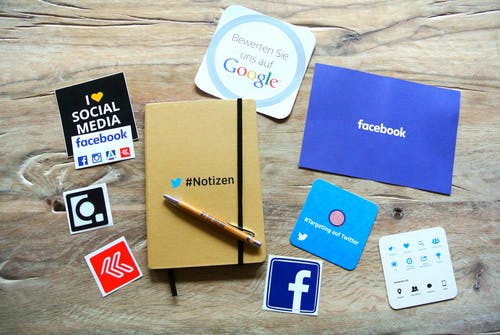
How Instagram can be used to gain an advantage over your competition.
With so many people becoming a part of the massive social media revolution, Instagram has become one of the biggest platforms available. In fact, Instagram is now the second biggest social media platform, with around 800 million active monthly users. It comes after Facebook, which has about 2.07 billion active users worldwide.
This is why many users, especially entrepreneurs, are taking advantage of these platforms to reach out to potential clients.
Why Instagram?
Facebook might have more than twice the number of users that Instagram has, but these two have their differences in terms of reach and form of promotions, making it necessary for most businesses to use both to improve their online presence and have an edge against the competition.
What makes Instagram a must-have for some businesses is that its mobile-centric photo sharing capabilities makes it a favorite for people in terms of capturing moments to share with and captivate audiences.
So, compared to Facebook, Instagram is a better choice when it comes to promoting your brand.
Getting started with Instagram for business
If you are one of the many business owners and entrepreneurs who have decided to go on Instagram and reach more consumers, here are nine things that you need to work on to promote your business online:
Fill out your bio strategically
Let the people of Instagram know who you are and what you do. Creating a credible identity on Instagram is a necessity. This way people will understand what you brand is about and if you are something that can be a part of their interests.
At the same time, you need to incorporate keywords that will help search engines know what your business is for.
Find, follow, and interact with your ideal customers
Instagram is not just about gaining as many followers as you can. It’s also a good tool to understand how you can better cater to your potential clients. Instagram is a great platform for businesses to have a better understanding of the people who can potentially become a part of their clientele.
Think about your product
How can you better promote your brand and your product on social media? It’s not just about words or numbers. Instagram has proven time and again how powerful photos can be when it comes to gaining a large number of followers, and more importantly enticing people to purchase products as shown on the photos shared by your brand.
Expand your reach with #hashtags
Hashtags have become a very important part on the online world. Think of it as the best bots out there. It has helped people find more interesting items in relation to a certain topic they are using to search and promote with.
If you are looking for the best way to reach more potential clients, hashtags should always be a part of your posts.
Build anticipation and offer exclusivity
There is a certain charm when it comes creating suspense and anticipation. Many people like having their curiosity piqued. Some brands that market online tend to take advantage of this by sharing a number of posts that entice other users to click on their post and learn more about their company.
Some brands, on the other hand, run competitions and quizzes and give out their product as prizes to the winners.
Think strategically about your posts
For your posts to be more effective and be able to reach more clients, you have to identify a specific strategy. It’s ideal to schedule regular posts and that you maintain a common theme throughout all your posts and these posts should promote your brand.
Riding the waves of viral videos or photos from famous people can also help you get more followers.
Coordinate with social media campaigns
There are various social media campaigns that can give you inspiration on how to get more followers. Many social media influencers and brands make use of Instagram’s live video feature to interact with clients and get more people to follow their page.
With a bright idea in place, these social media campaigns can help you go trending and become the talk of the media.
Announce new hires, promote your culture
If you want people to get more involved in your company, let them know as much as you can share with them. Let the public understand what type of environment your company has and who are the people behind your brand.
If you onboarded new people, share it with your followers and let them see what your brand is all about.
Showcase your customers and service
To make the most of social media, it’s not always just about your brand. Sometimes to be more inclusive and to create better connections with your customers, it’s ideal that you share the limelight with them, too.
Get your customers involved with your brand and share with your followers who your customers are. You have a famous person as one of your customers? Snap a photo of them with your product and share that with the people.
Instagram can definitely give you a better online presence. If you are new to this social media platform, these nine things can definitely help you promote your brand and reach more people who can turn into your own followers and clients.
— Marquis Matson is a writer, social media manager and SEO content marketer. She currently lives on the coast of Ecuador, working remotely as a freelancer. Her primary focus is on building online visibility of new, up and coming brand, particularly brands that promote health and wellness. She lives a nomadic lifestyle, though is originally from California.

- Posted 6.28.19 at 04:08 am by Roy Osing
- Permalink
June 24, 2019
5 simple steps I took to have a rewarding and successful career

Source: Pexels
5 simple steps I took to have a rewarding and successful career.
I have had a long career.
Over 50 years in many roles — from analyst to entrepreneur to president to consultant to author — and in many different types of organizations — from a regulated monopoly to an intensely competitive data and internet company to a small business on my own.
And I am frequently asked what were the key things I learned about success.
The question asked is: if I could distill the hours, days, months and years I put in “at the office” down to THE few specific learnings that had the greatest impact on my success, what would they be?
It’s a tough question to answer because there are so many variables at play that determine what works and what doesn’t: the leader that one serves, the economic environment that one operates within, the demographics of the employee population and the rate of technological change all work together to influence the performance of a team of professionals.
That said, I believe that these 5 principles that I learned and applied throughout my various careers had, in comparison to many others, the greatest impact on my overall performance and were my critical success factors.
1. Competence is serving others
There are two types of people in life: those who like to control those around them and those that love to serve others.
One stems from the historical command-and-control model; the other from a belief that if you enable someone to do their job as they know how, their — and the organization’s — performance will soar.
It’s the servers who are the most successful because they understand that when you are in the serving mode, others respond enthusiastically to what they are saying and to what they want to do.
Servers connect emotionally with humans and create a bias to action that results in amazing outcomes. Servers lose their ego because it gets in the way of getting things done.
Success isn’t about what YOU know, it’s about how well you mobilize what OTHERS know.
2. Execute first; plan second
Ideas represent 20% of what gets done. It’s not the idea or the plan that has value, it’s the execution.
So-so ideas that are miraculously implemented with tenacity and passion become revolutionary and are game changers; “great” ideas without hell-bent implementation become road kill and never see the light of day.
Most people don’t get this. They’ve been taught that the development of the plan should be the priority focus; that rigour must be applied to “get it right”.
The problem is, the plan is never right because that would imply that all variables affecting the plan have successfully been accounted for. And in a world of unpredictability that is impossible.
One of my key learnings was to get the plan “just about right” and apply maximum energy to executing it, and tweaking it based on what works and doesn’t work along the way.
While others spend their time trying to perfect their plan — the impossible dream — you are creating something that actually works based on the realities of the marketplace.
3. Success demands giving up
Success isn’t just about what you do that’s new, it’s also about what you give up that’s no longer relevant or productive — it’s not about what you take on, but rather what you are prepared to give up.
It would be great if we had an unlimited amount of time to pursue all of the possibilities that face us. But we don’t, so it is extremely important that we tackle the truly critical tasks that will pay off handsomely and that we eliminate the baggage from yesterday.
I constantly observe people toiling away on projects that don’t contribute to their goal, but they are happy to continue them because it’s their comfy zone.
I suggest you constantly question the relevance of what you are doing; be “in your face” on whether the project adds value to your end objective or not.
And be ruthless in expunging this resource wasters — #CRAP — and replace them with task that positively contribute to the end result you expect.
4. Change needs emotion
The prerequisite to this is that your brand needs to carry a strong change agent dimension; people need to see you as someone who wants to make changes that are consistent with the dynamics occurring in the environment around you.
You don’t want to be seen as a hanger-on who is reticent to accepting the inherent risks of doing things differently.
That said, to be an effective change agent requires that you excite the emotion in people; waking up the logic isn’t good enough.
I can’t tell you how many times a good theoretical solution died on the vine because no one was excited by the prospects it posed.
Change doesn’t come easy and it is definitely NOT as a result of intellectual energy. Change happens when people’s emotions are stirred by the new vision.
The lesson for change agents is to appeal to people’s right brain when change is the agenda. Pump ‘em up with the possibilities.
5. Mistakes are vital
Avoiding making a mistake is not as important as what you do after you’ve made it.
Mistakes will always be made; people and technology are not perfect. But if you do an amazing job at recovering, people will forget the actual mistake you made and remember only what you did to rectify it.
A colossal screw up with little or no follow up action to recover stays a colossal screw up whereas one that has a brilliant recovery that leaves you breathless makes it a colossal success.
How do you turn an OOPS! into a WTF?
The formula for an unforgettable recovery is: fix the OOPS! fast (it must be within 24 hours or don’t waste your time) and surprise people with what they don’t expect.
The surprise factor is the secret ingredient to a mind-blowing recovery because everyone expects the mistake to be fixed but they don’t expect to be taken on a magic carpet ride during the process.
They will remember the magic; the mistake disappears from consciousness.
5 rather simple things that punch above their weight in terms of deciding between average and unmatched performance and career success.
They made a huge difference for me and they will for you.
Cheers,
Roy
Check out my BE DiFFERENT or be dead Book Series
- Posted 6.24.19 at 04:59 am by Roy Osing
- Permalink