



Roy's Blog: October 2020
October 3, 2020
How personalized marketing can boost e-commerce sales to astonishing levels
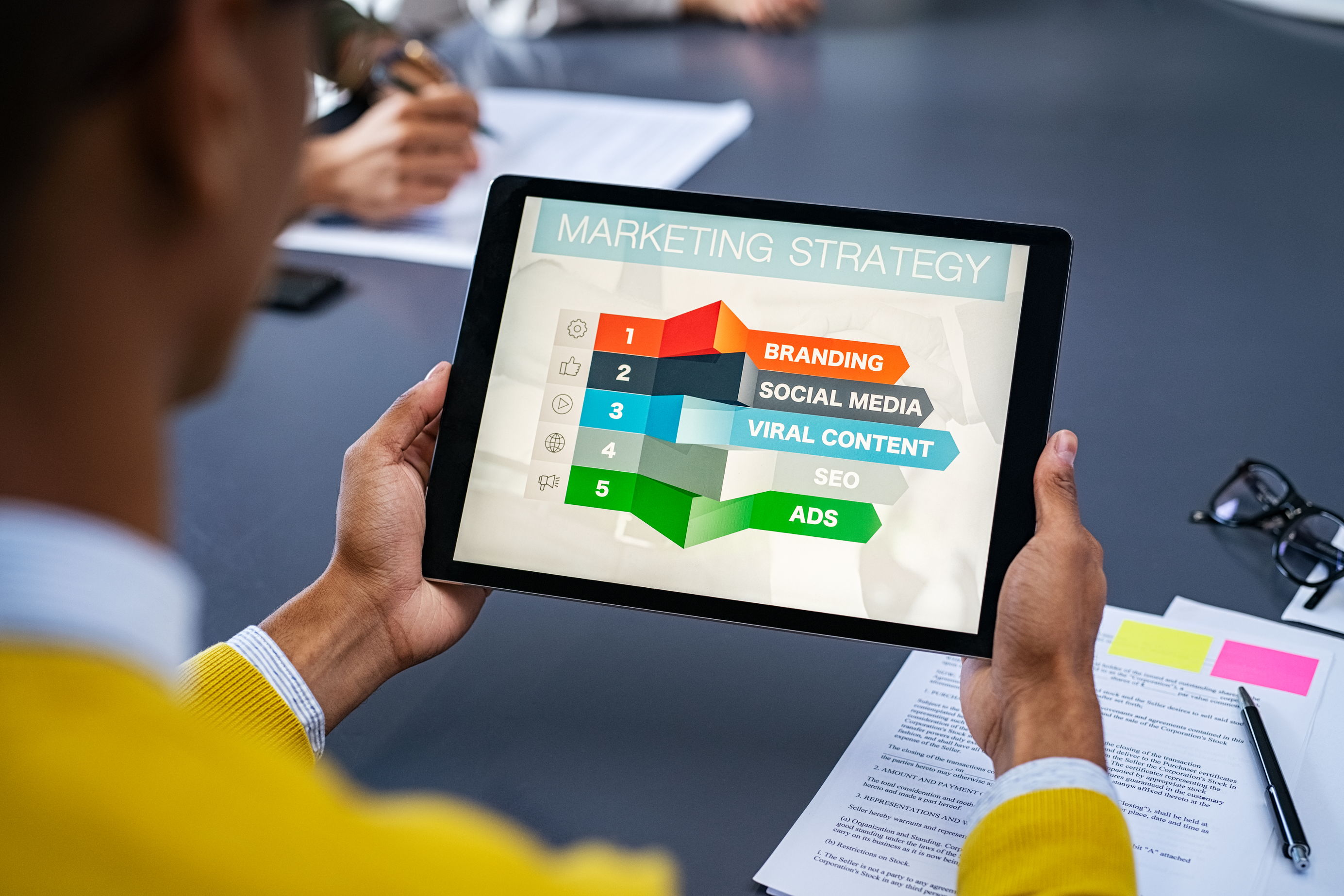
How personalized marketing can boost e-commerce sales to astonishing levels.
If you are not using personalized marketing for your business or company, you are definitely losing out in sales and revenue.
Offering a great customer experience through eCommerce is not enough; you need to devise ways to drive in more traffic to your platform which will help you stand out among your competitors in today’s competitive and challenging consumer market.
One of the ways through which you can achieve both increased customer satisfaction and drive more traffic to your site is through personalized marketing.
What Is personalized marketing?
Personalized marketing or one-to-one marketing is a strategy through which businesses deliver individualized content to clients. The content is based on the client’s personal data, past searches, history of purchase, location and interests.
The content varies depending on the services or products that a business is offering. However, the most basic content includes discounts, tips, topical articles, and product or service offers.
Why is personalized marketing important?
Despite personalized marketing being a huge eCommerce sales boost, few companies are using it. Most companies tend to concentrate on building a secure eCommerce platform, forgetting that this alone cannot help them achieve their desired goals.
Personalized marketing has these specific benefits which go well beyond simply having an efficient eCommerce platform.
— First, it saves customers time. Under normal circumstances, whenever they visit an online site, they receive numerous ads, videos and articles, most of which are irrelevant. But personalized content only feeds them relevant value-adding content.
— Second, it increases the time a prospective customer spends on your site. If customers find useful information on your platform, they are likely to spend more time there and they are more likely to end up making a purchase. Furthermore, an increase in onsite time reduces bounce rates, which is beneficial to your SEO.
— Last but not least, it increases your eCommerce sales. Valuable content brings about more customer satisfaction and enhances brand building. Satisfied customers are likely to come back for more purchases and also refer others to your site which, in turn further increases your sales.
How to create personalized content
Creating personalized content requires you to collect specific data regarding your clients. Such data include name, contact, email address, location, viewed products, purchases and wish lists. Ensure that you inform the clients that you are collecting their data and how you intend to use it. Additionally, make sure that you get a go-ahead from them.
How to use personalized marketing to boost sales?
Here’s a few suggestions on how to implement a personalized strategy in your business.
▪️ Banners for new clients — Your site’s first impression is crucial for any new user. Ensure that you have a welcoming shopping theme to attract more clients. A small welcome gesture such as a discount goes a long way in attracting new customers. A banner containing a welcome discount for new customers prompts them to register and purchase products from your site.
▪️ Personalize pages based on search history — Once a customer registers in your site, ensure that you track their search or browsing history. This search history offers a basis for the products you will display at their pages upon their next visit to your site. The personalized lised page display saves customers time since the platform already knows the products they want.
▪️ Retarget your clients and offer them personalized ads — Retargeting is made possible through pixel codes, which sets a cookie in your client’s browser. If a client visits your site and leaves without making a purchase, you can follow them to their next browsing sessions. Here, your ad pops up based on their browsing history and captures their attention. This retargeting technique helps turn potential clients into actual buyers.
▪️ Display recently viewed items — Showing recently viewed items reminds customers of their interests. You can create a wish list on your site, allowing customers to save their most preferred items. Based on the items in the wish list, you can send clients coupons or emails if any of those products have an offer.
▪️ Personalized emails — Emails are the most personal form of online contact. Sending personalized emails aims at informing customers when a product they had shown interest in has a discount. Ensure that you include the client’s name in the subject of the email to capture their attention.
Conclusion
To derive the most from your personalized marketing techniques, you need to keep up with digital marketing trends such as social media marketing and SEO.
Personalized marketing is a useful competitive tool in the world market today. If you are not sure about applying personalized marketing strategies, the tips mentioned above will significantly guide you. Implement them today to give your business a new twist, boost your eCommerce sales and remain different from your competitors.
— Monica Lee is a passionate writer and content creator. Her interests include outdoor activities, fitness, technology, entrepreneurship and everything in between. Say hi to Monica on Twitter @monical_lee.

- Posted 10.3.20 at 04:00 am by Roy Osing
- Permalink
September 28, 2020
6 simple ways leaders can manage change better

Source: Pexels
6 simple ways leaders can manage change better.
There’s always a quid pro quo to successfully implement any new idea.
‘If I accept your direction and agree to help you (execute it) what do I get in return?’ is the hidden question behind any change.
‘What’s in it for me?’ is the question that most implementation planning rarely asks.
It’s expected that the idea will sell itself.
That people in the organization will see the light and rally behind it regardless of personal consequences. That their loyalty to the organization (and receiving a regular paycheque) will trump any negative impact the change may have on them individually.
This is rubbish of course but I would say the majority of changes sought by organizations do NOT have the detailed ‘What’s in it for me?’ work done to make them successful.
I was recently asked by a major corporation to speak to their management team on the subject of change management. Their board had decided to move the organization to a new more modern building. Period.
The problem was that in the move, people lost many benefits they had in the old facility; smaller (or no) work stations and short commute times for example.
I was asked to come in and put a good face on the decision and provide some tips on how to deal with the employee fallout that was happening.
My challenge was that they had not done the ‘What’s in it for me?’ work as a part of the implementation planning. Or if it was considered it was assumed not to be a big deal; that employees would be persuaded that the bigger picture would outweigh any impact the move would have on them personally.
And they would buy in.
Not likely.
Employee buy-in only happens when people can see personal benefits.
Hygiene factors such as a more comfortable work environment and a shorter distance to work; career factors such as greater promotion potential and salary lift all play a more important role than the ‘strategic benefits’ of the planned change.
What are your options to sell the change if it is asymmetric in favour of the organization, and the planned change removes benefits for employees?
1. Come clean — Own up to the potential personal negatives the decision could cause for people. Trying to put lipstick on a pig and finess the downside exacerbates the situation; it just doesn’t work.
It’s best to acknowledge the negatives as well as the positives and declare what you’re planning to do to mitigate personal risk to employees.
2. Meet with employees — Pick a sample of employees and do a ZOOM call to get a more granular understanding of the personal negatives of the change.
Ideally, this should be done before the change is announced, but if it hasn’t, it’s critical that it be done before the decision is implemented.
And for the negatives expressed, ask for solutions that could be employed to keep the decision intact.
3. Emphasize the personal positives — Put the conversation on the benefits the change will have on the organization on the back burner and focus more on what it will do for people (and if you think that conversation will be light on content then be prepared to have a change that is good on paper only).
And balance the discussion between short term and long term benefits. If there are negatives in the short term, explain how people will be better off tomorrow — be as specific as you can and avoid lofty, ill-defined and vague benefits that people will not relate to — that and also what leadership intends to do to cushion people from the immediate ‘pain’ some will likely experience.
4. Be available 24X7 — It’s critical for leaders to be ’always on’ to answer any questions individuals have on the change. It’s not sufficient to only host employee group meetings because some individuals won’t be comfortable asking their own personal questions in front of their peers.
Establish a dedicated telephone number or email address for people to connect with leadership and staff the support service with your most empathetic and caring people not staffers who want to push the high level strategic reasons for the change.
5. Sweeten the offer— If you find substantial resistance to your change idea, add some personal positives to the plan in recognition of what is being taken away.
In the final analysis, if you don’t do something positive to assuage the negative feelings employees have, the change will fail so if you have to make an extra investment, make it; the return will be worth it.
6. Put leadership on the hot seat — Hold the authors of the change accountable in front of the body of employees to defend the change. This is something a leader can’t delegate to one of their lieutenants.
Leaders accountable for the change decision need to feel the hot breath of angered employees to appreciate the personal negatives of the plan. Take the punch; the leadership brand is at stake.
Any planned change requires quid pro quo work if implementation is to succeed.
Don’t rely on lofty strategic reasons to persuade anyone to support change efforts.
Make it personal.
Cheers,
Roy
Check out my BE DiFFERENT or be dead book series
- Posted 9.28.20 at 06:17 am by Roy Osing
- Permalink
September 26, 2020
How genuine personal branding can be used to market yourself to success

Source: Pexels
How genuine personal branding can be used to market yourself to success.
In today’s workplace, personal branding is essential to stay ahead of your competition. But what is personal branding, and how can you use it?
Below, I detail the best ways to market yourself with personal branding as well as tips from the most successful examples of personal branding.
Personal branding is the combination of your skills, image, experiences, and personality that makes up how people view you. Because of this, personal branding is a fantastic way to make your mark at work.
Whether you’re a salesperson looking to become the best or a graphic designer wanting to showcase your work, personal branding is a strong place to start off from to succeed.
There are numerous benefits to building a personal brand. From being able to convey your value to recruiters in a way that your resume can’t build trust with your audience, creating a stellar personal brand is a sure-fire way to stand out amongst the rest.
It’s clear that your personal brand can help supercharge your job search. To learn everything you need to know to make your mark with personal branding, check out this infographic by Resume Now.
— Michaela Wong is a content creator and graduate of San Diego State University who covers career development, personal advancement, human resources, and more.


- Posted 9.26.20 at 08:09 am by Roy Osing
- Permalink
September 21, 2020
Why leaders who actually ‘serve around’ are the best ones

Source: Pexels
Why leaders who actually ‘serve around’ are the best ones.
Popularity breeds, in some circles, believability. What is a popular notion soon becomes the belief of the day.
It’s the age of movements
There are many popular concerns in the world today that define the conversation around what’s important — topics such as COVID-19, women’s rights, ‘black lives matter’, drug decriminalization, sexual misconduct, sexual orientation, climate change, the environment, indigenous rights, pipelines, and the charter of rights & freedoms tend to define some of the popular narrative in society in these times, and the priorities people turn their attention to.
In a relative sense, not much attention is given to the people who define the economic agenda of society — the leaders of our organizations whose quality of leadership defines how people live their lives in the other pluralistic society that engulfs them. Their daily environment is shaped by how they are treated; how they are motivated and how they are engaged in fulfilling the strategic agenda of their organization.
And when attention is paid to the topic of leadership it is typically dealt from an academic and theoretical perspective.
Studies discovering relationships between leadership behaviours and employee performance are discussed and conclusions reached on the skills people should possess if they want to aspire to be an amazing leader.
Rarely are emotions targeted as the means to hook people to engage in a leadership conversation; certainly the same cannot be said about debates on the environment, oil pipelines and allegations of sexual misconduct.
These topics are dripping with emotion — how people feel about something often dominates the position you take rather than the facts presented.
Leadership isn’t a ‘sexy’ topic
Certainly other social narratives get more emotional conversations going than leadership.
This is unfortunate. The practice of leadership is every bit as important as any other social narrative. People spend most of their life in a working context with a boss they coexist with.
And it is the boss’s skills, capabilities and attitudes that can impact the lives of individuals much more than any movement could.
But I’m not talking about the same-old traditional leadership practices borne out of a more theoretical view of the art; rather I’m referring to a new style of leadership that has grown up in the trenches where real people work and profound performance is achieved.
It’s a practical leadership approach grown from knowing what it takes to ignite the passion and emotion in people to achieve the organization’s goals and objectives.
The next generation of leader
Leadership by Serving Around — LBSA — is next generation. It’s the imperative if people are to have meaningful and rewarding careers and if organizations are to stand apart from their competitors and achieve remarkable levels of performance.
Organizations exist to serve. Period. Leaders live to serve. Period. — Tom Peters, author of excellence
It’s a fashionable notion because it relates to the fundamental human needs of people to feel they have a compelling purpose and that they are needed and cared for.
And it’s different from its predecessor, MBWA — Management by Wandering Around — where managers wander through the workplace without a whole lot of focus, trying to ‘find out what’s going on’. MBWA is relatively undisciplined with the intent of discovering clues on team performance, observing the efficiency of business processes and trying to spot dysfunction that impedes productivity.
There’s nothing wrong with MBWA, but it doesn’t go far enough to create teams of passionate, turned-on people necessary to ensure organizations thrive and survive in today’s highly unpredictable and volatile world.
Here’s how LBSA works: Leaders purposefully go through the workplace with a strategic purpose, looking for serving moments or opportunities to help someone.
Managers ask: “What’s going on?”
Serving Leaders ask: “What can I do to help you?”
The leader’s agenda is to offer personal help, recognizing that if someone’s individual problems are solved, performance enhancement follows. If you take care of the person, performance takes care of itself.
Serving leaders are the icons of tomorrow. They earn followers through an undying display of caring for people and their wellbeing
This is what LBSA looks like:
1. Question
Leaders ask; they don’t tell. They are not present to give a presentation on anything.
Their serving job is to listen to what people have to say about what’s going on in their world as opposed to directing them on what they have to do.
They know they don’t know; that the people in the organization are the experts, so they ask them. These leaders have conversations that have a minimal transmission element. Their communications style invites commentary, opinion and the truth on what needs to be changed.
2. Help
The key questions they ask are: ‘How can I help?’; ‘What key changes should be made to enable you to do your job easier?’; ‘What do you think about…?’
They see themselves as instruments to make life easier and more productive for others. If this leader can remove roadblocks and barriers that prevent people from doing their job, they know results will skyrocket.
Apart from a one-on-one engagement — and appropriate physical distancing of course — with an employee, LBSA can be extremely effective with groups of people.
I tagged the process ‘Bear Pit Session’. I assembled a group of people in my organization and went through the ‘How can I help?’ process. I structured each audience to give me a good cross section of the functions in the organization that were pivotal to the success of its strategy and where execution was critical.
Each session guided me to where I could affect change and improve performance (and get to know the up-and-comers who had the potential to assume leadership positions in the future).
3. Notes
They take notes, lots of notes. This shows the leader believes what employees say is important — because it is — and that their words are taken seriously and they will be supported.
Standout leaders get a ton of writer’s cramp every time they go out of their office.
They pay particular attention to people’s names and something interesting or special about them, which is often useful in follow up. Note taking shows that a leader cares about what people have to say and is one of the simplest and powerful ways to evoke emotion from the questionee.
4. Homework
They are prepared. They determine what and where the issues are and serve around according to what they learn. For example, they would visit the customer service operations if customer feedback suggests improvements are needed in that area; if sales needs a boost, they serve there.
Serving around isn’t a fluffy thing to do; it’s not about showing up spontaneously and chatting up employees to showcase the leader’s charisma and people skills. On the contrary, serving is a ‘hard act’ with a defined strategic purpose and specific expected outcomes. And to fulfil its prime purpose it requires meticulous planning. No homework = no results.
5. Solo
They fly solo when they serve around; they lose their entourage and groupies.
They explicitly don’t want any filters between what people say and what message they take away. The manager groupy crowd always has an agenda to protect themselves from their leaders and they try to do this by managing — controlling — the flow of information between the employees they have reporting to them and the boss.
To be effective, serving cannot have any filters. It must be a personal leadership act.
If you’re uncomfortable with flying solo and you feel you need backup, you shouldn’t lead.
6. Repetition
They routinely allocate time on their calendars every week to serve around. They know that a serving moment cannot be seen from an office bubble. Serving is hardwired into their list of priorities.
The routinization of the task actually makes it more effective as time goes on.
The word gets out that Roy serves regularly by either one-on-one conversations or by bear pit sessions and people proactively prepare for the event when they get their opportunity to participate. Their input is clear and more focused and is easier to respond to to make any changes required.
7. Listen
Because their primary role is to question, they shy away from giving stump speeches, monologues or presentations. They share information when asked but would rather assume the role of absorbing information.
For most leaders, this is extremely difficult because of their ego. They find it difficult to resist the temptation to share their words of wisdom or pronounce something that they think is thoughtful and wise.
Serving leaders know to zip their mouths and open their other senses.
They give people time to tell their story; they interrupt only to clarify the points made to ensure that any action they take will have the right outcome.
8. Humility
They are humble. They don’t create a splash wherever they go. They are the antithesis of what most people view these days as a stereotypical leader.
They don’t need charisma to be effective; that veneer isn’t consistent with who they are. They leave their ego at the door.
People like the serving leader because they are like a ‘normal’ person rather than the stereotypical leader who for some reason is portrayed to be ‘above’ the common employee.
I’ve always considered humility to be a strategic attribute of an effective leader because it invokes trust, believability, engagement, and commitment from the people the leader touches.
Simplicity inspires humility. The serving leader understands that complexity often gets in the way of achieving superlative results. They wrote the book on dumbing stuff down for people.
9. Practicality
They are practical in orientation. They’re unimpressed with theoretical concepts that can’t be implemented.
They are more receptive to ideas they believe are both consistent with the strategic intent of their organization and are likely to have strong support by people who would be asked to implement them.
Their ‘would they be emotionally all-in?’ filters dominate their decision-making on potential innovation and they test new ideas with the frontline and in their bear pit sessions.
10. Defective solutions
They are not only ok with defects and flaws, they insist that people focus on making as many tries as possible rather than seeking the ‘perfect’ solution before taking action.
They encourage people to try as many imperfect solutions as they can, and preach that the more tries made the more likely that success will eventually be achieved.
Serving leadership addresses a compelling societal need — to create organizations with a human face where people can grow, prosper and be valued.
It’s not a cause or fad that will fade with limited media life. In fact it won’t attract the traditional and social media attention that other current narratives garner.
It is a sustaining force because of its universal — rather than special interest group — appeal.
Cheers,
Roy
Check out my BE DiFFERENT or be dead book series
- Posted 9.21.20 at 04:23 am by Roy Osing
- Permalink