Roy's Blog: September 2020
September 5, 2020
7 exciting bucket list ideas to consider when you want to retire

7 exciting bucket list ideas to consider when you want to retire.
If you’re like majority of people, your biggest retirement concern is likely whether or not you’ll have enough saved when it comes time to step back from your career. If you aren’t careful, you can find yourself focusing so much on your retirement finances that you forget to plan anything else.
That might not seem like a big deal, but it’s part of the reason that the probability of experiencing clinical depression rises by about 40 percent after retirement.
When people concentrate all of their energies on making sure they can retire, they’re much more likely to feel lost once they actually do.
As you begin thinking about your retirement lifestyle, one tool you may consider is a bucket list.
Bucket lists can be great for bringing an element of specificity to your plans for your future, but only if approached the right way. Many bucket lists are comprised entirely of extreme, once-in-a-lifetime goals that are more fantasy than reality.
While these “wish” style bucket lists are great, they won’t bring you any closer to crafting a specific image of what your day-to-day will look like in retirement.
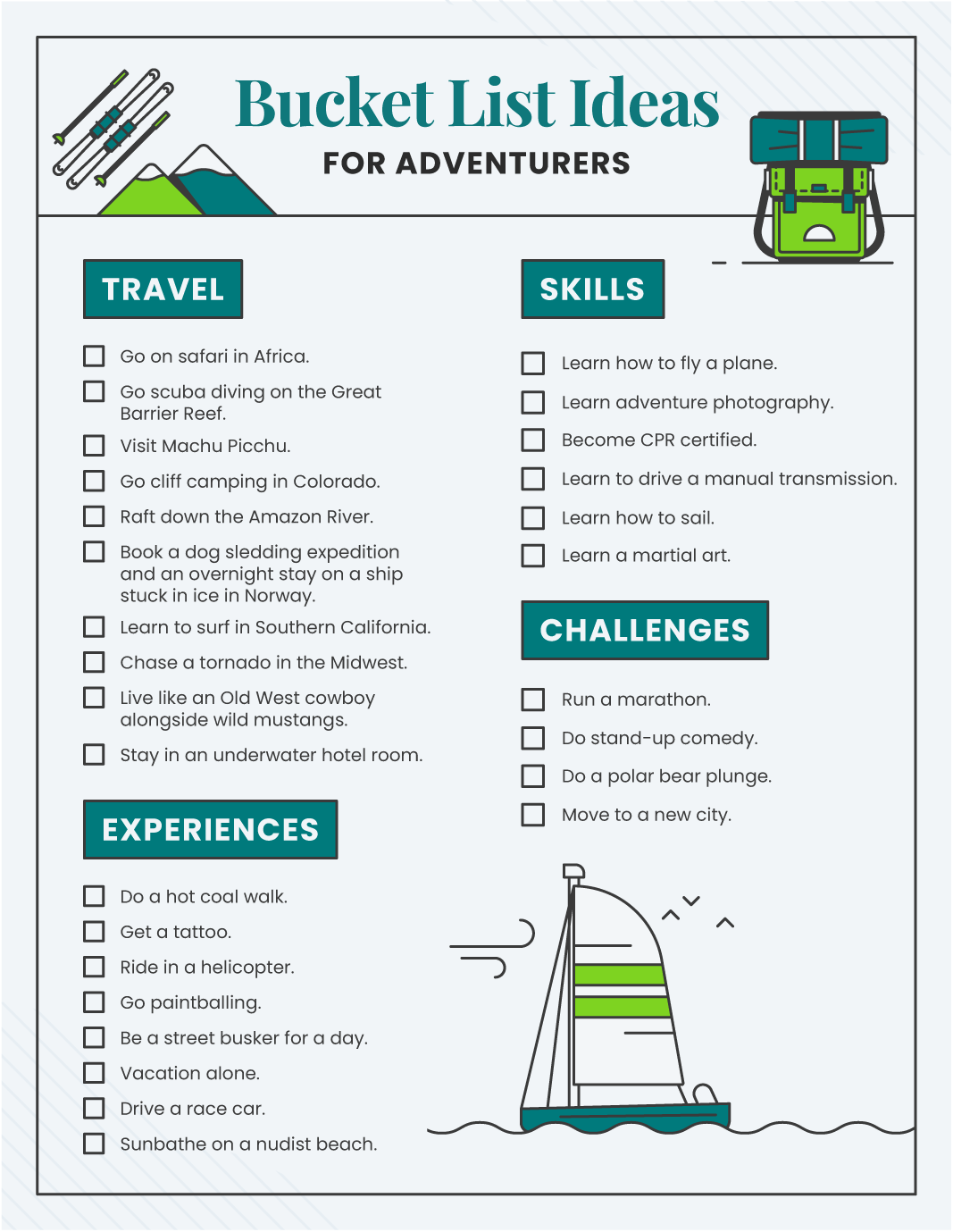
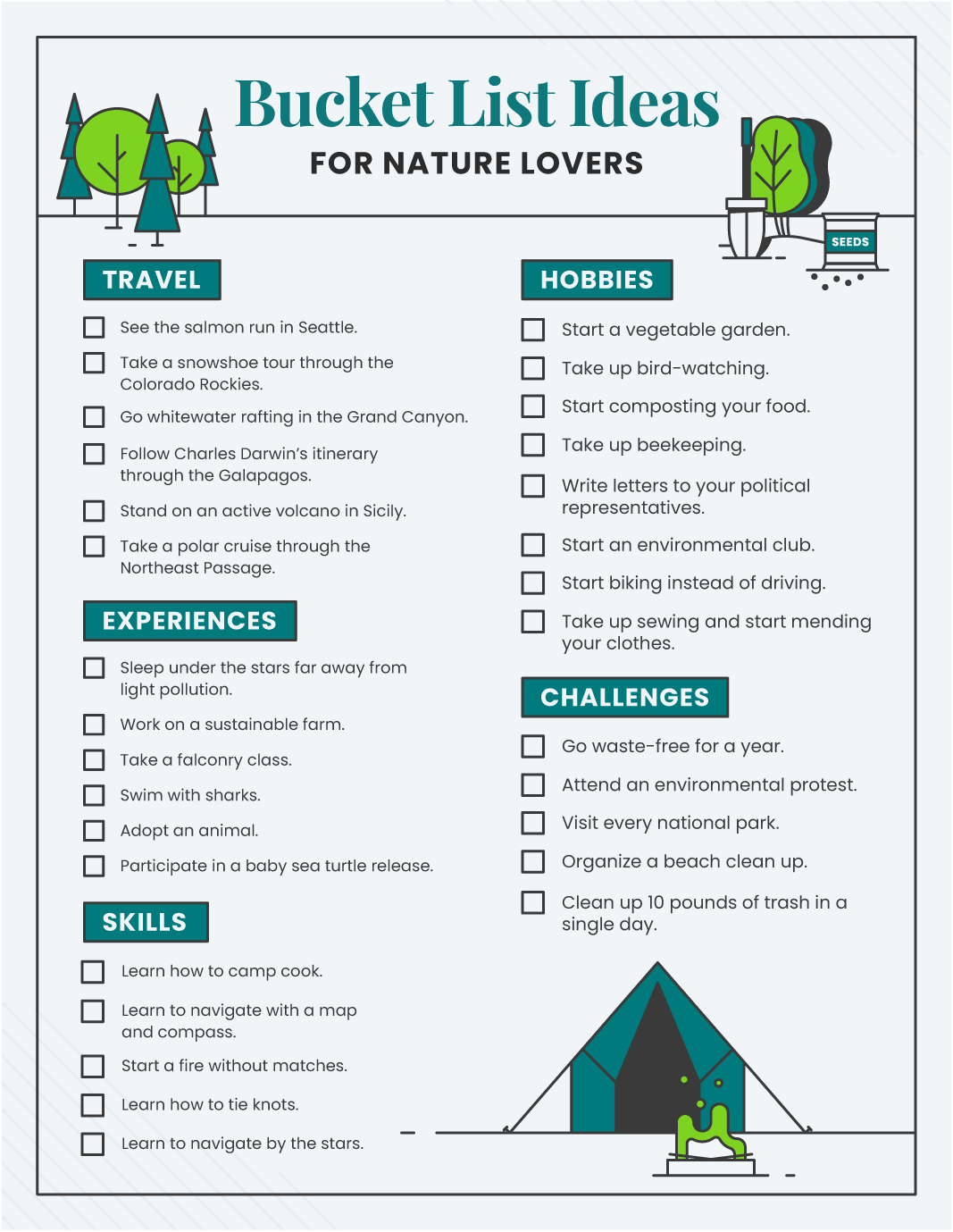
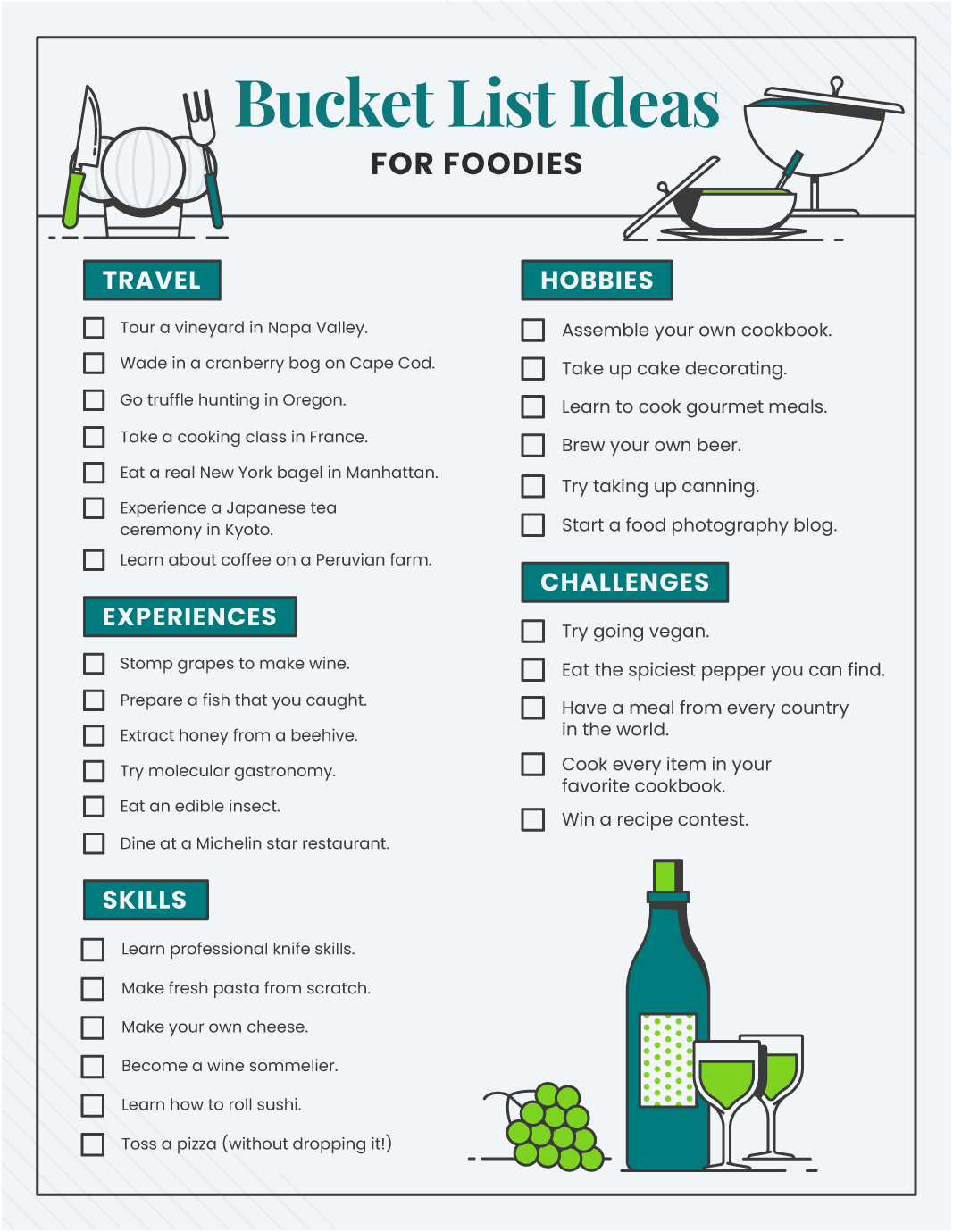
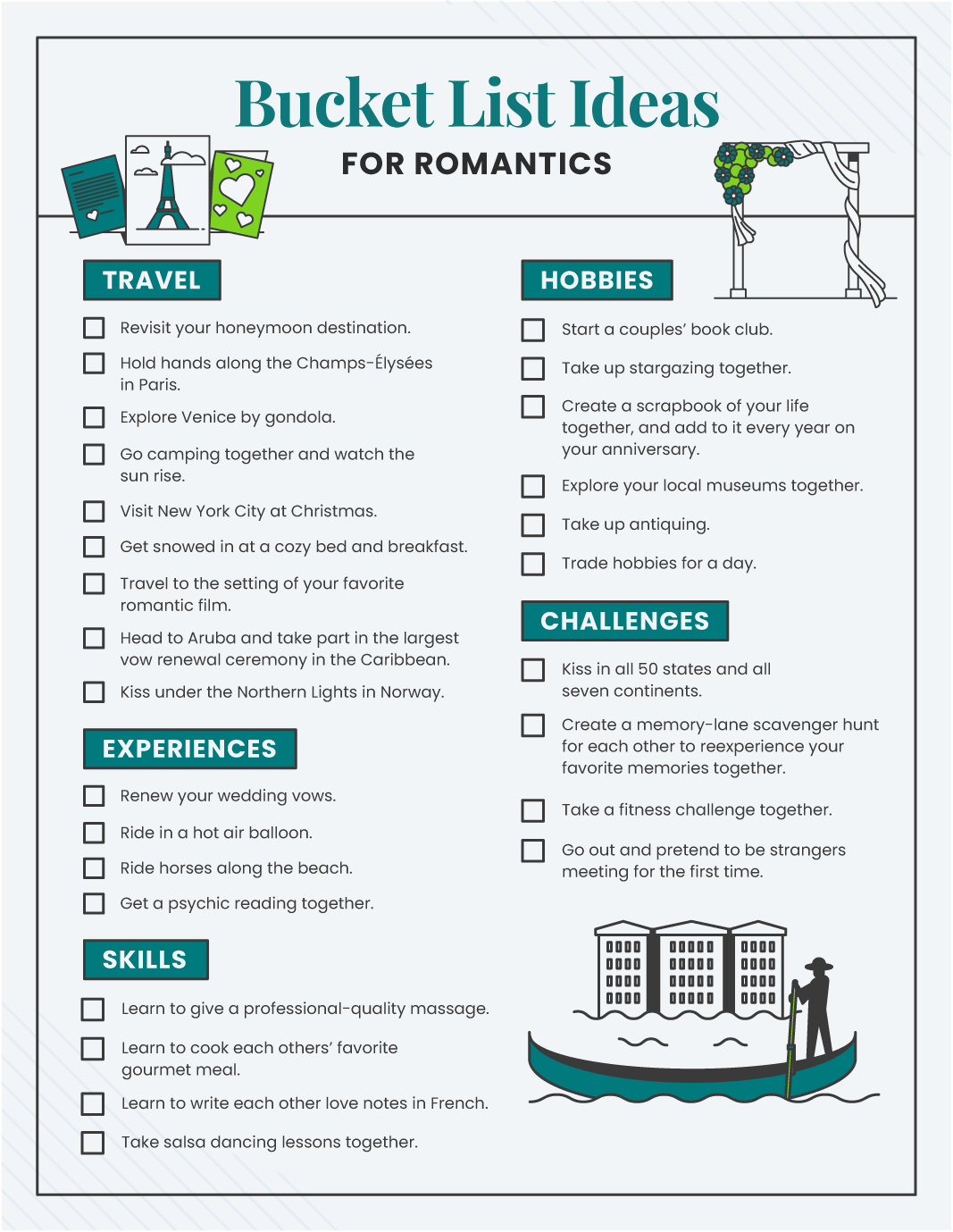
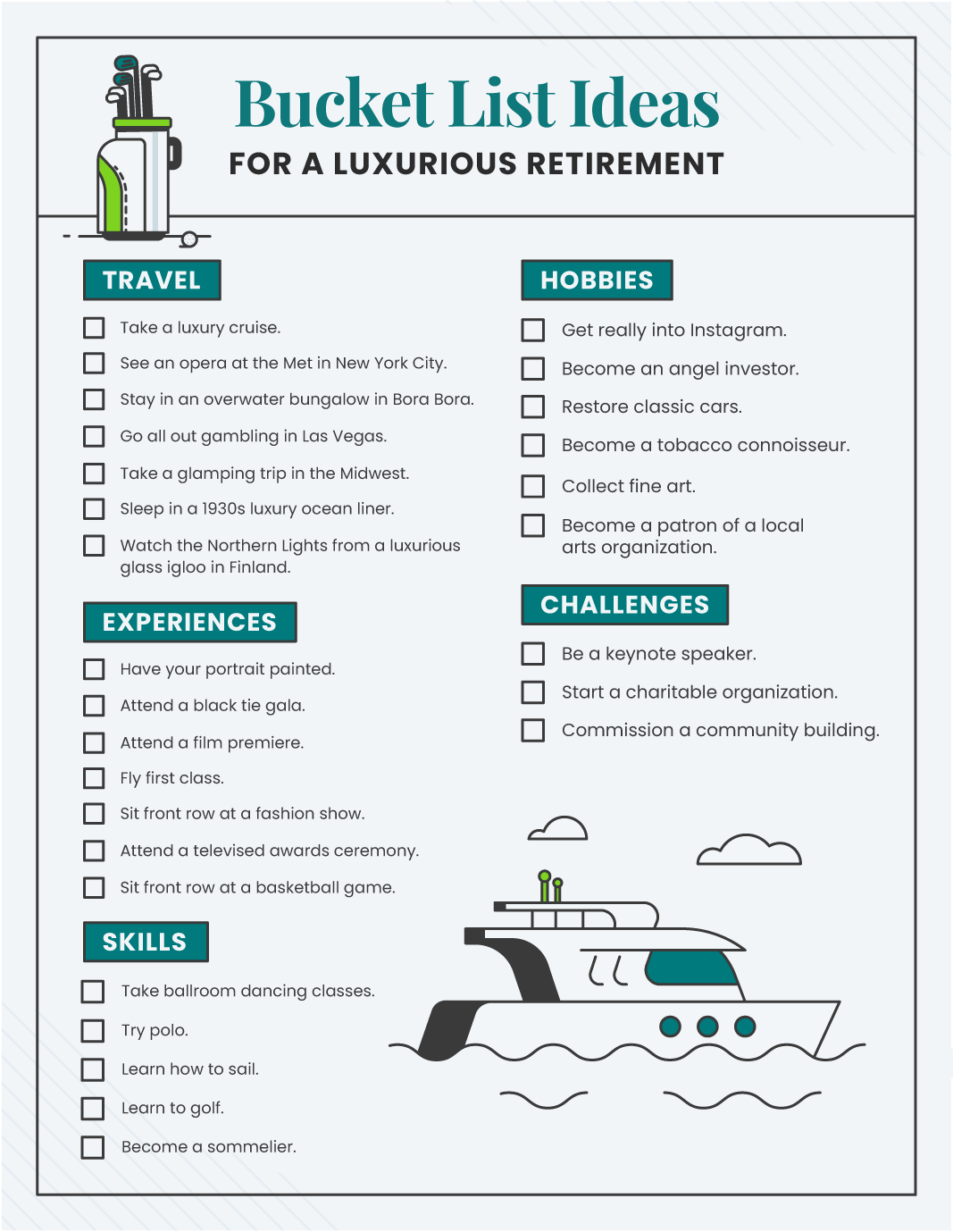
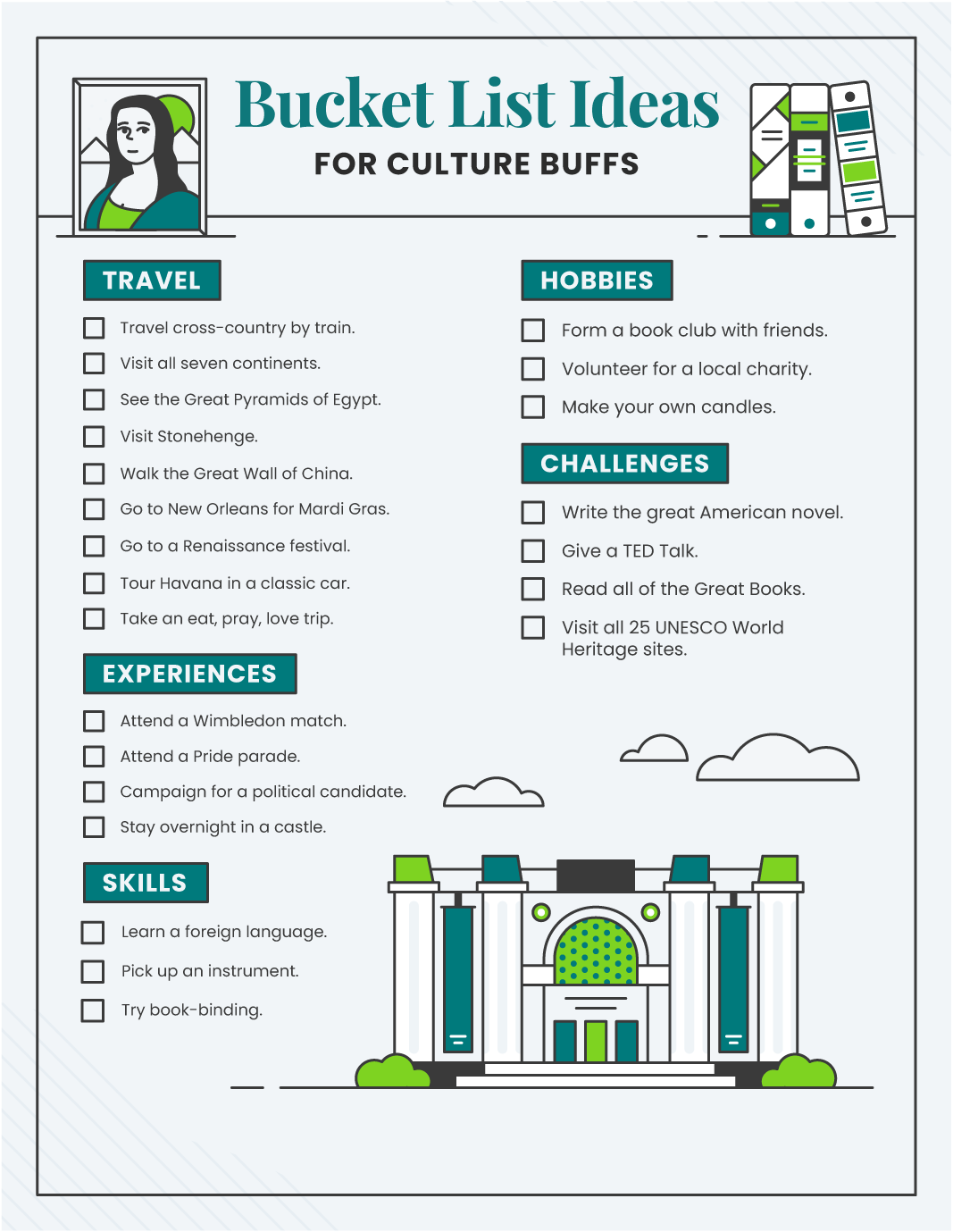
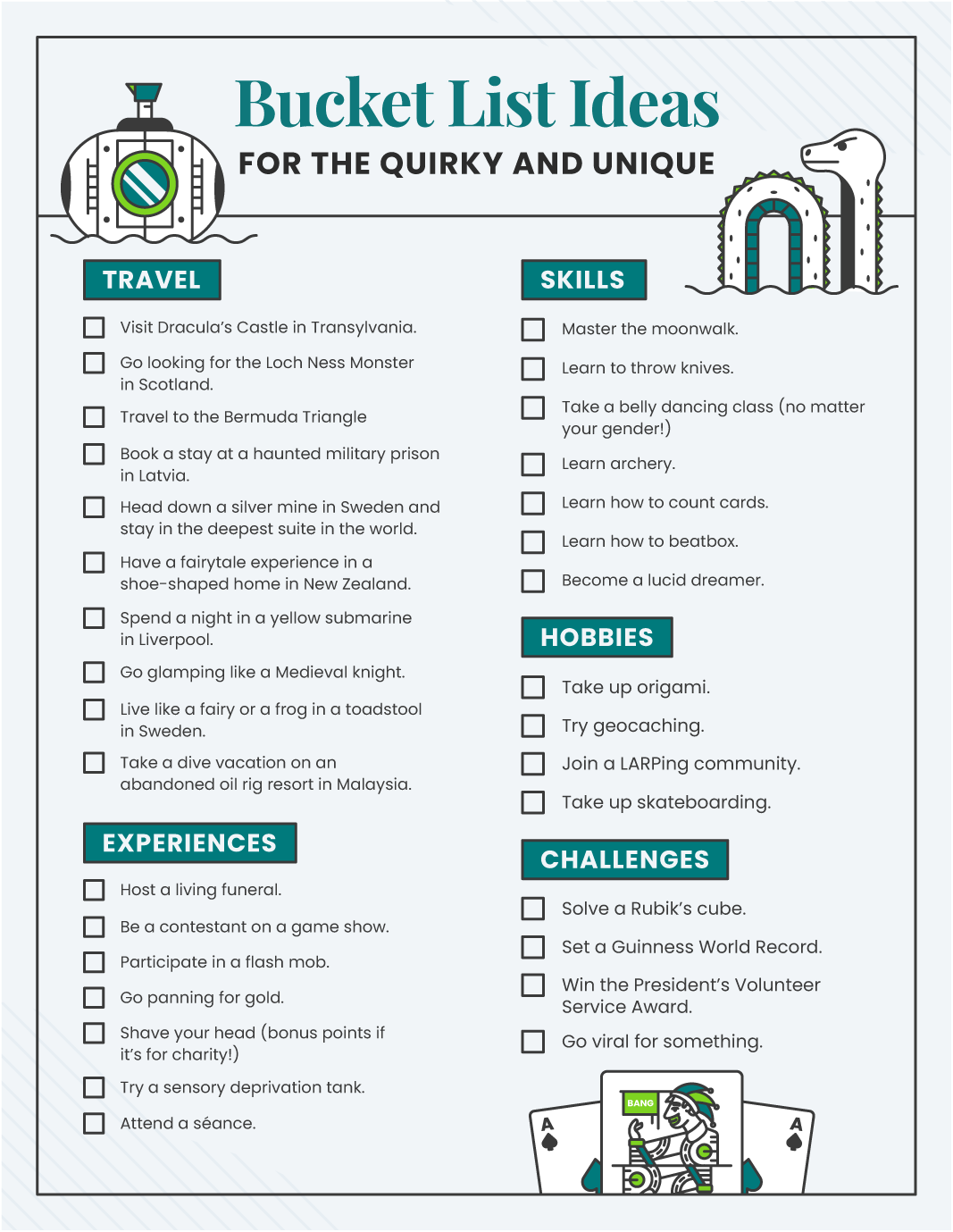
Consider getting started with one of these printable retirement bucket lists, created by the team at Annuity.org.
Each of the seven lists is catered to a particular lifestyle, and they all have sections for hobbies, challenges, experiences, skills, and travel to help you flesh out your ideal retirement life. You can start with one of these lists and modify or add to it as you go.
Having a concrete list of ideals will also help you budget accurately for retirement — those who opt for the “luxurious” bucket list will likely need larger savings than those who select the list for nature lovers.







— Amanda Pell is a writer and content strategist who specializes in personal finance and lifehacking content, covering everything from moving tips to investment ideas to travel hacks and more. When she’s not knee-deep in research, you’ll likely find her hiking with her dog or with her nose in a good book.

- Posted 9.5.20 at 05:10 am by Roy Osing
- Permalink
August 31, 2020
5 effective things nosy leaders do that make them great

Source: Pexels
5 effective things nosy leaders do that make them great.
Nosy neighbours. Nosy friends. Nosy colleagues. Nosy acquaintances.
The adjective ‘nosy’ refers to someone who shows too much curiosity about other people’s affairs.
It’s a tag or label that connotes a negative attribute or character; one that most people frown upon. It represents the unwanted invasion of one’s space and the inappropriate probing into another person’s affairs.
Notwithstanding the refutation of the worthwhileness of nosy, I suggest that there IS a noble place for nosy and it lies in the conversation about what makes a great leader.
It’s not a leadership trait that you hear discussed in the hallways of organizations or in leadership seminars.
Nosy is a topic that doesn’t befriend common leadership concepts like delegation, objective setting, empowerment, financial analysis, visioning and so on; it’s viewed as a repugnant leader trait to possess.
I’m on the other side of whether or not nosiness is an attribute that leaders should have if they want to stand out and be great.
I think great leaders are nosy; here’s why:
1. Probing Proboscis
They stick their nose in everything they consider important to the execution of the business plan Of the organization. They know which functions are critical and what projects will determine success or failure.
So they make a point of probing the status of crucial activities and asking how they can help remove any impediments in the way of moving forward to the expected goal.
Every day of the week they stick their nose into something different. And they do it personally with no backup entourage. They want to personally understand what’s going on and what needs to be done to improve performance.
The Probing Proboscis sees their role to determine barriers to strategy execution and to provide the lubricant necessary to keep things moving.
2. Explorers
Their nosiness into everyone’s affairs is their way to gain insights from their activity. Action begets either success or failure and regardless of the outcome produces learning that can be used to discover new things to do and new opportunities to pursue.
A glitch in a new product launch may open up a new application that wasn’t anticipated and the nosy leader wants to be involved in the activity stream so they can spot it and witness it first hand.
The nosy leader discovers useful new stuff because they’re immersed in what others are doing.
Nosy engagement stimulates innovation; the nosy leader is the catalyst.
3. Discomfort raisers
There is usually a wake of discomfort created in the workplace when the nosy leader starts their invasive interest in a particular subject area.
Sure, discomfort raises a certain amount of anxiety in the crowd around the nosy leader, but it is a healthy force. Crowd members are required to be on their ‘A Game’ and find ways to perform at a higher level.
The nosy leader’s presence intervenes in any complacency going on in the workplace; they interfere with the momentum of ‘the way things are done around here’.
It’s healthy for individuals to not take things for granted because it challenges them to be more creative and productive. If they’re on edge because of nosy, too bad. They need to get over it.
4. Discontinuity creators
Nosy leaders sometimes change the trajectory of the activity stream they’re exploring. It could be because of a question they ask: ‘Why are you going it that way?’ which makes an employee question their current approach and decide to change it.
Or it could be as a result of a directive the leader issues when witnessing action that is inconsistent with what the organization wants.
Either way, current momentum is disrupted and a new direction is suddenly imposed on the workflow that is in the nosy leader’s crosshairs.
An abrupt change in direction on anything is positive; it removes the old and makes way for the new.
5. Talent finders
As the nosy ones probe everything around them, they stumble upon interesting people who have unique skills that can be put to use elsewhere. And without having their noses firmly embedded in the activity of the organization it is highly unlikely that their talent discoveries would ever have occurred.
It’s a collateral benefit to rubbing shoulders with people who are busy trying to do their jobs to achieve the objectives expected of them.
Every organization has talent nuggets among their employees just waiting to be discovered.
The nosy leader is always on the lookout for people who stand out; who they notice and pay attention to. High achievers are discovered and everyone benefits.
Nosy leaders are effective because they want details of what’s going on in their organization, and they want it first hand without the filtering of middle management and others ‘below’ them in the hierarchy.
If it makes employees or peer leaders uncomfortable then that’s the price paid for an intervention aimed at making the organization better.
Cheers,
Roy
Check out my BE DiFFERENT or be dead book series
- Posted 8.31.20 at 05:07 am by Roy Osing
- Permalink
August 24, 2020
Why a serious unexpected event should be called an emergency by leaders

Source: Pexels
Why a serious unexpected event should be called an emergency by leaders.
What is ‘situational awareness’?
Jillian Horton, a Canadian internist and writer describes situational awareness as:
“...a learned ability to notice and interpret what is happening around us so we are prepared for what might happen next. Critically, it also allows us to anticipate and navigate common thinking and behaviour traps. The latter is especially important because our situational awareness in emergencies can be unduly influenced by the behaviour – including the under-reactivity – of those around us.”
Why are people situationally unaware, and what behaviours are common?
Ms Horton explains:
“Some of the answer is rooted in our wiring. Our behavioural responses are both learned and dependent on our environment, and when we encounter unfamiliar situations we often revert to a default setting: looking at what others are doing. We’re aware of the pandemic, but because people around us aren’t wearing masks, we’re tricked into thinking that what they’re doing must be right.”
“...our perceptions can also be heavily influenced by what we want to be true – a cognitive misstep known as affective error.’
It’s the inability of a person to ‘...recognize or label their experiences as an emergency and, as a result, (be) unprepared for the consequences.”
So, situationally unaware individuals don’t label unexpected events that start to impact them as emergencies and as a result are unprepared for what could happen to them; in unfamiliar circumstances they look to the crowd around them for the right way forward and they don’t want to believe that there is a calamity likely to befall them.
I think there is a striking parallel between what she discusses as the vulnerability we all face through a lack of situational awareness particularly in the current COVID environment, and the jeopardy leaders pose to their organizations when functional situational awareness skills are not present.
What leaders can do to improve their situational awareness?
1. Emergency mind set
Ms Horton:
“...people in charge must be able to label what they are experiencing ‘...as an emergency” so they can prepare themselves for the consequences. Leaders must be alert and highly sensitive to forces around them that could have drastic consequences on their organizations if they play out the way they ultimately could.
There are several challenges leaders face to prepare themselves to spot a potentially cataclysmic event that could ruin their organization and to call it what it is.
Leaders generally delegate most of the ‘spotting’ responsibility to others so they never have their finger directly on the pulse of what’s going on in their environment; they rarely are able to feel the power of events afflicting them.
Leaders must shed the traditional notion of delegation and take on a more active role in reading and evaluating the ongoing changes impacting them.
And they need to use the ‘emergency’ label when they feel the impending changes could have severe consequences on their business and stop underplaying the importance of the unexpected.
They don’t have to ‘cry wolf’ constantly but shouldn’t be afraid to call it when the consequences could be dire. No plaudits are given to the leader who avoids overkill because they don’t want to raise unnecessary concern among investors and employees but pushes their organization over the cliff because they didn’t.
Ring the alarm bell when you think trouble’s brewing, and prepare for what could happen if you’re right.
2. Social proof
Ms Horton:
“...when we encounter unfamiliar situations we often revert to a default setting: looking at what others are doing. This concept is known as social proof. We’re aware of the pandemic, but because people around us aren’t wearing masks, we’re tricked into thinking that what they’re doing must be right.”
Leaders absolutely cannot be influenced by those around them and assume that the appropriate response to the emergency is to do what the crowd around them does.
This is what I would call benchmarking on steroids because of the likelihood in this instance that copying kills.
Copying best in class organizations is too commonplace in organizations today and it is encouraged by leadership. Unfortunately it’s disguised as innovation when in fact it’s anything but that. It’s a lazy way of deciding how to rise to a challenge a leader faces.
One choice is to scour the landscape for an organization that has found an effective solution and try to adopt it; the second choice is to observe what others have done and morph their approaches into something that uniquely works for you.
Leaders should be encouraged to discover a solution that has their organization’s fingerprints on it; that fits their circumstances like a glove because this is the only way to be more confident in the results that can be expected.
They shouldn’t be ‘tricked’ into believing that the way some other organization addresses a problem is right for you. Adopting someone else’s solution and expecting that it will effectively work for you is nonsense — and it’s irresponsible.
Crowd observation and following their lead simply increases the crowd size and momentum for the wrong solution.
3. Affective error
Ms Horton:
“...our perceptions can also be heavily influenced by what we want to be true – a cognitive misstep known as affective error.”
So, maybe the sniffles are just allergies and maybe a low grade fever is just a cold. Yup. That’s it. I’m ok regardless of what’s going on around me.
Leaders face this situation all the time. A major client leaves for a competitor; customer service results are on a 90-day downward trend; new customer acquisition costs are 25% over budget and revenues are trending below plan.
And the behaviour I observe more often than not is to treat the situation as an aberration; something — a blip — that doesn’t have to be taken seriously because it more likely will correct itself in the coming months or years.
It’s a wait-and-see attitude that leaders take because they don’t want to believe that their plan is flawed and that they are actually witnessing its imperfection.
The leader’s affective error is that they want the plan to succeed and therefore they don’t believe the facts when they suggest otherwise
In this instance leaders must face the truth based on the facts presented to them. To wish them away based on some altruistic notion that they can will their truth to happen isn’t just bad leadership, it’s deadly to employees and shareholders.
Situational awareness learnings for the leader
▪️ Call any significant negative discontinuity an emergency to get you leaning into the potential consequences rather than away from them;
▪️ Never think that the crowd knows what’s best for you; letting those around you taint your reaction to an emergency is irresponsible and potentially deadly;
▪️ Listen to the facts; not your heart. React to what IS true rather to what you would LIKE to be true.
Cheers
Roy
Check out my BE DiFFERENT or be dead book series
- Posted 8.24.20 at 05:51 am by Roy Osing
- Permalink
August 22, 2020
How your Zoom interview can be incredibly powerful so you get the job

How your Zoom interview can be incredibly powerful so you get the job.
In the age of COVID-19, transitioning to virtual work can be a challenge. For those who are currently job hunting, it’s important to put your best foot forward for virtual interviews.
Although some think virtual interviews are very similar to phone interviews, there are some distinct video interview tips you should know to make sure you stand out above the rest.
1. Technology — When preparing for virtual interviews, it’s important to conduct a technology check so you can prevent any technical difficulties from occurring. To really stand out, be sure to set up professional-looking lighting and have a backup device ready to go just in case.
2. ’The eyes’ — Another often overlooked tip is to maintain virtual eye contact. Many people make the mistake of looking at themselves during an interview which, to the interviewer, seems like you are averting eye contact. By looking at the camera instead of your screen, you can impress the interviewer and give off an air of confidence and tech-savviness.
3. Wait — Lastly, be sure to account for the video and audio lag delay in an interview by waiting for a second after your interviewer finishes speaking to begin responding. This helps you avoid the awkwardness of cutting off your interviewer mid-thought (and can give you some extra time to organize your thoughts).
Virtual interviews can be tough. By following these tips, you can ensure you stand out from the others competing for your position. For a complete guide to nailing virtual interviews, check out the infographic by Resume Now below.
— Michaela Wong is a junior content marketing specialist and graduate of San Diego State University. She writes for a variety of clients ranging from career development to interior design.


- Posted 8.22.20 at 06:35 am by Roy Osing
- Permalink