



Roy's Blog: March 2023
March 20, 2023
What’s the audacious (but simple) formula to take a startup to a BILLION in sales?

Is there a formula to take a startup to a BILLION in sales?
Yup. But it’s not just about sales. This is not a treatise on sales techniques; FAR FROM IT! In fact sales plays a minor role in what it takes to get a BILLION.
In my seventh book, “Audacious ’Unheard-of Ways’ I Took a Startup to A BILLION IN SALES”, (https://www.bedifferentorbedead.com/blog/item/1328) I share with you the formula I discovered over my four-decade career as an entrepreneur, CMO and president.
I hope you check out my book for the details, but here are 8 snippets I hope will tweak your interest:
1. Business plan — You won’t make a dent in the BILLION if you spend all your time trying to perfect your plan to get your strategic intent ‘perfect’. I will show you how to develop my BILLION business plan that gets your end game ‘just about right’ and focuses on execution as the source to learn and tweak it on the run.
2. Tailor-made solutions — BILLION dollars in sales doesn’t come from a mass market solution marketing machine, rather a healthy mix of mass customized and individual tailor-made solutions with ME-NOW as the primary focus.
I will give you a step-by-step method of doing it based on what worked for me as CMO.
3. Premium pricing — Pricing on the journey to a BILLION is about being a premium price business where the value provided to its customers commands higher prices than the competition. Discount pricing is for commodity players with mediocre sales and margins.
I will share my pricing secrets with you and show you how to play the high-price, high-sales game.
4. Elegant delivery — A key component of the BILLION sales stream is how solutions are delivered to customers. Delivery systems must be flawless.
This is basic stuff. Customers expect to get what they’ve bought in a straightforward way and when delivery systems don’t work their dissatisfaction is often expressed by complaining to their friends or moving to another supplier.
I will show you in simple terms how to flawlessly execute your plan and ensure your customers get what they want when they want it.
5. Caring service — A business that is capable of a BILLION in sales cares about its customers.
They actually have a culture that has moved beyond the normal strategy of providing excellent customer service to one where employees treat their colleagues and customers with the respect and empathy they deserve.
I will explain in detail how I created a service strategy for the organizations I led and the success that I had.
6. Serving leadership — A BILLION in sales comes from frontline functions supported by serving leaders.
They understand that superlative performance and unmatched results come from well trained employees working with the right tools and ‘100 % uptime’ systems and processes and minimal barriers and roadblocks to doing their jobs the way they need to be done.
Leadership plays a vital role in the effectiveness of delivering results by spending time with the frontline and other key delivery systems personnel asking the simple question: “How can I help?” and serving them in any way they can.
My success as a leader came from a blueprint I developed for myself and I’m going to take you through it so you can reap the same rewards as I did.
7. A win-your-business-everyday attitude — A BILLION in sales requires an attitude and culture that takes nothing for granted in terms of customer loyalty. These businesses know that, with so much competition and alternatives for their customers, they must earn the right to serve their customers everyday.
And that if they do much as lose focus on that purpose, they could lose business in a heartbeat.
Employees are coached to assume that their customer’s business is always up in the air and that they must fight for it with every customer engagement.
My approach to building strong teams is unique, and in my book you will learn to not only have a strong turned-on team, but also to do it in an unheard-of way.
8. Reaction DNA — You don’t earn a BILLION by having a strategy that successfully plays out the way it was originally intended; there are always unexpected ‘body blows’ that strike, which requires a business to react ‘in the moment’ to take it in a new direction.
These businesses have reaction as a basic element of their DNA. They absorb body blows effectively, re-vector their strategy and retain their sales momentum.
There’s a formula to create the organizational ability to respond to unforeseen events that shock you, and I will unveil it for you in specific detail.
These snippets only scratch the surface in terms of what I did to successfully take a startup business to a BILLION in sales.
For the full reveal, check out my new book,
Cheers,
Roy
My complete 7-book BE DiFFERENT or be dead Book Series
My 50+ Podcast Shows that will change your life.
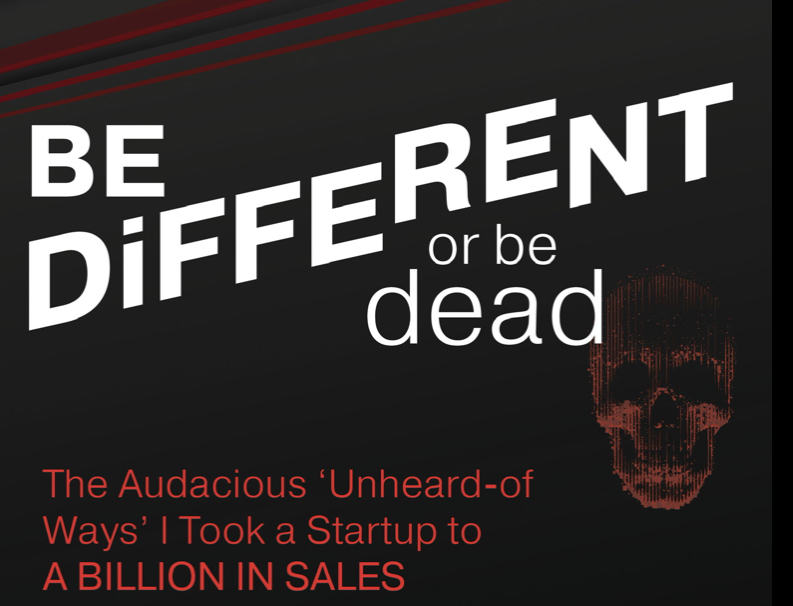
Order ‘Audacious’ here:
Amazon.com
Amazon.ca
Google Books
Barnes and Noble
Indigo.chapters.ca
- Posted 3.20.23 at 07:27 am by Roy Osing
- Permalink
March 13, 2023
4 simple metrics that tell you how your business plan is performing

Source: Unsplash
4 simple metrics that tell you how your business plan is performing.
Now that you’ve created your business plan, how will you measure how well you are executing it?
How will you know if you are progressing to achieve your desired goals?
Performance management is the tool that tries to focus the energies of the organization on the desired outcomes.
The problem is, many people tend to mismanage performance by choosing too many metrics to measure.
And as a result people end up chasing many outcomes with little strategic payoff.
Organizations have data on almost everything, and therefore there is a tendency to measure too much in an effort to have all inclusive measurement.
Too little thought is given to choosing the critical few measures that relate to the success of the strategy.
If 80% of successful strategy execution can be ‘explained’ by measuring 3 outputs or activities, focus on measuring them as opposed to the other 100 that may be related to the strategy but are not critical to in achieving it.
My rule of thumb is to pick 3 or 4 key measures and focus everyone on these.
If your balanced scorecard doesn’t include the following metrics, you’re missing an amazing opportunity to know if you’re on track.
▪️ top line revenue as an expression of how the market is responding to the value you deliver;
▪️ the quality of the service experience as perceived by the customer;
▪️ the number of CRAP activities eliminated to free-up time and resources to take on new initiatives;
▪️ the number of dumb rules removed to make it easier for the customer to engage with your organization.
There are many more metrics that can be used , but these simple ones will show you whether or not your plan is being successfully implemented.
Cheers,
Roy
My 50+ Podcast Shows that will change your life.
Check out my BE DiFFERENT or be dead Book Series
‘Audacious’ is my latest…
- Posted 3.13.23 at 04:36 am by Roy Osing
- Permalink
March 6, 2023
Why flogging cheap prices is a terrible strategy and should be stopped

Source: Unsplash
Why flogging cheap prices is a terrible strategy and should be stopped.
Why is competing on the basis of low prices actually bad marketing?
How is the game played?
▪️It can be a reaction to a short term dip in revenue, with the belief that lower prices will attract more business and prop revenues back up.
▪️It can be a vehicle to promote a particular product or service that is running below forecast. The intent is to get the customer’s attention with a slashed price and hope that sufficient sales volume will stimulate sales.
The most common play, however, is a ‘me too’ response to a competitor’s move. The competition drops their prices and the marketing analyst thinks they must match or undercut the competition to prevent customers from leaving.
At the end of the day, those who price cut trust that this strategy will make their business better off, that somehow they will gain a market advantage in the long run.
The irony of a business reducing their prices in response to a competitive move is that the business is really allowing the ‘bad guys’ to set their prices.
Why would any business allow their competition to set their prices? Does that make sense? Certainly not!
And the benefits of slashing prices, in any event, are illusory or short term at best. Sales revenue may spike up in the short term but it comes at the expense of lower margins unless costs can be reduced at the same time (which rarely happens).
Price cutting has no strategic value
Reducing prices never enhances your long term market position.
It contributes nothing to differentiate you.
It doesn’t make you special or unique in the eyes of the customer.
In fact it has the opposite effect. It shouts out your status as a commodity player who is interested in providing little more than low prices. Price floggers are a dime a dozen; you will not likely win this game. You might keep your head above water for a short time but sooner or later you will either hit the margin wall, or some gunslinger will come along and lower their prices again.
And the race to the bottom is on.
Stand-out marketing organizations learn to manage market share and profitability by maintaining prices higher than the competition.
Here are 3 actions you can take to avoid the price cutting game that leads everyone to the bottom.
▪️Set your priority to manage market share and profitability by focusing your efforts on high value customers where profitability is healthy. Let competitors have the low margin segments.
▪️Resist the temptation to lower prices across the board in favour of targeting price programs to specific vulnerable market segments. In the face of the competition entering long distance markets at prices 15-20% lower than incumbent telephone companies, flat rate packages (like 100 minutes for $10) were introduced for heavy users at a premium to the competition. It worked.
▪️Focus on creating additional value to support higher prices for your products and services. Offering product packages and added customer service features are ways to keep prices higher than the competition.
Stand-out marketing organizations are premium price suppliers and they win.
They are rewarded with fans who love them and spread their word to others because they’re worth it.
“The reason it seems that price is all your customers care about is that you haven’t given them anything else to care about. “ — Seth Godin, marketing guru
Ponder these questions to see if you’re playing the price cutting game:
— What’s the conversation in your organization: is it about how to add value or reduce price?
— How frequently do you have special promotions that reduce prices?
— When you talk to your customers, what’s the main message: your low prices or your premium value?
— Do you offer product or service bundles with price discounts for buying more?
— How many initiatives do you regularly have to add value to your offerings and increase price?
— When you compare yourself with your competitors, is it mainly about price?
Price = $0.00 means you offer no value.
Is that really where you want to be?
Cheers,
Roy
My 50+ Podcast Shows that will change your life.
Check out my BE DiFFERENT or be dead Book Series
‘Audacious’ is my latest…
- Posted 3.6.23 at 05:13 am by Roy Osing
- Permalink
February 27, 2023
7 simple things that define an audacious sales team

Source: Unsplash
7 simple things that define an audacious sales team.
What defines a great sales team and the salespeople in it?
The number of products sold and revenue generated?
No.
Products and revenue are the result of the sales effort; the more effective the sales effort the higher the economic return to the organization and the higher bonus for the salesperson.
Here are the 7 things that define audacious sales:
✔️ Taking a long term view of what the customer needs, not exploiting the moment and driving to make an immediate sale;
✔️ Creating an enjoyable experience for the customer, not using the engagement process as a platform to feed the salesperson’s ego;
✔️ Enhancing the relationship with the customer not not pushing products at them because of the sales quota in place;
✔️ Asking questions as the engagement priority as opposed to telling the customer what they need;
✔️ Respecting silence in the conversation rather than filling the air with the sales pitch;
✔️ Honouring integrity and honesty rather than bending the truth and doing whatever it takes to make the sale;
✔️ Achieving the outcome that is best for the customer which may not completely fulfil the personal agenda of the salesperson.
How do you know if a salesperson puts in an effective effort?
Ask their customers.
Here’s what they say about the standout ones:
— “I refuse to buy from anyone else.”
— “He is the only one I trust.”
— “I often go out of my way to create the sales opportunity for her.”
— “I feel guilty talking to anyone else about what I need.”
— “I don’t feel confident dealing with anyone else.”
— “I am ok to wait until they are available.”
— “I am quite willing to be inconvenienced in order to buy from them.”
— “I am thankful to have him looking out for my long term interests.”
— “I think of her as a close friend.”
— “I honestly believe he cares about me and what my problems are.”
— “They’re in it for the long term with me.”
— “She is always there to talk to me when I need to.”
— “They never push products at me.”
— “She is the best listener I have ever known.”
How many salespeople can claim their customers make even one or two of these statements?
In my experience, very few.
Cheers,
Roy
My 50+ Podcast Shows that will change your life.
Check out my BE DiFFERENT or be dead Book Series
‘Audacious’ is my latest…
- Posted 2.27.23 at 06:12 am by Roy Osing
- Permalink