



Roy's Blog: October 2023
October 9, 2023
What is the single truth about meaningful innovation?

What is the single truth about meaningful innovation?
How many books, articles and case studies have you read on how to innovate?
There are literally thousands of pundits espousing various methods of creating something new.
The plethora of methodologies rain down:
▪️brainstorm.
▪️explore technological capabilities.
▪️benchmark what the competition is doing.
▪️track social media conversations.
▪️explore the possibilities of being contrarian.
▪️cognition tools.
Whatever process you decide to use, make sure you have a context for creating new ideas.
It’s not about the new idea in and of itself, it’s about the problem it solves; the strategic context it operates in.
In my experience leading a startup organization to A BILLION IN ANNUAL SALES, the innovative source that is underexploited is the frontline.
The strategic context they ‘play in’ is customer engagement, hiking long term relationships and enhancing loyalty.
And the creative juice they can supply is enhancing the customer experience; making the experience delightful, mind blowing and ‘gaspworthy’ so the customer will never leave the organization and will tell others how unbelievable and great the organization is.
Meaningful innovation is created by frontline people charged with the responsibility of delivering memorable moments for others.
Why are frontline employees rarely asked to be the engine of innovation?
Leaders don’t want to hear this, but my observation is that it’s because the frontline generally is not viewed as a high value asset that has the power to either dramatically improve the performance of an organization or destroy it.
The way forward to meaningful innovation is to engage your frontline. Take your strategic imperatives to them and ask for their help creating new approaches, new ways and new methods.
This is a leadership issue.
Don’t leave it to middle management to do it. They won’t. They don’t understand the strategic importance of the frontline.
Leaders MUST put their personal fingerprints on this to make it happen.
Leaders… DO IT. NOW!
Cheers,
Roy
My 50+ Podcast Shows that will change your life.
Check out my BE DiFFERENT or be dead Book Series
‘Audacious’ is my latest…
- Posted 10.9.23 at 06:11 am by Roy Osing
- Permalink
October 2, 2023
Why the current business planning methods are wrong and need to be rejected
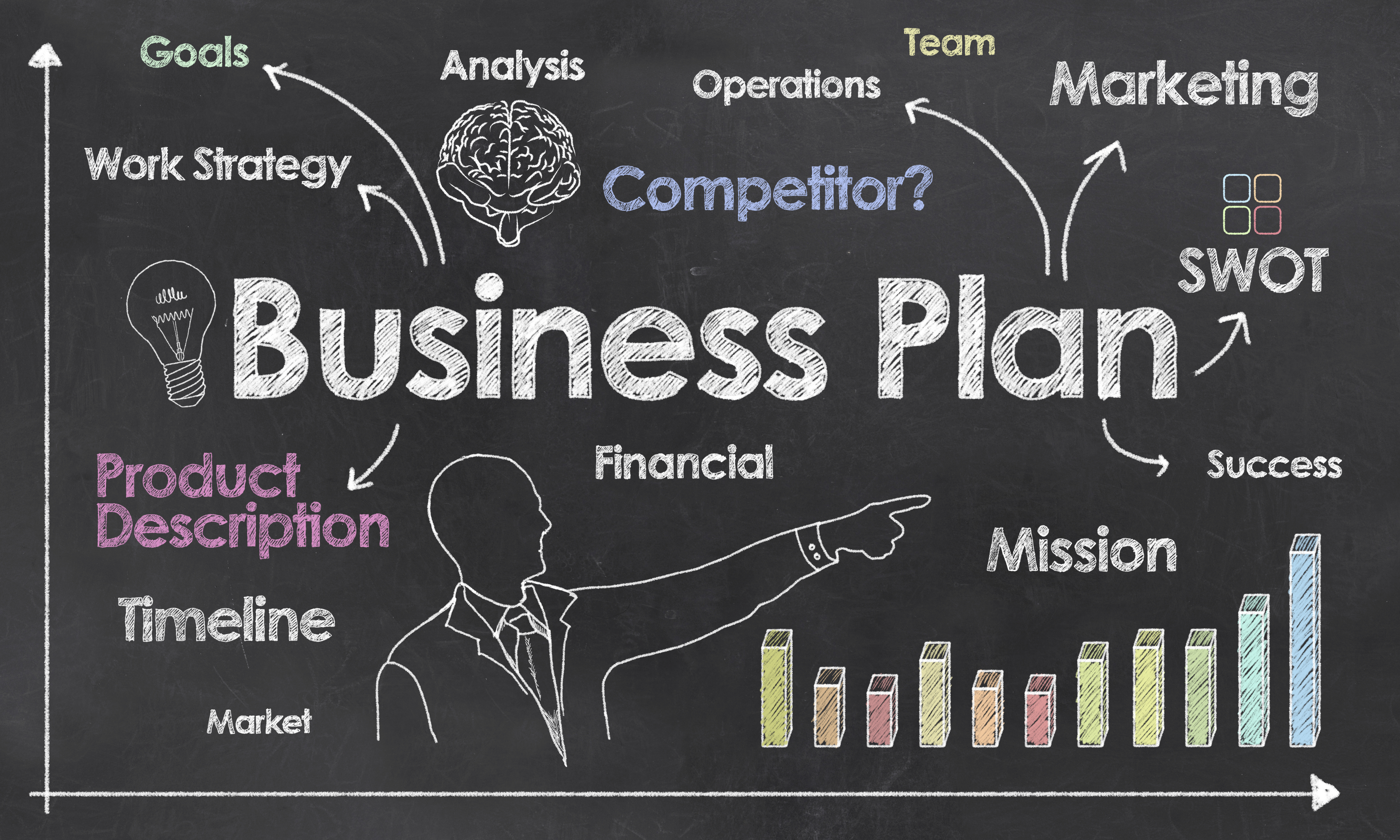
Why the current business planning methods are wrong and need to be rejected.
Current business planning methods are wrong.
They are totally out of touch with what organizations need to be successful.
And they need to be rejected and replaced with a planning process that recognizes the challenges organizations face in today’s environment of rapid change, unpredictability, uncertainty and ‘chaos’.
Here’s my quick rundown of the shortfalls of traditional business planning methods.
#1. Time — It takes too long to develop a business plan using standard pedagogical methods. Weeks can turn into months of analysis, modeling, risk assessment, strategy option comparisons and status reviews before the business planning process is concluded.
And as time passes by people lose interest in the outcome, and what began as an exciting task erodes into a laborious exercise.
#2. Cost — It’s an expensive process to deliver a business plan. At anywhere from $200 -$300 per hour it doesn’t take long to run up a $25,000 bill to have the business plan developed.
#3. Direction overload — Priority is given to getting the business plan direction ‘perfect’.
In fact most of the business plan development time is spent on defining the strategy direction exactly and precisely. Precision is given the utmost priority. Literally over 80% of the time spent is on getting the business plan direction EXACTLY RIGHT.
Analytics are used to attempt to squeeze perfection out of the plan.
#4. Execution MIA — With the overwhelming focus on business plan direction, little time is allocated to determining how the plan will be implemented.
The details of who does what by when are unfortunately not dealt with, leaving the plan “a brave idea” with no roadmap describing exactly how the intent of the plan will be achieved.
I’ve sat through planning sessions where so much time was spent on the WHAT, there was no time left for the HOW.
#5. Benchmarking — Under the guise of innovation, looking at ‘Best in Class’ organizations to determine what changes are needed overwhelms the direction setting process.
The amount of original thought and audacious creativity (https://www.bedifferentorbedead.com/blog/item/786) going into the business plan is meager at best.
Most organizations have an ongoing ‘love affair’ with benchmarking.
#6. Differentiation — There’s much talk about how to create a competitive advantage in the market, but it’s mostly smoke with no substance.
CLAPTRAP, ASPIRATIONS and NARCISSISM pervade this discussion. People declare they are ‘the best’ at this and ‘#1’ at that.
They all agree they are ‘market leaders’ with respect to some competence or skill that gives them the competitive edge that will vault their performance to astronomical heights.
In the end, the tough work of declaring what makes them truly unique among their competitors never gets done. The capabilities and competencies needed to “be the ONLY ones that they do” never gets addressed.
Reliance on the same-old textbook differential advantage rhetoric continues with no real change to their competitive position.
The objective of any business plan is to establish your organization as the ONLY one that does what you do.
#7. Leader fingerprints — Current business planning methodologies rely heavily on the opinions of consultants and other SME’s—Subject Matter Experts— either internal or external to the organization to guide the direction of the plan.
THEIR views, based on their alleged experience and expertise in developing high performing organizations, influence the strategic imperatives of the organization that results in the future allocation of investments.
Fingerprint leadership, in a nutshell, has a leader strategically micromanaging in their organization.
The truth is, in this business planning model, leaders review the opinions and recommendations of these SME’s and provide their approval on the strategic journey out to them, but rarely do they offer anything unique in terms of business strategy.
Their individual perspectives on strategy get little airtime because they’re not asked to plot the course of the organization from a blank sheet of paper.
The opportunity costs to the organization of giving too much power to the SME Influencers are significant. First, the business plan fails to capture and incorporate the experience and expertise of the leaders and second, leadership accountability is weakened.
With no direct skin in the game other than approving someone else’s proposal, a leader isn’t compelled to apply the same energy to implementing the plan as they would if they had more of an Influencer role.
strong<>#8. Textbooks and models — What SHOULD work in theory or academic pedagogy gets priority over what direction best fits the unique requirements of the particular organization the business plan involves.
The “Paper Plan” gets completed with virtually no frontline input. Models are used to predict expected demand from the plethora of assumptions made about customer take rates and competitive behavior.
Academia influences the direction and Doing doesn’t. If the results of the current strategy are falling short of expectations, the automatic assumption is that the STRATEGY—i.e. the plan direction—is wrong when in fact it might be an execution issue.
The landscape of business planning needs to change.
Business Planning should:
▪️Be relevant.
▪️Be engaging and fun.
▪️Engage the leadership team extensively, and draw on their knowledge and experience.
▪️Be reasonably quick to develop and not cost ‘an arm and a leg’.
▪️Focus more on execution.
▪️Establish leadership accountability.
▪️Be influenced more by the people in the trenches dealing with customers and competitors.
I created the Strategic Game Plan to address the frailties of traditional planning methods.
It guided us to take a startup to A BILLION IN SALES! and has helped many businesses achieve the growth and success their leaders never experienced before!
Cheers,
Roy
My 75+ Podcast Shows that will change your life.
My Podcast Show Audacious Moves to A BILLION.
My BE DiFFERENT or be dead Book Series.
‘Audacious’ is my latest.
- Posted 10.2.23 at 07:00 am by Roy Osing
- Permalink
September 24, 2023
Why a great business plan has blood stains on it

Source: Unsplash
Why a great business plan has blood stains on it.
Should your business plan document have 2 faces to it?
Should it have more than one purpose?
Most organizations look at their strategy document as a description of their desired future.
It is the culmination of hours of excruciating work that has tested a number of alternative courses of action and has landed on one that is believed to deliver the maximum benefit.
Indeed the strategy document does perform this valuable role. It communicates to one and all (although I have seen instances where the strategy is held in confidence on a need-to- know basis for fear that its unintentional release would cause irreparable harm to the company) where you are going and the activities necessary to get you there.
From this perspective it is an essential tool in the internal communications plan to ensure all employees are on board.
Use your strategy document as a record of progress.
But I think there is a more vital role that the strategy document plays - to record the things we learn in the course of executing the strategy.
It’s one thing to declare the direction we intend to take. It’s quite another to witness the extent to which we conform to our grand intentions in the market with real customers and real competitors.
I believe in planning on the run, the notion that you set your direction and you adjust it based on the learning you get from executing it.
The plan never turns out the way you imagined; there are too many random market variables impacting us that get in the way.
That said, the strategy document must be viewed as a destination for depositing everything that we have learned during the arduous execution process.
What worked?
What didn’t? Why?
What is the variance diagnosis?
You need to record your experiences just like you would journalize what’s going on in your personal life.
Documented experiences lead to learning which leads to adjustments to your strategy.
Dump on your planning document! It’s ok to have pages ear-marked, coffee stained, scribbling and the odd blood stained paper cut. It shows that it has been used to journalize your strategic journey.
The dirtier your business plan the better.
Cheers,
Roy
My 50+ Podcast Shows that will change your life.
Check out my BE DiFFERENT or be dead Book Series
‘Audacious’ is my latest…
- Posted 9.24.23 at 05:25 am by Roy Osing
- Permalink
September 14, 2023
Great leaders ‘eat their own dog food’ in these 10 easy ways

Source: Pexels
Great leaders ‘eat their own dog food’ in these 10 easy ways.
How often have you heard a leader in your organization preach a set of values and yet don’t consistently demonstrate them? For these people it is easier to give other people advice than to listen to their own words and practice them unconditionally.
They talk about creating a risk-taking culture but punish those that make mistakes.
They talk about being customer focused but they have no calendar time dedicated to meeting with customers.
They talk about people as the most important asset of the organization but they have a closed-door policy and it is impossible for employees to get face time with them.
This type of behaviour does not go unnoticed by the tribes in the organization. Employees see the inconsistency between words and action and they are left with the conclusion that it is all a facade and the leader doesn’t really mean what they say.
As a result the organization falters. Little progress is made towards a healthier future. Employee satisfaction plummets. Competitors plunder.
The business eventually fails.
These are the things great leaders do to ‘eat their own dog food’:
They:
▪️ passionately communicate the business plan of the organization in minute detail to define the precise behaviours necessary to successfully execute it.
▪️ focus on the critical few things that must be done to make the strategy come alive and they model the appropriate behaviour.
▪️ are nosy leaders. They spend copious amounts of time with employees identifying roadblocks to progress and clarifying the behaviour expected to deliver the strategic imperatives of the organization.
▪️ believe in ‘do-it-yourself’ and never ask others to do anything they are not prepared to do themselves.
▪️ actively participate in the 360 feedback process for their own performance improvement, involving employees throughout the organization for feedback on their leadership.
▪️ Align every aspect of their position responsibilities to strategic goals and behave accordingly.
▪️ openly communicate their pain when difficult circumstances impact the organization. Employees need to see that leaders suffer disappointment like everyone else.
▪️ assign high potential managers to do their job for brief periods to get another perspective on how they could perform their role more effectively.
▪️ engage frontline people in improving the execution of their business plan. They initiate frontline panels as vehicles to get feedback on execution effectiveness and to provide direction for improving.
▪️ make a point of showing employees how they have matched words with action. They intentionally don’t delegate certain tasks in order to make the behaviour they want explicit for people.
The leader’s fingerprints are all over the activities that really matter.
The ‘do as I say and not what I do’ thing doesn’t work. It’s an insult to people’s intelligence.
So, if you think you’re a great leader you’d better be eating your own dog food.
Cheers,
Roy
My 75+ Podcast Shows that will change your life.
My Podcast Show Audacious Moves to A BILLION.
My BE DiFFERENT or be dead Book Series.
‘Audacious’ is my latest.
- Posted 9.14.23 at 07:00 am by Roy Osing
- Permalink