


Roy's Blog: July 2022
July 9, 2022
Why a customer engagement strategy is critically important to your business
Why a customer engagement strategy is critically important to your business.
Businesses these days are realizing the importance of customer engagement and its effects on their overall success.
A customer engagement strategy is a plan to improve the relationships you have with your customers.
Customer engagement has a major impact on your bottom line. Happy customers will continue to do business with you and they are also more likely to recommend you to others.
On the other hand, unhappy customers are more likely to leave for your competition and they will also spread negative reviews about your business.
Check out the infographics below by GetVoIP that includes 6 clever customer engagement strategies to boost your customer loyalty and your business.
— Md Umar Khan is the SEO Executive at Wild Idea Marketing. He loves writing about marketing, entrepreneurship, and technology. In his free time, he loves to play video games.

- Posted 7.9.22 at 06:35 am by Roy Osing
- Permalink
July 4, 2022
My 4 simple ways to be an audacious leader

Source: Pexels
My 4 simple ways to be an audacious leader.
‘Audacious’ = bold, courageous, controversial, contrarian, risky and edgy.
What does it mean to be an ‘Audacious’ leader?
When I talk about audacious leadership, I’m referring to these four principles that have proven to be essential ingredients for a high performing organization and A BILLION IN SALES.
#1. BE DiFFERENT!
Look for ways to be special and stand out from the crowd around you and be the ONLY ones who do what you do.
It’s the first principle of Audacious Leadership because being different from others in a way customers CARE about is essential for business survival and growth.
My observation is that even though the world has become fiercely competitive, organizations have not improved much at distinguishing themselves from their competition.
‘CLAP-TRAP’ DOMINATES!
Expressions still used to stake competitive claims — BETTER, BEST, #1, LEADER. PREMIUM, MOST RELIABLE, GREAT TASTING.
Examples:
“(Beverage company) offers the best coffee and espresso drinks for consumers who want premium ingredients and perfection every time.”
“We work hard every day to make (Card company) the world’s most respected service brand.”
ASPIRATIONS CONTAMINATE!
These are lofty helium-filled statements helium-filled claims at the 10,000 foot level that, as a competitive claim, are essentially meaningless because they can’t be proven and leaders can’t be held accountable for delivering them.
Aspirations have other value—as statements of intent—but to distinguish an organization from their competitors and make the buying proposition clear for potential customers, they’re not at all useful.
Examples:
“We’re in business to save our home planet.”
“To inspire humanity — in the air and on the ground.”
’ONLY CLAIMS’ are the solution
‘ONLY’ competitive claims The ONLY Statement to express an organization’s uniqueness.
“We are the ONLY ones who…” is the form of The ONLY. It is specific, understandable, binary and measurable.
Examples:
”The North Delta Business Association is the ONLY team that:
1. Links you to other businesses; 2. Connects you with experienced & knowledgeable people to help you lead & grow your business; 3. Constantly challenges you to do things differently.”
“St John Ambulance is the ONLY First Aid Advocate that provides safety solutions anywhere, anytime.”
“Roy Osing is the ONLY author, entrepreneur and executive leader who delivers practical and proven ‘Audacious Unheard-of Ways’ (no one else talks about ‘Audacious Unheard-of Ways’) to build high performing businesses and successful careers.”
“Roy is the ONLY coach and advisor who offers The ONLY Statement as a practical and proven tool to create a competitive advantage for organizations and individuals.”
RULES of ONLY
▪️PROCESS
✔️Choose the customers you intend to serve—your WHO.
✔️Define what they CARE about; what they CRAVE.
✔️Determine your top 3 skills and competencies.
✔️Match what the WHO cares about with your skills and competencies.
✔️Draft your ONLY.
▪️TEST your ONLY
✔️ Is it compelling and relevant? — does it accurately express what the WHO craves?
✔️ Is it TRUE — do they believe you actually deliver on the statement consistently?
▪️Never include PRICE in the statement.
▪️Keep it BRIEF. Your ONLY is a sound bite that consumes a few lines, not a narrative consuming a page. If it looks like an essay it isn’t a viable claim.
▪️ONLY must speak to—target—the specific CUSTOMER GROUP you are targeting, not the market in general.
▪️Your ONLY is a DRAFT which is always susceptible to change given the unpredictability and dynamics of the markets you play in.
Take your almost-there only statement and start using it as your competitive claim.
Experience how effective it is in competing and getting business. Refine it as you go. And stay alert for a response by a competitor who may suddenly come awake when they see your move.
#2. EXECUTE!
The key to execution is to have a PLANNING PROCESS designed to execute, as opposed to one that tries to create a perfect plan—which doesn’t exist.
Most organizations spend 80% of their time on creating a perfect plan and 20% on how to execute it in the real world.
The Strategic Game Plan
My process, the STRATEGIC GAME PLAN process—SGP—is designed to produce a workable game plan quickly so execution could begin as soon as the plan is complete. It typically requires a 2-day investment to complete an effective SGP.
The SGP process answers 3 questions:
How BIG do you want to be? — This is your top line revenue goal over the next 24 months (remember, 5-year plans aren’t terribly helpful to drive execution). The answer to this question also determines character and risk of your plan.
WHO do you want to SERVE? — Which customer groups have the potential to deliver your 24-month revenue target?
How will you compete and WIN? — How do you intend to win your WHO given the competitive alternatives available. This is where The ONLY Statement as discussed above forms the answer to the question… “We will compete and WIN by being the ONLY ones who…”
Other Execution Moves
▪️Assign a Strategy Hawk to oversee plan execution.
▪️Cleanse the Inside of the organization of obstacles to getting stuff done — Dumb Rules and CRAP.
▪️Focus on and support the frontline.
▪️Hold leaders accountable for establishing direct Line of Sight between the plan and the role of each employee .
#3. SERVE!
A common definition:
“Servant leadership is a leadership style and philosophy whereby an individual interacts with others—either in a management or fellow employee capacity—to achieve authorityrather than power.”
My view of serving is that it isn’t about achieving authority at all, rather it’s a STRATEGIC ACT to improve the effectiveness of executing the organization’s Strategic Game Plan.
It’s a means to THAT end.
I discovered that one of the first approaches to get leaders in the workplace—Management by Wandering Around—didn’t go far enough in terms of using employee input to improve the performance of the organization.
I took it further by practicing what I introduced as Leadership by SERVING Around—LBSA—designed to HELP people not merely report on what I saw them doing.
The essentials of LBSA:
▪️It’s based on asking employees “HOW CAN I HELP?”.
▪️It’s a PERSONAL question, not an organizational one.
▪️It’s an enabling process to allow people to do their jobs easier and more effectively and to eliminate barriers—Dumb Rules—to customer satisfaction. I would ask “What’s preventing you from saying ‘Yes’ to customers?”
#4. DO-IT-YOURSELF!
DIY leadership is all about what I call ‘strategic micromanagement’ where a leader decides, based on the strategic importance to the organization, where they need to jump into the details and micromanage.
In my experience, leaders delegate too much to the point with some it simply becomes abdication of their responsibilities. Leadership dogma says that leaders should stay out of the details and let people do their jobs, and so they do exactly that regardless of the strategic consequences of their delegatory actions.
There are certain areas where leaders must wade into the water, take charge and ‘get wet’.
The execution of the organization’s strategy should be the primary focus of the DIY leader. If execution fails, performance falls and strategic goals don’t get met. I can’t think of a more important area where a leader needs to get personally engaged and leave their fingerprints.
Audacious leaders NEVER delegate the stuff relating to the execution of their strategy.
These are a few specific activities that I personally took on; they formed the platform of my weekly calendar:
▪️Communicating the Strategic Game Plan of the organization.
▪️Architecting the Customer Moment; what the customer engagement process ‘looks like’.
▪️Auditing the organization to see if its values are being practiced consistently.
▪️Performing the role of the Strategy Hawk to ensure that our strategic game plan’s objectives were met.
▪️Personally getting involved in interviewing candidates for Frontline Management positions to ensure the right ‘people lovers’ were hired into customer contact roles.
Audacious leaders are DIFFERENT, they focus on EXECUTION, they SERVE people and they’re masters at DIY.
Cheers,
Roy
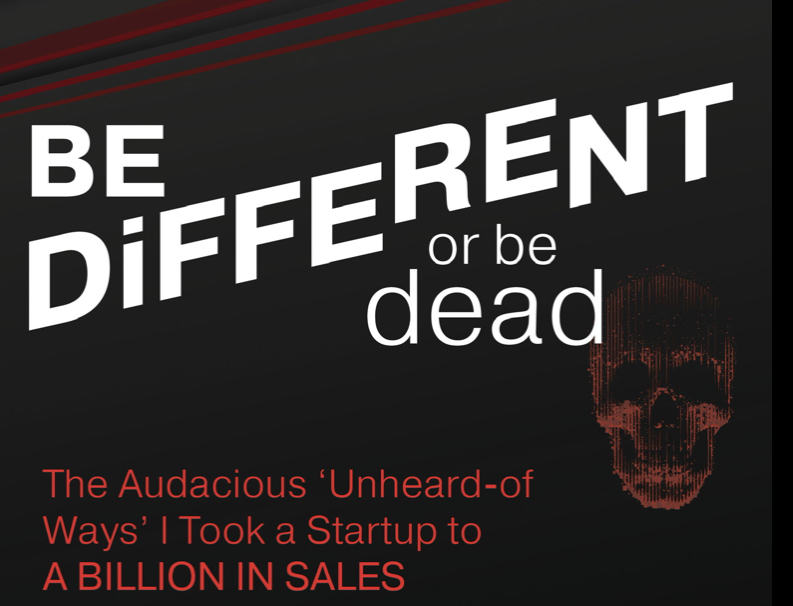
Check out my BE DiFFERENT or be dead Book Series
‘Audacious’ is my latest…
- Posted 7.4.22 at 04:25 am by Roy Osing
- Permalink
June 27, 2022
Why Nasr is absolutely amazing at creating experiences for people that last forever

Source: Unsplash
Why Nasr is absolutely amazing at creating experiences for people that last forever.
Petra, Jordan.
Nasr, our tour guide, who took us through breathtaking Petra had it right. And it was so natural for him to say it. And to do it.
He was able to turn a tour of Petra, one of the 7 Wonders of the World (given the honor in 2007) into an experience my wife and I will never forget.
And one that we will likely talk about for many years to come.
His concluding comments to us came from his heart: “My job as a guide is to create memories”.
Like Baboo in Mumbai, he went on to ask: “Please tell your friends about my country”.
And that’s what I’m doing.
Can you imaging if every one of your frontline customer contact employees saw their job to create a memory for every customer they ‘touched’?
The truth of the matter is that people will soon forget the price they paid for your product or service but they will NEVER forget the experience they received when they bought it.
Do you think it would lift your business to new levels? Do you think it would deepen customer loyalty to you?
In Nasr’s case, he personally understood that unless he was successful creating memories, people wouldn’t visit his country.
And he desperately wanted people to see the country he loves so much (it was refreshing to hear him speak of Jordan in emotional loving terms).
The problem is that employees in our businesses don’t have the same compelling driver or sense of urgency to create memories for customers.
They don’t understand its critical strategic importance to organizational success and survival
And it’s not their fault.
It’s a failure of leadership.
You get what you ask for. You get what you pay for.
Ask for memories to be created by your people. Make it a critical element of their role and compensation plan.
Hire people who innately know how to do it, because not everyone can. And don’t rely on training to teach people to do it. Memory creators are born with the gift.
We need a Nasr to lead our organizations out of the common, boring, invisible, unremarkable, unimaginative, stale herd.
We need many of them.
PS. If you have a chance to visit Jordan, do it. It’s safe and full of charming people.
There Nasr, it worked. I told your story.
Cheers,
Roy
Check out my BE DiFFERENT or be dead Book Series
‘Audacious’ is my latest…
- Posted 6.27.22 at 06:09 am by Roy Osing
- Permalink
June 20, 2022
Why being an outside-of-the-box thinker really isn’t good enough

Why being an outside-of-the-box thinker really isn’t good enough.
Let me start by saying that I would take an out-of-the-box thinker over someone who ‘colours inside the lines’ any day.
But unfortunately, if the only thing that happens out-of-the-box is thinking, it amounts to mental gratification only.
Let’s face it, the mind is only one ingredient to achieving greatness.
You need it to imagine doing extraordinary things but imagination on its own doesn’t go very far.
How many amazing ideas are left dying on the vine because they remained as ideas with no implementation?
That’s the startup reality and the challenge of making any new idea successful.
The death rate of new businesses and new ideas is painfully high because bright, imaginative individuals can’t turn their ‘brave new idea’ into a ‘crude deed’ that people are willing to pay money for.
They may be incredible at off-wall-thinking but can’t monetize what’s in their head.
What we need are ‘out-of-the-box DOERS’ who are capable of taking a ‘just about right’ idea and turning it into mind blowing success.
I’d put my money on someone who has a slightly flawed idea with an amazing ability to execute their ‘imperfect notion’ pristinely.
Here are some outside-the-box doer tips for you that I learned over my career as an executive leader with an operations bent.
#1. Have a plan the is ‘built to execute’; a plan to do!
The doers ethic is to have a plan that can be effectively executed, and this is where my Strategic Game Plan—SGP—comes in. The SGP is a simple and audacious way to simply and quickly create a strategy for your organization in literally 48 hours and begin executing in the 49th hour.
The SGP is created by answering 3 questions:
HOW BIG do you want to be — 24 month revenue growth goal?
WHO do you want to serve — Customer groups to target?
HOW will you COMPETE and win — The ONLY Statement: “by being the ONLY ones who…”
Check out the above referenced links to learn more about SGP.
#2. ’Cleanse-the-inside’ of the organization
You can’t DO anything if the inside of the organization is clogged up with stuff preventing people from executing your plan, so try these tactics to make things run smoother:
▪️Eliminate the Dumb Rules, policies and processes that don’t make any sense to customers and do nothing but create painful experiences for them. If people aren’t willing to engage with you and your inside reality, your imagined future evades reality.
▪️Cut the CRAP or grunge that makes it extremely difficult for people to do their jobs and deliver expected results. This is the bureaucratic bullsh*t that slows things down while some power pusher gets their ego assuaged.
How do you identify CRAP? Just ask the people doing the job and they’ll tell you in no uncertain terms what’s preventing them from doing their job.
Eliminate CRAP = EXECUTE BETTER
#3. Assign a Strategy Hawk
Doers need someone—the Strategy Hawk—to drive the execution process, someone whose entire existence in the organization depends on how well the SGP is implemented in terms of meeting the objectives of the plan within the expected timeframes.
The Hawk must be a leader who is well respected by the employee group, is tenacious and who has a high tolerance for ‘pain’ (changing the course of any organization is difficult; it requires someone who has the energy and perseverance to push through all internal roadblocks and resistance).
#4. Focus on the frontline
The employees on ‘the bottom’ of the organization need to receive priority attention from everyone who has their fingerprints on the SGP.
If the frontline doesn’t perform well, the SGP doesn’t get executed. Period.
Focussing on the frontline requires actions like:
— leaders holding Bear Pit Sessions with frontliners to determine what help they need to execute better.
— leaders reorienting their calendars to spend more time ‘serving around’ in the workplace.
— recognizing and rewarding frontliners for behaviours that lead to superlative execution.
— changing the internal communications emphasis on such things as technology and products and services to add the frontline component and why they are so critical to the organization.
#5. Clarify everyone’s role in executing the strategy
This is where most organizations fail.
Leaders don’t spend the time translating the SGP into what it means specifically to every function (and every individual) in the organization. What each person has to give up and what new actions, activities and behaviours they need to take on.
If employees don’t have a direct line of sight to the SGP, they decide on their own what actions are needed to implement it, which results in internal dysfunction (as everyone takes a different approach to executing the Plan) and results fall short of Plan execution.
Leaders must take on the role of SGP translation to ensure the right actions are taken in harmony by everyone in the organization to ensure flawless Plan execution.
Takeaway
Out-of-the-box Doers are the most valuable assets of any organization.
Out-of-the-box thinking will get you only so far; without morphing intellectual intent into action, thoughts have little value.
Cheers,
Roy
Check out my BE DiFFERENT or be dead Book Series
‘Audacious’ is my latest…
- Posted 6.20.22 at 04:20 am by Roy Osing
- Permalink