




Roy's Blog: September 2022
September 12, 2022
11 simple and proven ways to scale your business for amazing results

11 simple and proven ways to scale your business for amazing results.
There’s much talk these days about the need to scale a business; in fact I recently did a podcast show dedicated to the topic.
So, let’s start with some basics. What do we mean when we say we want to ‘scale’ our business? In the simplest sense, scaling a business seeks to grow revenue faster than cost. If revenue increases at 10% over time and cost increases at 5%, we can say we’ve successfully scaled our business. If revenue growth = cost growth or if revenue grows at a slower rate than costs, we’ve been unsuccessful and our business has NOT been scaled.
Successfully scaling a business results when top line revenue growth is disproportionate to cost growth.
I think there is some misunderstanding around the subject because I hear people talk only about the cost side of the equation.
They focus on cost infrastructure only, and driving the supply costs down to scale their business without considering the revenue component of the equation.
This approach has serious consequences:
▪️It could fail at scaling because cost growth could still exceed revenue growth even though costs have been reduced under a different infrastructure plan. Overall costs may have been reduced by 25% but they are expected to continue to grow at 5% in the face of a revenue growth of 4% — the business has not been scaled.
▪️The second potential issue is that by unhooking cost from revenue driver, you could actually be building infrastructure that is disconnected to a degree from sales, furthering impairing the ability to grow revenue.
A scaling strategy should START WITH REVENUE, to look for the optimum ways to grow in a way that is sustainable over time. Cost options—including supply infrastructure—should then follow to determine the lowest cost growth option to deliver revenue goals.
Remember: both cost objectives must be satisfied: low overall cost structure AND cost growth rates less than revenue growth.
These are some revenue strategies that helped me scale a business to A BILLION.
#1. Business strategy — The ability to scale starts with the right business strategy and my Strategic Game Plan—SGP—practice that delivers the right strategy built to EXECUTE.
Scaling requires a focused game plan that enables flawless execution.
#2. Business processes — Process follows strategy. Create/align internal business processes to serve the SGP explicitly and be targeted to its strategic priorities.
Your business process elements must work harmoniously together in order to generate the kind of revenue needed to scale your business.
#3. Team — Structure follows process. The right organization structure is required to effectively use the business processes established to execute the SGP and to allocate resources for maximum strategic return.
For maximum impact on revenues, insource customer facing functions; if you must outsource anything, outsource back end functions.
#4. Customer loyalty — Existing customers will give you more revenue at lower incremental cost than trying to acquire new customers.
And referrals come to you at close-to-zero cost of sales.
I’ve spoken at length about how you can build a loyal base of fans, but here are a few snippets:
— Create your Customer Service Strategy with CORE vs DAZZLE elements.
— Build a Recovery Culture so when mistakes happen, loyalty is strengthened not destroyed.
— Offer special deals for existing customers to reward their loyalty. Resist the temptation to use discounted promotions to attract new customers.
— Add ‘Customer Managers’ to your organization to ensure to focus on ‘The Loyal Ones’ rather than having simply a product focus.
#5. Sales relationship building — Morph your sales force to concentrate more on building long term customer relationships and less on flogging products.
This will not only reduce churn in your customer base, it will also enable premium priced solution sales due to the high trust factor and the more intimate understanding sales has of the customer’s operations.
Strong long term relationships breed more revenue at less cost.
#6. Premium pricing — Package your products and services into holistic solutions that can be provided at premium prices. Avoid the bundling mentality of bundling products together and offering the bundle at discounted prices.
Target your packaging efforts at customer segments that have a strong ’CRAVE Factor’,driven to buy on what they desire and want rather than on what they need.
CRAVE segments have lower price sensitivity and fewer competitors hence the revenue potential and lower costs is huge.
#7. Process Leadership — Assign leaders cross-organization process ownership as a way of increasing effectiveness—lower costs—of cross functional delivery systems.
For example, the marketing executive could be the owner of the product and service fulfillment process and would be accountable to deliver more output at lower cost.
The problem in organizations today is that no single executive owns a cross functional process because of the silo structure where everyone has their own piece of the action and no one owns the whole process.
To increase the revenue leverage of cost inputs we need process ownership at the highest level.
#8. Recruitment — Recruit the right people to build long term customer relationships and more customer loyalty.
As the priority, hire people who ‘love’ humans. Give customer facing—demand—units in the organization the priority.
#9. A ‘clean’ inside — Effective execution—hence more revenue and less cost—occurs not only when internal systems and processes run smoothly as referred to earlier, but also when the organization is focussing on the things that NEED to be done.
Often, legacy activity lingers throughout the organization, consuming cost and offering little on the revenue line.
Leaders must stop doing the stuff that is no longer a strategic priority. They must CUT the CRAP and eradicate the GRUNGE that gets in the way of flawless execution .
A new form of innovation must be introduced—‘DELETE’ Innovation—to eliminate unproductive activity and assets in order to release more unit revenue and less unit cost.
#10. Dumb Rules — A version of #9, this initiative is required to eliminate the rules, processes and policies that make no sense to customers and threaten their loyalty.
What is needed is a cultural mindset that seeks to ENABLE the customer to do business with you on their terms rather than one which falls victim to internal control.
A healthy balance—however skewed to what the customer expects—is needed with a customer control outcome not a company control one.
#11. Line of sight leadership — To achieve precision in strategy EXECUTION, everyone needs to understand their precise role, because if they don’t, dysfunction results and scaling suffers because costs outrun revenue generation.
To avoid this situation, leaders must provide line of sight from what employees to to what the strategy of the organization expects.
Line of sight leaders translate the strategy into what it means to marketing, sales, customer service, and every other function in the organization to get their teams marching in unison.
When this happens, maximum output for minimal input results and SCALE is achieved.
Cheers,
Roy
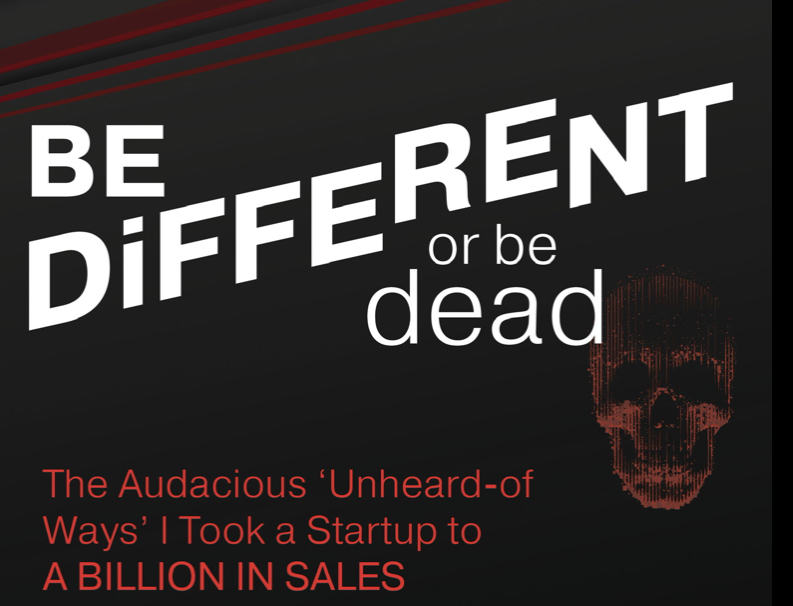
Check out my BE DiFFERENT or be dead Book Series
‘Audacious’ is my latest…
- Posted 9.12.22 at 04:03 am by Roy Osing
- Permalink
September 5, 2022
Why Customer Learning is a better tool than Market Research

Source: Pexels
A critical component of audacious marketing is customer learning: a continuous process of developing a deep understanding of the customers in your business plan that you have chosen to SERVE.
It’s an organic capability that should be developed in your own organization rather than one which can be outsourced to another firm. Why? Because you nurture and retain the attributes that will distinguish your organization from the competitive hordes, and customer learning is one of the traits that will separate you from others and drive superlative performance’.
Most organizations rely on Market Research to try and understand customer demand; Customer Learning is the breakaway tool to make you DiFFERENT.
In addition, online tracking tools that monitor individuals’ behaviour on websites and search engines don’t try and understand the customer, they merely want to observe the products or services people click on and push advertising to them. One could argue that observing behaviour is a form of learning, but when the outcome is to have advertising messages relentlessly pushed at you when you are on the web, it has the pusher’s benefits in mind not the surfers.
This marketing tactic is a product flogging technique not a learning one.
Here is a comparison between the common Herd approach to mining customer data and the approach I used to take a startup to A BILLION IN SALES.
Market Research
- evaluates the market periodically.
- can be (and is often done so) outsourced to an external firm.
- is viewed as a study.
- takes a snapshot of a customer at a point in time.
- takes a narrow view of the customer.
- describes the ‘average’ customer.
- knows little about each individual studied.
- uses few traditional segmentation variables.
- focuses on determining customer ‘needs’.
▪️is an ongoing process. Every customer contact is treated as an opportunity to gather information about the customer. It’s anything but periodic.
▪️engages all employees. Each person is the organization is given the responsibility to zero-in on what a customer desires when they engage with them.
▪️is considered a core competency of the organization. Customer Learning is viewed as an essential element of the organization’s competitive strategy that will separate it from its competitors.
▪️looks at the customer continually. The continuous nature of the process is able to spot changes to customer demand and put the organization in a better place to respond to it.
▪️looks a the customer holistically. Customer Learning looks at the customer from a broad perspective, rather than focusing on what their narrow product and service requirements might be. It looks at lifestyle for consumers, or overall strategy for businesses for example.
▪️ seeks to understand very small groups of customers. Customer Learning focuses on small discrete groups of people as opposed to mass market segments in order to look for differences in demand rather than similarities which is the main emphasis of Market Research.
▪️targets knowledge on individuals rather than the ‘average’ person. The ultimate goal of Customer Learning I’d to go nose-to-nose with an individual; to know what each person—not a mass—craves and covets.
▪️uses many segmentation variables to obtain robust information on many unique customer groups. Customer Learning uses as many segmentation variables as it can to get closer to an individual.
▪️seeks to discover customer secrets and what people CRAVE.
The bottom line is that there is a role for market research, but it won’t get you a competitive advantage in your market.
Invest time and energy in building a customer learning capability in your organization and you will be handsomely rewarded.
Cheers,
Roy
Check out my BE DiFFERENT or be dead Book Series
‘Audacious’ is my latest…
- Posted 9.5.22 at 09:00 am by Roy Osing
- Permalink
September 4, 2022
TESting :) 🤠 hello
Blog post. ???????? hello
- Posted 9.4.22 at 10:07 am by Travis Smith
- Permalink
August 29, 2022
How an employee can easily break loose when they are forced to conform

How an employee can easily break loose when they are forced to conform.
The reality is that sometimes an employee is confronted with a culture that encourages sameness: copying best in class organizations, following academic pedagogy, complying with non-practical consultant advice and conforming to many internal company practices.
Some organizations want you to comply, but there are ways of breaking out.
They feel stifled; stepping out from accepted norms in terms of how their job is performed is simply not an option if one is to avoid being labeled as a loner—not a team player—and if they want to keep their job.
So what options does someone have if they want to be creative and be different but the culture says conform to the traditional established scripture?
First, recognize that the world is not black or white; either fit in or step out are not the only considerations when faced with this dilemma.
This is the approach that I used in an organization that reeked of adhering to strict standards.
#1. Define the areas of the job where conformance is expected and no deviation is tolerated.
If, for example, copying best practices is mandated for a specific function in sales like sales funnel management in order to have everyone doing it consistently then accept it and perform the function in amazing fashion.
#2. Define other aspects of your current role where compliance rules haven’t been defined and step out in these areas.
To illustrate how you might go about stepping out of the conformance challenge, here are some simple actions that worked for me to perform my roles differently than others and shed the shackles of compliance.
#1. Personal brand — Build your personal brand strategy on the principle of standing out from the crowd. You need a strategy to guide your actions outside of the conformity zone. Look for opportunities to breakaway in areas that add value to the organization.
#2. Teamwork — Lead the teamwork process with other functions in the organization to get more support for your own team. A simple act that will benefit the entire organization; get known as the person who championed the cause.
It’s unlikely that others will be willing to go the extra mile in this area; you’ll be recognized as someone who is breaking away and adding significant value to the organization.
#3. Relationships — Try to find a way to be the champion for relationship building both inside and outside the organization. Look specifically for how to engage with customers and bond them to your company.
Long term success requires intimate customer relationships and loyalty; create your own rules for doing this and teach your colleagues.
You will be substantially rewarded for this stepping-out act.
#4. Contrarian — Outside of the compliance zone defined by the organization, be audacious in doing the opposite of what you observe others doing.
Take leadership to eliminate boilerplate and copycat thinking and focus on innovating and creating new approaches to how the organization conducts business.
#5. Cravings — Gather people ‘cravings’: those deep innermost wants and desires people have but will tell only their most trusted partner. This can be practised with colleagues and ultimately with customers and partners.
This is an area you can easily breakaway from the traditional ‘needs based’ way most organizations do marketing.
Cravings not only pave the way to building loyalty, they also enable you to step away from the common ways others perform their roles.
#6. Report card — Introduce an internal report card; rate others on how well they support your organization.
This is an excellent way to enhance the support received from other functions in the organization and be innovative in improving the performance of the organization without being spotted as a non-conformer.
#7. Customer champion — Look for opportunities to step up to be the customer’s champion inside your organization. Be that person who does whatever it takes to get an issue resolved if it comes your way; shield the customer from the pain of having to deal with your bureaucracy, rules and policies.
Talk up and behave live THE customer advocate among the others in the herd around you.
You can be different in an environment that mandates compliance and sameness.
And you can be an effective agent in changing the culture of your organization from a copycat to a vibrant, innovative and creative one.
Cheers,
Roy
Check out my BE DiFFERENT or be dead Book Series
‘Audacious’ is my latest…
- Posted 8.29.22 at 06:00 am by Roy Osing
- Permalink




