



Roy's Blog: Marketing
December 26, 2020
How to manage social media without it taking up all your time

Social media has marked a new dawn in customer relations. With this ‘fourth wall’ breaking to enable two-way conversations, instantaneous feedback and round-the-clock access, we’ve seen a complete revolution around how businesses and organizations can build relationships with their customers.
Whether they’re established stakeholders or new visitors, the 21st century and its swathe of social media platforms have made it more important than ever to really connect with the non-negotiable of delivering true value.
In fact, value in the era of social media is defined with metrics of engagement making it a time where the qualitative is quantitative and every business and organization truly has the opportunity to build relationships that are reinforced with their guiding values.
With half the world using social media, there’s over 3.5 billion chances to tell stories, share good news, connect meaningfully, and meet customers where they are on their preferred platforms.
Despite this, as a time of unparalleled engagement and activity, an effective and authentic strategy doesn’t just happen. Just think of these hallmarks of exceptional social media and the approaches that underpin them:
● Considered content of a calibre that gets the story right needs a holistic approach based on customer and market analysis
● Timely and accurate responses that hit the mark because they’re backed with purpose rather than obligation
● Informative and helpful messages accompanied with rich media developed with higher order thinking
These three prongs of activity combined with monitoring and abstract conceptualisation are only as good as the time that’s devoted to them. Yet, even though it’s the place where most businesses and organizations know their customers are, it can also be the last place where attention is turned or where team resources are allocated.
The reality is that social media requires an investment of time — something many businesses and organizations don’t have a lot of. This spells disaster, so what can be done to overcome this and where to from here?
Well, M2 On Hold produced this infographic ‘How To Manage Social Media Without It Taking Up All Your Time’ as a helpful resource for everyone from professional marketers to start-up businesses.
Read on for the full guide and to renew your strategy for how you manage social media channels, content development, and customer engagement while working smarter not harder.
— Justin Green is the General Manager at M2 On Hold. As part of his role he enjoys creating useful content on social media marketing.


- Posted 12.26.20 at 06:29 am by Roy Osing
- Permalink
December 24, 2020
Why ‘ME’ marketing is now the best way to grow sales

Source: Unsplash
Why ‘ME’ marketing is now the best way to grow sales.
‘ME’ marketing will destroy traditional marketing; it’s all about the individual not the crowd.
Brilliant marketers get that ‘ME’ segments generate higher returns than market segments produced by traditional marketing.
The four bases of commonly prescribed market segmentation are demographics, psychographics, behavior and location (‘geographics’) and the marketing process is to develop programs targeted at potential customers with similar traits within a particular segment.
Segmentation studies are based on observations of population behavior; the characteristics of the masses (represented by the ‘average’ person in the population) determine the conclusions of the study.
Why are these four segments used as the prescription for marketing segmentation? Because this type of data on people is readily available to the marketer.
Census data provides demographic and location information, billing and web visitor tracking systems produce product usage information and standard market research studies ask for lifestyle preferences which people are generally ok with providing.
For a marketing program, individuals are ‘mapped’ into each of these segments and are assumed to be like everyone else in their segment in terms of their likelihood to be attracted to a particular marketing program targeted to the segment.
The marketer’s assumption is that each person in the segment ‘looks the same’ in terms of the segmentation variable chosen and because of this similarity will all exhibit the same buying propensity.

Source: Unsplash
I’ve always found this assumption to be a non-starter. Just because I’m a skier does not in any way suggest that other skiers would be interested in buying the same products as I do.
And just because I’m in the boomer demographic with a specific income in no way is a good predictor of what others with similar characteristics will be interested in buying.
In this approach, an ‘average’ target for a service might be ‘a male boomer with an annual income of between $60 - $100K who lives in Vancouver and who has an annual ski pass at Whistler’.
And the flaw is that there may actually be some people who do have the targets attributes and who would be interested in what is being offered, but there will also be many with these attributes who won’t be interested and who will not be interested in the offer.
Traditional segmentation produces hits and misses and the marketer hopes there are more of the former. But you can’t count on it.
There are two serious issues with traditional segmentation methodology; its underlying assumptions are flawed.
First, having segmentation variables prescribed with the simplifying assumption that people tend to make purchase decisions on the basis of their demographics and so on, is fallacious; people express their differences with their own buying triggers which can’t be prescribed up front.
And second, assuming that people who exhibit the same segment characteristics will make similar buying decisions is simply not true; there are many sub-clusters within any given segment that have their own buying motivations quite apart from those in the overall segment.
‘ME segmentation’ is different from the commonly-used methodology, and should be adopted by a marketing organization that wants to stand out and perform above their peers.
ME segmentation poses the research question to an individual person not the population.
ME segmentation is strategic
It is considered as a strategic exercise which asks the question “How should the market be segmented to expose as many opportunities as I can?” not how do I assign my customer base into the prescribed segments.
The prescribed segmentation variables such as demographics, location, usage and lifestyle are not automatically used; they are given mild attention only: the focus is on determining the appropriate variable that will unlock the growth key for the organization.
The objective is not to place people in the prescribed segments, but to discover the appropriate segmentation elements that will produce the best sales result.
For example, if a specific web application best appeals to a Gen-Z individual with an IOS device, lives in Tsawwassen BC, is a member of a family of 4, and has a household provider who is female, then this is the appropriate segmentation to use.

Source: Unsplash
It’s focus is on differences
Traditional segmentation seeks to define small numbers of customer groups that share similar characteristics, and these characteristics are broad and general in nature.
People who are over 65 years old who have right-of-centre political beliefs, women who live on the west coast who are pro abortion are examples of the segments that are produced by the traditional approach.
ME segmentation, on the other hand, is a process driven by the intent to find differences in customer clusters in order to expose as many customer clusters as possible.
Opportunities come from the differences between people NOT similarities among them.
And greater the number of segments that are defined, the more intelligence you have on each person in the cluster AND the better the ability to match a product, service or experience to their specific individual need.
It’s end game is on ‘the many’
As stated above, ME segmentation tries to define as many different customer clusters as possible in order to get closer to the individual with the belief that if you have a tight fit with an individual person, you have a better chance of selling them something than if the person’s desires are watered down by a larger group.
The probability of making a sale increases due to the fact that you are better able to match your offering with the more precise needs. wants and desires of the individuals in each cluster.
Person-research will yield many conclusions; one for each person you talk to.
And each conclusion will be valid unlike conclusions from population research which will be valid for some individuals (who just happen to be exactly identical to the population profile) and invalid for others (whose special unique characteristics don’t match the population profile.)
Better to have 100 different conclusions from 100 individual people rather than 1 conclusion based on the “average” person in a population of 100.
It’s never-ending
ME segmentation is a continuous process of going deeper and deeper into a cluster of customers. Obtaining more and more information on the individuals in the cluster.
The marketer needs to keep looking for differences until they are nose-to-nose with an individual because that’s when total understanding of people’s desires is achieved.
If there were one million customers, the result of the ME process would be one million segments of 1.
What are the implications of a million clusters of 1?
▪️you would be different as few undertake the journey.
▪️you would have more rich and deep knowledge on your customers than your competitors have.
▪️your sales potential would increase exponentially.
▪️you would build both share of market and customer share.
▪️customer loyalty would increase because you are better able to match your solutions to their needs and wants.
▪️you would be better able to survive unpredictable ’body blows’ you might suffer in an ever changing world because you are so tight with your customers.
All because you choose to put in place a marketing philosophy to treat segmentation as a continuous strategic learning down to the individual.
Keep segmenting your market until you are nose-to-nose with a person.

Source: Unsplash
The role of the ME marketer
Within the ‘ME’ context of segmenting markets down to ‘the nose’ of an individual and examining their needs and wants rather than treating markets as homogeneous groups, the ME marketer’s role is different than what marketers have done in the past.
The ME marketer:
— Is driven by individual people have to say, not by what is implied by large markets or populations, and puts the individual before the average needs of the crowd.
— Is ok with the possibility of creating a unique marketing plan and product or service solution for an individual.
— Drives IT to ‘mass-personalized’ serving systems capable of uniqueness delivered to thousands of customers.
— Reserves Customer Appreciation Day events for specific customers who have demonstrated their loyalty to the company for many years.
— Looks to the power of new technology to define the needs of individuals and to use the secrets discovered to create personalized solutions and not to flog their current product portfolio.
— Uses every tactic available to build long term relationships with people rather than flog products at them with a focus on making short term sales. They see AI as a way to create new experiences for people and not a productivity tool.
— Is a strong advocate for the customer inside their organization, ‘doing battle’ for them to protect their interests in their own bureaucracy.
— Does whatever it takes to try and eliminate any dumb rules in their organization that infuriate customers and threaten their loyalty.
Mass marketers are the dying breed of the profession, and it starts with the practice of segmentation.
Segmenting down to ‘the nose of a person’ enables a deep understanding of what people want and desire, and exposes opportunities to not only enhance marketing productivity but also to create sustaining long term value for the organization.
ME markets are superior to crowds.
Cheers,
Roy
Check out my BE DiFFERENT or be dead Book Series
- Posted 12.24.20 at 06:26 am by Roy Osing
- Permalink
December 16, 2020
4 really easy actions to take to get more sales

4 really easy actions to take to get more sales.
We all wish to kick start a successful business. After all, who doesn’t want to be the next Steve Jobs or Bill Gates?
According to Wealth X, 62 percent of US billionaires are classified as “self-made” individuals. In 2019 alone, the Fortune 500 companies generated 13.7 trillion USD worth of revenue, as per the Corporate Finance Institute.
While such figures may seem promising, it is also essential to see the other side of the picture. Medium reports that over 90 percent of all startups fail. And 22.5 percent of businesses fail within their first year of operation.
How do you ensure that your business isn’t among them? By generating enough sales to keep the firm afloat because cash flow issues are the top reason why companies go under.
As crucial as it is, generating sales isn’t an easy task. Here is what you must do in case your business’s sales are lackluster.
1. Focus on current customers
Yes, you should always strive to increase your market share. However, in this battle, you must not forget about your current customers.
As per Small Business Trends, approximately 80 percent of profit is generated from 20 percent of existing customers of a business.
Not to mention that the probability of repurchase stands at 70 percent while attracting a new client has a probability of at most 20 percent.
To improve your sales, don’t just try and cater to new customers. Instead, focus on your current consumer base. Create campaigns specifically for them. This can include email marketing efforts, loyalty programs, and offering impeccable customer service.
Trader Joe’s is known for treating its customers immensely well. Each of its employees on the ground is hyper-focused on each customer that enters the business. Whether it be quick checkout, friendly customer service, or apt product recommendation, the chain managed to instill loyalty through its service.
2. Optimize your online presence
According to research by Think with Google in 2019, a whopping 51 percent of the shoppers said that they use Google to research a product before purchasing it. And 92 percent of the total traffic for a given query goes to links on the first page displayed.
Hence, unless your business has a robust online presence, you won’t be able to generate enough leads, and thus sales. In today’s world, you just cannot underestimate the power of digital media.
Begin by optimizing your website and social media platforms. Boost your site’s load speed, revamp its content, and add the right keywords to your website to ensure that it attains a high ranking on the search engine.
While you are at it, take help from experts who specialize in your niche.
For instance, a general SEO company will not be a perfect company for an industry like the automotive sector. Instead, quality automotive SEO companies will be a better choice. This is because they will be better versed in the nuances of the industry and what works best for your consumers.
3. Launch limited-time offers
Sometimes customers need an extra push to sway them into purchasing from your business. Here, you can leverage their feeling of FOMO. Not only is this feeling real, but when targeted correctly, it helps in improving sales for a business as well.
As per Trust Pulse, 60 percent of shoppers end up purchasing items because of FOMO. Use this by launching limited-time offers.
There are two facets to this: Discounts and products.
You can offer exclusive discounts to certain customers or announce flash sales. The fact that the discount is only valid for a small period of time encourages people to act now. For instance, look at this promotion by Pura Vida Bracelets.
You can also launch limited-edition products. The fact that there is only a handful of these products urges people to purchase them – sometimes even at a premium.
Coca-Cola came up with an excellent campaign for this in 2017.
Following the demand for Marriage Equality in Australia, the beverage company released coke bottles that feature the word love. However, two cans had to be combined to produce the word and display a heart. This boosted the sales of the drink by 80 percent.
Incorporate either type of promotions in your marketing campaigns for a better revenue stream.
4. Use email marketing
According to Statista, as of 2019, there are over 3.9 billion email users, hence email marketing is an effective way to convert customers. DMA reports that a dollar spent on email marketing leads to a return in investment of 42 dollars!
When your sales are decreasing, it is time to address customers to ensure that they don’t forget about your brand.
Whether it be cart abandonment emails or specific campaigns, there are various strategies you can use. However, make sure not to overdo it. Or else, it may seem like spam.
You can also use emails to gain feedback from your customers. This will help you to gain insights about the elements you can improve upon to boost your sales.
Often, a company is lacking in some way, but it doesn’t know it. Consumer feedback can be a real eye-opener for businesses. It can tell you what grievances a customer may have with the company and what they wish it would do better.
Airbnb does a great job of asking for feedback via its email campaigns. They make the content personalized and pithy to grasp and retain customer attention. The company also brands its communication consistently for optimum awareness and recognition.
Generating enough sales for the success of your business is not an easy task. However, it is not impossible either. With the right strategies and tactics, you can surely improve the performance of your business.
Prior to implementing different measures, make sure that your team is motivated, and your product is of top-quality. Without competent resources selling your product and the item being actually worth the money, no hack will be able to help.
— Alma Causey is a mother, wife, logophile and a professional blogger by choice. She has completed her masters in English literature from the University of Groningen. With her unique approach towards content marketing, she brings worth a second read blogs to life. Oh, Alma is incomplete without cats. Find her on Twitter: @Almacausey. And you can check out some of her past work at Muckrack.
- Posted 12.16.20 at 05:51 am by Roy Osing
- Permalink
December 14, 2020
Why special marketing deals for new customers are dishonest
Source: Unsplash
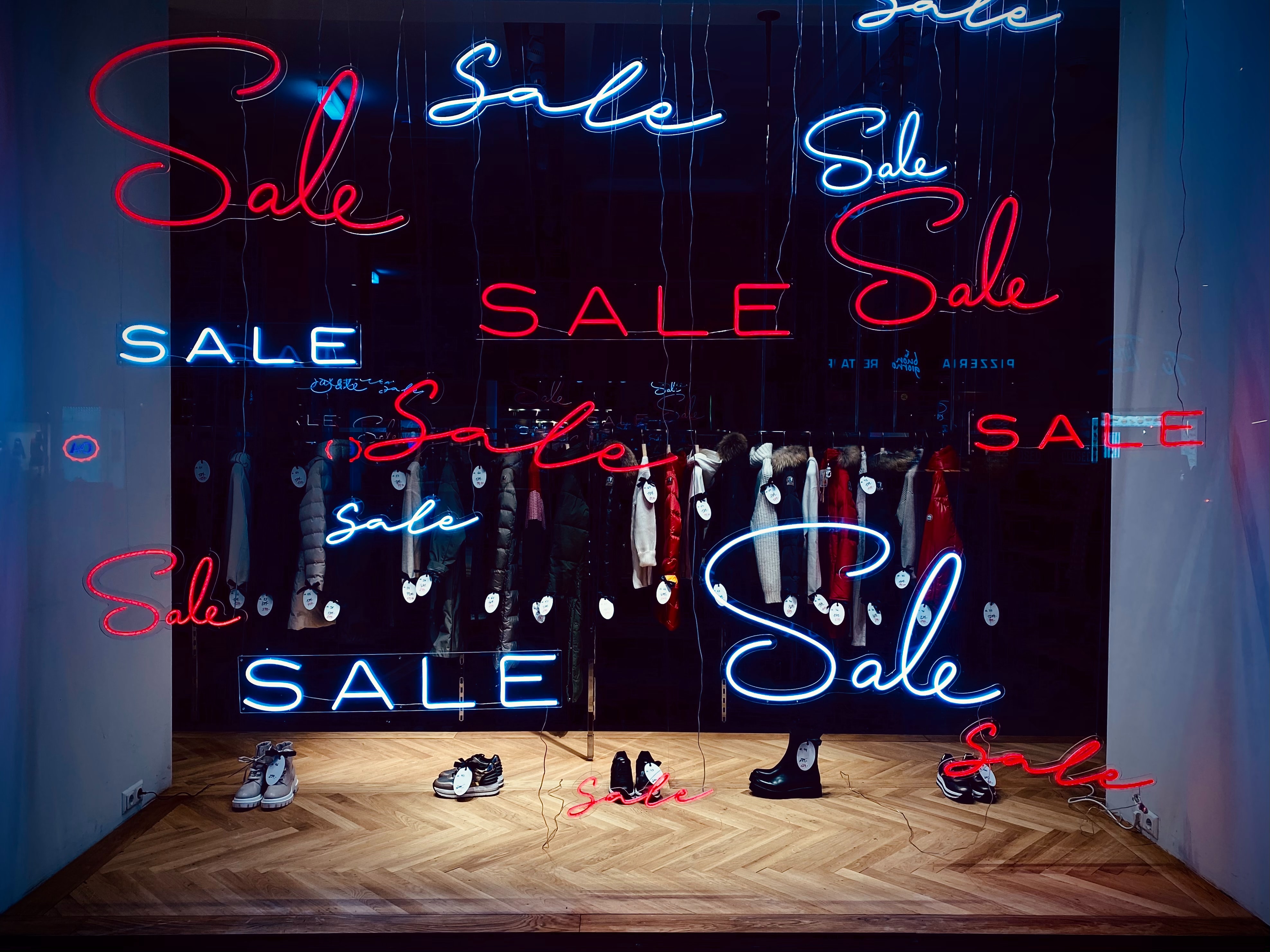
Special marketing deals for new customers is dishonest. Period.
I think one of the travesties of today’s marketing is the special promotion designed to bait or attract new customers. I believe it’s a dishonest marketing tactic which works against customer loyalty.
Most companies use special offers or promotions to bait or attract new customers with the belief they will kick sales up a notch and increase revenue.
For the most part, special deals use price as the hook and are time based to encourage people to make a fast purchase decision.
“For the next three months subscribe to our wireless service and get a free LED TV” is a common promotion offered by many as a way to acquire new wireless customers.
These offers are dangled in the face of a potential NEW customer; THEY receive the free TV.
On the other hand, someone who has been a loyal wireless customer for 10 years gets NADA even though they have supported the company to the tune of thousands of dollars.
This is crazy.
There are two main issues I have with this bait marketing approach.
1. It’s lazy marketing
First, it’s lazy marketing. The easiest thing to do is to give stuff away with the mistaken belief that if you do, the recipient of the gift will somehow feel obligated to enter your loyalty tent and remain dutiful henceforth.
What a joke.
Despite the studies marketers trot out, people value what they pay for, and if they pay nothing to move from another supplier to you they laugh under their breath and wait for the next juvenile marketer who comes along and makes you a better offer. And when they find one, bye-bye.
2. It’s intellectually dishonest
Second, bait marketing is not only an insult to the loyal customers who have given themselves to your organization for years, it’s also intellectually dishonest.
Existing customers rarely qualify for the bait deal. The free TV is NEVER offered to the customer who has been loyal for 5 or 10 years!
They have steadfastly paid their bill on time every month. They have put up with the odd price increase and policy change but their loyalty has been resolute.
And they have rarely been offered a deal on anything. They may have been thanked for their loyalty with words or an annual free calendar, but certainly nothing as substantial as the person being baited.
And when they discover that a special promotion is being offered to new customers and ask for the same deal they are told “I’m sorry you don’t qualify for this promotion”.
How do they feel? Second rate? Third rate? Don’t rate?
Special offers should be placed at the feet of your loyal customers fIrst. Reward or retention marketing may not be as sexy as its bait cousin, but special deals should be extended to existing customers FIRST!
It’s an awesome way to thank people for their ongoing support and return the favour with a token of your appreciation. Think about it as re-investing (in them) some of the revenue they have generously given you over the years.
But companies rarely use promotions this way.
They’re afraid of losing money.
They actually believe that if they offer the new customer deal to an existing loyal customer they will lose money; they don’t want to take the revenue hit from current customers taking advantage of the savings.
They don’t feel it is necessary to offer the promotion it to loyal customers to encourage them to stay. And if an exiting customer takes the deal they don’t believe it stimulates new sales.
These are bogus arguments for a number of reasons:
Offering something special to your loyal fans will surprise and delight them
They will stay loyal to you as long as you serve them well. And they will act as your best advertisers by telling the story to others about how great you are. Revenue will grow as a result.
Ever done a Net Present Value calculation on a customer who has been with you for 10 years? Is it a big number or small number. Right!
If you don’t include them they will find out
They will know that they are not included in the deal and they will be angry and feel neglected. They might leave you, but for sure they will talk you up to their friends and family as a selfish organization that does not care about their loyal customers. They will slander your brand; shouting out your lack of integrity and honesty.
If your special deal attracts someone because of their thirst for your low price, what makes you think they won’t leave you for a better offer?
A special targeted at ‘switchers’ is also fuel for more switching. Then you have realized zero return on your promotion investment and you have given your current customers reason to leave.
Investing in your loyal customer base always makes sense
You’re not reducing your margins by offering them the special deal, you’re reinvesting some of your margins in them to maintain their loyalty. Why do companies buy back their own shares?

(Read the fine print. This offer is for ‘new subscribers only’. As a customer for many years, this reduces their brand value in my eyes…)
It’s time organizations re-think the strategy behind ‘the special deal’ which is unethical and dishonest.
Any way you cut it, the deal strategy for new customer acquisition is risky.
Smart marketers go for the sure thing in the long run.
Show customers why they should stay with you.
Cheers,
Roy
Check out my BE DiFFERENT or be dead book series
- Posted 12.14.20 at 06:30 am by Roy Osing
- Permalink