



Roy's Blog: Leadership
October 2, 2023
Why the current business planning methods are wrong and need to be rejected
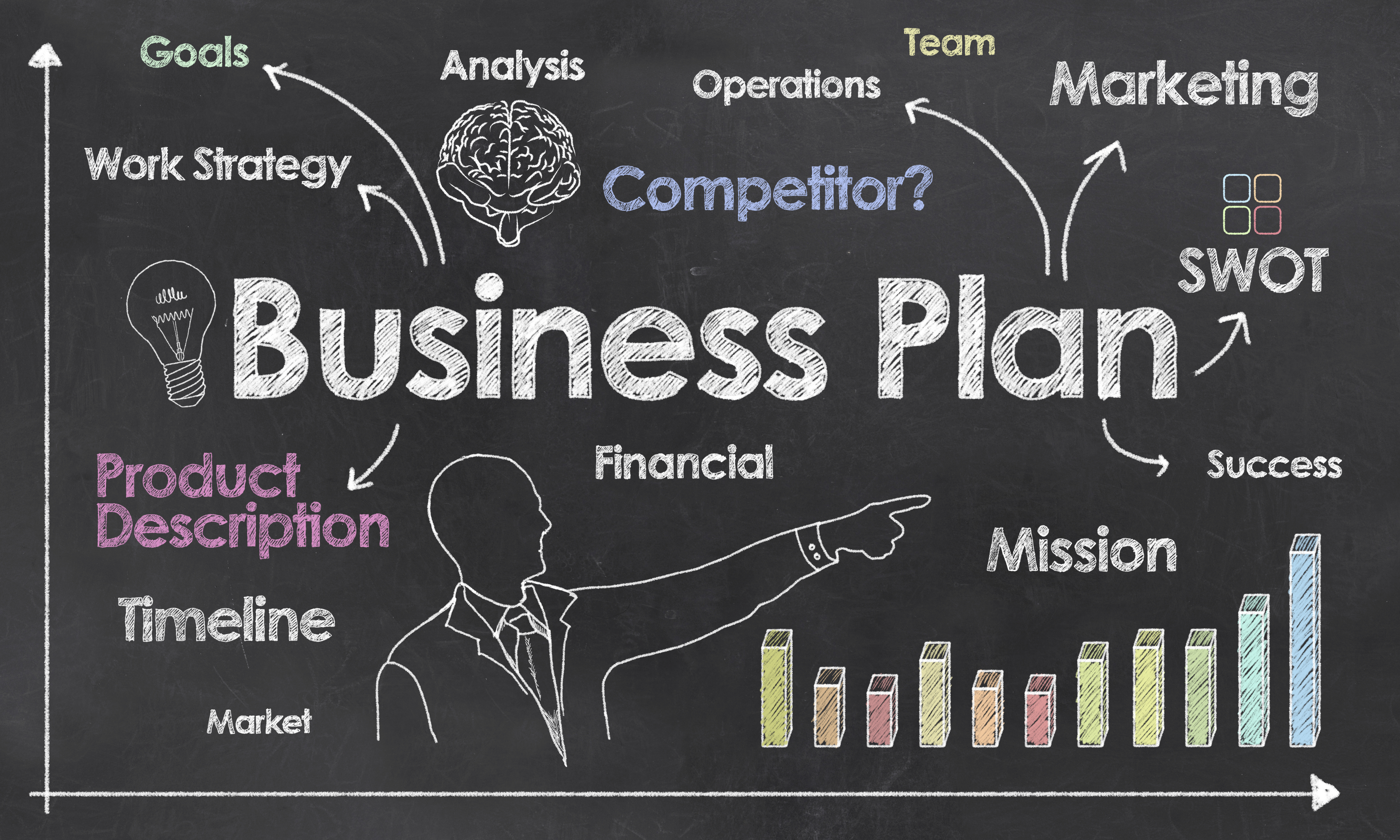
Why the current business planning methods are wrong and need to be rejected.
Current business planning methods are wrong.
They are totally out of touch with what organizations need to be successful.
And they need to be rejected and replaced with a planning process that recognizes the challenges organizations face in today’s environment of rapid change, unpredictability, uncertainty and ‘chaos’.
Here’s my quick rundown of the shortfalls of traditional business planning methods.
#1. Time — It takes too long to develop a business plan using standard pedagogical methods. Weeks can turn into months of analysis, modeling, risk assessment, strategy option comparisons and status reviews before the business planning process is concluded.
And as time passes by people lose interest in the outcome, and what began as an exciting task erodes into a laborious exercise.
#2. Cost — It’s an expensive process to deliver a business plan. At anywhere from $200 -$300 per hour it doesn’t take long to run up a $25,000 bill to have the business plan developed.
#3. Direction overload — Priority is given to getting the business plan direction ‘perfect’.
In fact most of the business plan development time is spent on defining the strategy direction exactly and precisely. Precision is given the utmost priority. Literally over 80% of the time spent is on getting the business plan direction EXACTLY RIGHT.
Analytics are used to attempt to squeeze perfection out of the plan.
#4. Execution MIA — With the overwhelming focus on business plan direction, little time is allocated to determining how the plan will be implemented.
The details of who does what by when are unfortunately not dealt with, leaving the plan “a brave idea” with no roadmap describing exactly how the intent of the plan will be achieved.
I’ve sat through planning sessions where so much time was spent on the WHAT, there was no time left for the HOW.
#5. Benchmarking — Under the guise of innovation, looking at ‘Best in Class’ organizations to determine what changes are needed overwhelms the direction setting process.
The amount of original thought and audacious creativity (https://www.bedifferentorbedead.com/blog/item/786) going into the business plan is meager at best.
Most organizations have an ongoing ‘love affair’ with benchmarking.
#6. Differentiation — There’s much talk about how to create a competitive advantage in the market, but it’s mostly smoke with no substance.
CLAPTRAP, ASPIRATIONS and NARCISSISM pervade this discussion. People declare they are ‘the best’ at this and ‘#1’ at that.
They all agree they are ‘market leaders’ with respect to some competence or skill that gives them the competitive edge that will vault their performance to astronomical heights.
In the end, the tough work of declaring what makes them truly unique among their competitors never gets done. The capabilities and competencies needed to “be the ONLY ones that they do” never gets addressed.
Reliance on the same-old textbook differential advantage rhetoric continues with no real change to their competitive position.
The objective of any business plan is to establish your organization as the ONLY one that does what you do.
#7. Leader fingerprints — Current business planning methodologies rely heavily on the opinions of consultants and other SME’s—Subject Matter Experts— either internal or external to the organization to guide the direction of the plan.
THEIR views, based on their alleged experience and expertise in developing high performing organizations, influence the strategic imperatives of the organization that results in the future allocation of investments.
Fingerprint leadership, in a nutshell, has a leader strategically micromanaging in their organization.
The truth is, in this business planning model, leaders review the opinions and recommendations of these SME’s and provide their approval on the strategic journey out to them, but rarely do they offer anything unique in terms of business strategy.
Their individual perspectives on strategy get little airtime because they’re not asked to plot the course of the organization from a blank sheet of paper.
The opportunity costs to the organization of giving too much power to the SME Influencers are significant. First, the business plan fails to capture and incorporate the experience and expertise of the leaders and second, leadership accountability is weakened.
With no direct skin in the game other than approving someone else’s proposal, a leader isn’t compelled to apply the same energy to implementing the plan as they would if they had more of an Influencer role.
strong<>#8. Textbooks and models — What SHOULD work in theory or academic pedagogy gets priority over what direction best fits the unique requirements of the particular organization the business plan involves.
The “Paper Plan” gets completed with virtually no frontline input. Models are used to predict expected demand from the plethora of assumptions made about customer take rates and competitive behavior.
Academia influences the direction and Doing doesn’t. If the results of the current strategy are falling short of expectations, the automatic assumption is that the STRATEGY—i.e. the plan direction—is wrong when in fact it might be an execution issue.
The landscape of business planning needs to change.
Business Planning should:
▪️Be relevant.
▪️Be engaging and fun.
▪️Engage the leadership team extensively, and draw on their knowledge and experience.
▪️Be reasonably quick to develop and not cost ‘an arm and a leg’.
▪️Focus more on execution.
▪️Establish leadership accountability.
▪️Be influenced more by the people in the trenches dealing with customers and competitors.
I created the Strategic Game Plan to address the frailties of traditional planning methods.
It guided us to take a startup to A BILLION IN SALES! and has helped many businesses achieve the growth and success their leaders never experienced before!
Cheers,
Roy
My 75+ Podcast Shows that will change your life.
My Podcast Show Audacious Moves to A BILLION.
My BE DiFFERENT or be dead Book Series.
‘Audacious’ is my latest.
- Posted 10.2.23 at 07:00 am by Roy Osing
- Permalink
September 14, 2023
Great leaders ‘eat their own dog food’ in these 10 easy ways

Source: Pexels
Great leaders ‘eat their own dog food’ in these 10 easy ways.
How often have you heard a leader in your organization preach a set of values and yet don’t consistently demonstrate them? For these people it is easier to give other people advice than to listen to their own words and practice them unconditionally.
They talk about creating a risk-taking culture but punish those that make mistakes.
They talk about being customer focused but they have no calendar time dedicated to meeting with customers.
They talk about people as the most important asset of the organization but they have a closed-door policy and it is impossible for employees to get face time with them.
This type of behaviour does not go unnoticed by the tribes in the organization. Employees see the inconsistency between words and action and they are left with the conclusion that it is all a facade and the leader doesn’t really mean what they say.
As a result the organization falters. Little progress is made towards a healthier future. Employee satisfaction plummets. Competitors plunder.
The business eventually fails.
These are the things great leaders do to ‘eat their own dog food’:
They:
▪️ passionately communicate the business plan of the organization in minute detail to define the precise behaviours necessary to successfully execute it.
▪️ focus on the critical few things that must be done to make the strategy come alive and they model the appropriate behaviour.
▪️ are nosy leaders. They spend copious amounts of time with employees identifying roadblocks to progress and clarifying the behaviour expected to deliver the strategic imperatives of the organization.
▪️ believe in ‘do-it-yourself’ and never ask others to do anything they are not prepared to do themselves.
▪️ actively participate in the 360 feedback process for their own performance improvement, involving employees throughout the organization for feedback on their leadership.
▪️ Align every aspect of their position responsibilities to strategic goals and behave accordingly.
▪️ openly communicate their pain when difficult circumstances impact the organization. Employees need to see that leaders suffer disappointment like everyone else.
▪️ assign high potential managers to do their job for brief periods to get another perspective on how they could perform their role more effectively.
▪️ engage frontline people in improving the execution of their business plan. They initiate frontline panels as vehicles to get feedback on execution effectiveness and to provide direction for improving.
▪️ make a point of showing employees how they have matched words with action. They intentionally don’t delegate certain tasks in order to make the behaviour they want explicit for people.
The leader’s fingerprints are all over the activities that really matter.
The ‘do as I say and not what I do’ thing doesn’t work. It’s an insult to people’s intelligence.
So, if you think you’re a great leader you’d better be eating your own dog food.
Cheers,
Roy
My 75+ Podcast Shows that will change your life.
My Podcast Show Audacious Moves to A BILLION.
My BE DiFFERENT or be dead Book Series.
‘Audacious’ is my latest.
- Posted 9.14.23 at 07:00 am by Roy Osing
- Permalink
August 28, 2023
Why unbelievable career success depends on ‘Do it Now!’

Source: Unsplash
Why unbelievable career success depends on ‘Do it Now!’
There seems to be an overly cautious mentality in some organizations that is biased to study and reflect instead of taking action and learning as you go.
This phenomenon is due to a combination of people being risk averse, paralysis by analysis—I can’t take any course of action until I have more information—or working in an organization that doesn’t encourage the just do it ethic, and punishes people who make mistakes.
Results come from getting’ it DONE, not from pondering and over-analyzing.
If organization culture demands that people follow the rules, stay inside the box and punish those who dare dip their toe in outside waters there will not likely be an abundance of employees who try new things, learn from their mistakes and effectively contribute to taking their organization to new levels.
If you find yourself in such an organization, you may have to either wait for more enlightened leadership or leave.
A pervasive bias for inaction in an organization that discourages independent thought and action is an opportunity for people who want to BE DiFFERENT.
While most people contemplate the issues and study them from every angle, the Stand-Out breed do the appropriate (to the risks involved) amount of study and move to execution FAST.
Successful people focus on getting their plan just about right and executing it flawlessly as opposed to trying to create a perfect strategy (which doesn’t exist anyways).
Winners translate thought into action, FAST. A decision taken to address a critical business matter is quickly followed with a detailed implementation plan to realize the desired results.”
The focus isn’t on determining the most pristine and elegant way of arriving at the destination.
On the contrary, it is on taking the most practical achievable course to get the expected results. It might be messy and inelegant but who cares?
Taking the hill is all that matters. Achieving superlative results is the game to be played.
Plan on the Run = plan (get it ‘just about right’) – execute – learn – adjust – execute ….. forever.
I’m not suggesting that you should do an incomplete analysis of a situation.
However, ensure the depth of analysis is consistent with the decision you have to make. A $10,000 decision doesn’t require the same amount of rigor as a $100,000 one.
In addition, you never will have a complete information file on any matter you are dealing with. You will always have incomplete information. You will always get biased input.
The picture will never be perfectly clear.
Get 80% of the information you need, make the decision to take a certain course and get on with it.
Accept the fact that intended results rarely occur without mid-course corrections as it is impossible to predict all factors that influence success.
Issues will arise that you never considered and you will have to deal with them. The important thing is to make progress while having contingencies in place to mitigate the negative consequences from unforeseen events.
Cheers,
Roy
My 50+ Podcast Shows that will change your life.
Check out my BE DiFFERENT or be dead Book Series
‘Audacious’ is my latest…
- Posted 8.28.23 at 05:04 am by Roy Osing
- Permalink
August 21, 2023
Why audacious moves are needed to create stability

Stability is achieved when you are able to maintain high performance in an environment with constant uncertainty and rapid unpredictable change.
Stability eludes you when you play it safe and don’t change.
Change—going with the current in a way that is different from everyone else—is the only strategy that will give you a fighting chance.
If the world around you is changing faster than you are, YOU’RE DONE!
BE DiFFERENT or be dead.
Make a Move.
Keep your feet moving.
Take a chance.
Be bold.
Be courageous.
Be audacious.
Suck as much stability from the chaos around you as you can.
Cheers,
Roy
My 50+ Podcast Shows that will change your life.
Check out my BE DiFFERENT or be dead Book Series
‘Audacious’ is my latest…
- Posted 8.21.23 at 06:16 am by Roy Osing
- Permalink