



Roy's Blog: Leadership
July 17, 2017
How to build a great business plan in 3 simple steps

Source: Pexels
Unfortunately, many organizations don’t develop a strategy to guide them into an unpredictable future; they rationalize the current planning process to be too complicated, time consuming and expensive.
And they’re right.
Numerous people gather in a room for a strategic planning session. Subject matter experts descend of the group and try to impress everyone with their detailed knowledge of the many governing factors that need consideration in the strategy building process, and many days are consumed — in my experience wasted — to get the strategy perfect.
Normally the services of a third party firm are used to both facilitate the session and provide expert content to the plan direction and efficacy. This is a clever way of avoiding having the people responsible for the strategy’s success taking ownership of the direction taken by applying their own opinions and good judgement.
The planning team is presented with material, they ask questions about various aspects of it and in the end most of the time they agree with the results of the analysis and direction proposed.
But at the end of the day, the traditional planning process takes so much time and energy, there is insufficient time left to develop how the plan will be executed in the trenches by real people. And the planning team is left with a strategy that may make sense on paper, but can’t be executed effectively because there was insufficient time devoted to implementation.
Get insanely focused on execution
Given that eventually any strategy or plan must result in action, the best planning process is predicated on the premise: keep it simple, get to the gut issues quickly and ACT.
Minimize the strategy direction setting time; maximize the implementation action planning time.
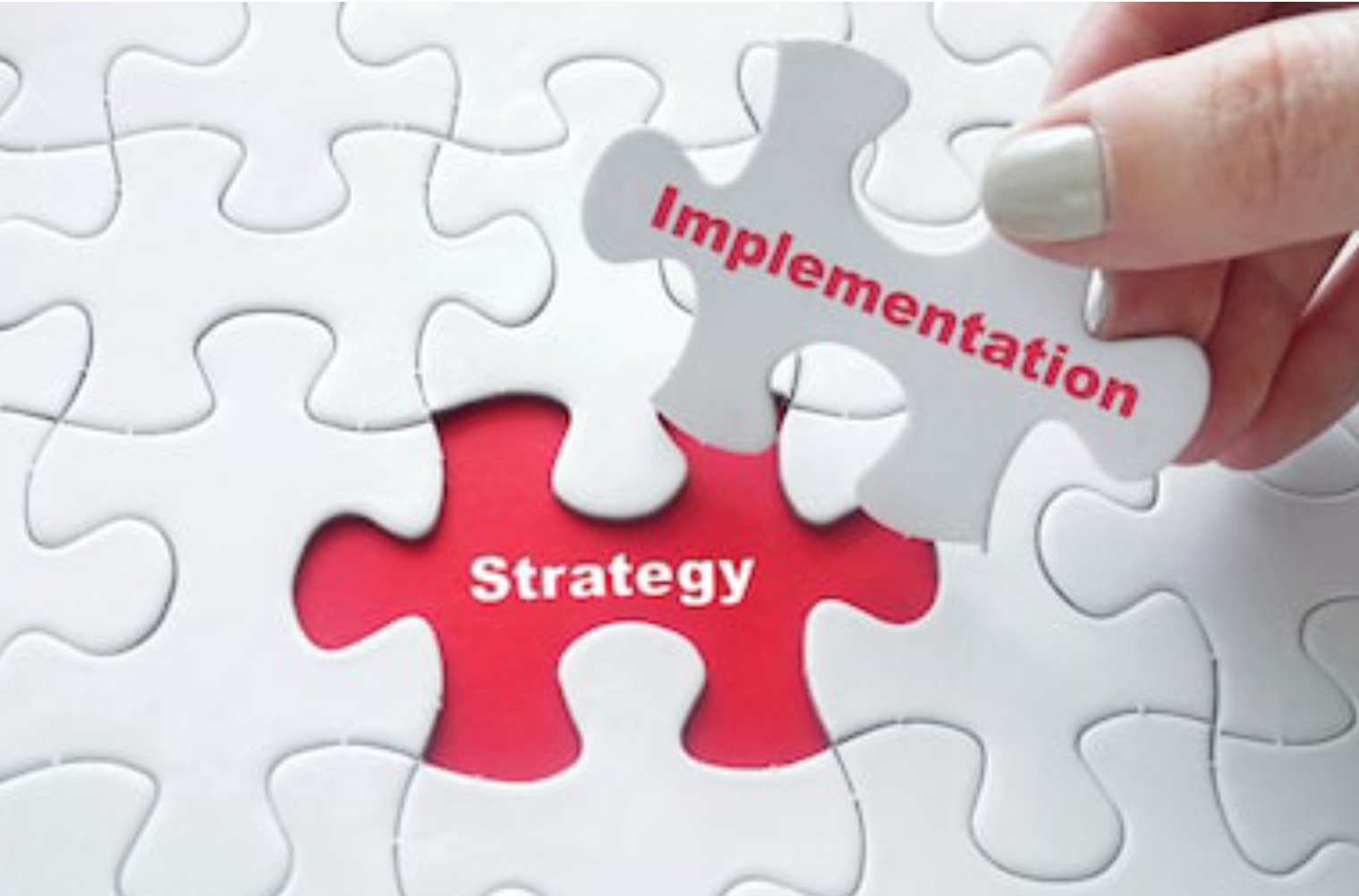
Loosen up on strategy development; tighten up on execution.
The strategy-building process I developed was necessary because although the field of experts who could help me develop a theoretically pristine direction was wide and deep, the number who actually could help in plan execution was close to zero.
The process I developed was simple, fast and time efficient. And unlike its brethren, it used the knowledge and experience of the planning team members rather than going with a third party planning expert — added benefit was the team building that went on during the process.
My process — the strategic game plan — was based on discovering the answers to 3 questions; the answers defined the strategy.
Growth — HOW BIG do you want to be?
Most planning processes end with financial results. They calculate the growth results of executing the strategic direction chosen.
My process starts with your growth intentions, and builds the strategy from HOW BIG you want to be. The reason is simple: more aggressive growth goals require a more aggressive — and risky — strategy, and more moderate growth goals need a more incremental — and less risky — strategy.
The traditional planning approach forgets that there is an extremely tight relationship between revenue growth and strategic intent; my strategic game plan doesn’t and that’s what makes my approach DiFFERENT than others.
Customers — WHO do you want to SERVE?
You have a goal to grow revenue 25% annually over the next 36 months. The next question is where are you going to get it? Where are you going to invest your scarce resources of time and money.
It boils down to selecting a group of customers who collectively have the potential to generate the revenue you have decided to go after.
To get the right answer to this question requires an intimate understanding of the various customers you serve. You can’t choose the customer group to generate the revenue you covet if you don’t understand the propensity of your various customer segments to buy from you — discover their secrets and success will follow.

Competitors — HOW will you compete and WIN?
It would be nice if you were the only provider of products and services to the customer group you’ve chosen, but that’s not likely to be the case. There is likely to be healthy aggressive competitors targeting the same customers you want to target, so the challenge you face is to determine how you will differentiate your organization from all others you will be competing with.
Why should people choose your organization when they have other choices available? What makes your team special in view of the alternatives available?
HOW will you compete is intended to explore the competencies of your organization that you can exploit to gain competitive advantage, with emphasis on how you can be positioned in the customer group you’ve chosen as the ONLY one that does what you do.
By answering these 3 questions using the expertise of those in the room you will have your strategy quickly (less than 3 days) and inexpensively (a personalized experience for your team). And it will be owned by every person who has contributed to it which means execution will follow.
Cheers,
Roy
Check out my BE DiFFERENT or be dead Book Series
- Posted 7.17.17 at 04:10 am by Roy Osing
- Permalink
July 10, 2017
8 practical ways great leaders get ideas from people

8 practical ways great leaders get ideas from people.
What exactly is a “great idea”?
How would you know one if it stared you in the face?
The fact is, an idea is judged to be great only when it is viewed in retrospect in terms of whether or not it led to success. Most new products like iPhone, for example, weren’t deemed to be amazing ideas until they were a hit with consumers.
The challenge is how leaders can generate so many new ideas in their organization, that the chance of hitting the mother load is maximized
Leaders should consider these tactics to build momentum for new idea creation in their organizations.
Core values
1. Begin by declaring that new idea creation is an essential ingredient of the organization’s DNA; new ideas are necessary to sustain the organization over the long term.
Ensure employees understand that this is not another ‘program of the month’ initiative that can be taken lightly.
2. Implement an idea collection portal for individuals to submit new ideas. Make it simple and easy to use. Invest in resources to quickly evaluate whether submissions have value to warrant further investigation.
Keep the idea originator in the loop with the status of their idea.
3. Ensure the core values of the organization includes creating new ideas. A core value is an activity or behaviour that is vital to the organization achieving its strategic game plan.
New idea generation must be included if any traction is to be made. If you are silent on the subject it won’t happen.
Job descriptions
4. Change every manager’s position description to include extracting new ideas from their team members. Every team leader must be held accountable for encouraging the innovation process.
Make tries an essential element of every team member’s daily routine.
5. Include new idea generation in the performance plan of every team member. Be specific to encourage the right behaviour - come up with 10 new ideas on how to improve the performance of product “A” by year end.
Review progress every 90 days with each individual.
6. Organize new idea conferences and invite all employees. Bring in outside business leaders who have a track record of monetizing new ideas.
Learn how they practically transformed an idea into reality; an idea with no execution is worthless.
Customer engagement
7. Ask customers for new ideas affecting your business. These people use your products and services, so what better source of new applications, new features and competitive drawbacks could there possibly be?
I realize that market research is the most commonly used tool to determine what customers are thinking, but it doesn’t go far enough. I’m talking about one-on-one conversations with your users as the best way to trigger new ideas.
8. Focus new idea efforts on the priorities of the organization. If finding and trying new ideas isn’t one of the top 3 priorities of the organization, don’t expect a flow of innovation. Leaders must declare the importance of building new boxes and dedicate resources to supporting the effort.
A great new idea may just happen by chance, but the probabilities are slim
Innovation cultures are created when leaders implement simple tactical steps that, operating synergistically, increase the likelihood that they will happen.
Cheers,
Roy
Check out my BE DiFFERENT or be dead Book Series
- Posted 7.10.17 at 04:17 am by Roy Osing
- Permalink
June 26, 2017
Why do great leaders always measure how people feel?

Source: Unsplash
Most leaders rely on financial metrics to determine if the organization is performing as planned.
Their balanced scorecard may include other targets in marketing (market share, product sales), customer service (overall satisfaction) and HR (employee engagement) but the overwhelming weight goes to the financial quadrant.
Looking at organizational performance through largely a financial lens leads to matters such as cost reduction and control, process efficiency, inventory management, collections performance, functional outsourcing and productivity improvement dominating the strategic and tactical agenda.
This is an “inside” view of performance management; it is a unidimensional approach to determining the activities necessary to enhance the long term health of the organization - and even adding an employee component continues the myopic inward gaze.
A sustained inward focus is unhealthy for an organization.
The customer metric must find its place in the hierarchy of priorities; it must be given equal status with its financial mate and preferred status to other internal measures.
Internal efficiency with customer dysfunction is a recipe for disaster; measuring customer perception is an absolute must for any organization wanting to achieve long term remarkable performance.
Customer perception is all about feelings so the great ones measure feelings.
What does the customer feeling metric look like?
Ask them…
▪️How they feel about the service you provide; don’t rely on internal statistics on service performance.
Internal metrics reflect what you think are the appropriate measures of service delivery; SURPRISE! they sometimes bear no resemblance to what the customer thinks is important. Do they feel ecstatic or do they feel you suck?
▪️What aspect of your service they hate and how do they think you can improve. It’s a visceral polarized thing. You want to know at the extreme negative end of the satisfaction scale that pisses them off the most.
▪️What the dumbest rules and policies you have and why are they so outrageous. What really drives them insane about how you treat them?
Internal rules and policies are the biggest triggers that force customers to go elsewhere; discover them and fix them.
▪️If you have a heart. This gets at whether you are viewed as an unfeeling artificial organization concerned only about shareholders and profits or a caring team whose primary objective is to add value to society.
▪️How they view the leadership of the organization. It’s one thing to get an opinion from employees, and quite another to get this external perspective. Extend the 360 feedback process to include the owners of loyalty.
These are questions intended to release an emotion response from the customer as opposed to merely looking at ‘the numbers’. They tell a different story than analyzing statistics, and paint a unique picture of how the organization is performing on the service front.
Numbers have no ‘tone’; words and emotion convey the severity of issues and as such provide leaders insight into the priorities necessary to improve service performance.
It takes guts for leadership to expose themselves to this type of conversation.
But if they do (and listen and act on what is learned) they will be miles ahead of any other organization that is content with an inside view of what is needed to improve results.
Cheers,
Roy
Check out my BE DiFFERENT or be dead Book Series
- Posted 6.26.17 at 05:46 am by Roy Osing
- Permalink
June 5, 2017
Why the downside is really an exciting upside in disguise

Source: Unsplash
Many people I associated with over my career were ‘one-timers’ when they ran into an unforeseen problem.
They would typically shout their displeasure - “Awe sh*t” - and make excuses to their boss for why they were unable to deliver the expected result.
They were victimized by the assault of a random event.
They reached back for the ‘Things happened that were beyond my control’ to explain why they were unable to succeed.
Like it’s ok to fail because things didn’t go as planned.
It’s nonsense of course.
There are ALWAYS unforeseen and unexpected events that reveal themselves to challenge the successful attainment of a goal. It is rare that a plan plays out according to its original script; only the naive and inexperienced believe that the plan is immune to the randomness of the marketplace.
That’s not the way the real world works despite school teachings.
Success-driven people are different than the ‘excuse artists’
They are naturals at looking at a potentially negative situation and finding the pony; they are magnets for an opportunity buried in the excrement.
When confronted with a setback over which they have no control, they deploy these actions to recover.
1. They emphatically declare to one and all their intention to NOT accept they bad hand they have been dealt and that they will find a way to get back on track. They want everyone to know that THEIR brand is all about coming back not giving in.
2. They study the forces that caused their plan to go awry; the detailed characteristics of the intervention at play. They work hard to get the facts that caused the problem rather than succumbing to emotion.
3. They evaluate the specific impacts created on the current course of action. They calculate the new plan vector from the old plan + interruptive force. With no counter initiatives where is the original plan likely to go given the unexpected disruption?
4. They look for nuggets; opportunities disguised as a body blow. Given the new force at play how can its energy be harnessed to create an intervention of your own? And a new direction? “This is how it might work” replaces “Damn it didn’t work”.
5. They don’t stop. They continue to iterate through possible adaptations until they find one that will work. Not a perfect solution (for that could only happen with a return to the original plan) but a good “imperfect” one.
Forces in the environment can’t be predicted but successful people can make the best of a bad lot in remarkable fashion.
Cheers,
Roy
Check out my BE DiFFERENT or be dead Book Series
- Posted 6.5.17 at 04:30 am by Roy Osing
- Permalink