



Roy's Blog
August 7, 2017
14 simple things leaders should look for to hire amazing people

Source: Pexels
14 simple things leaders should look for to hire amazing people.
The most critical role of a leader is to populate their organization with competencies required to execute on their business plan.
Yes, academic pedigrees are important but they don’t represent the tipping point for successful performance.
Here are 14 competencies that leaders should be looking for in people. They represent basic human character and define the difference between a mediocre organization and a remarkable one.
▪️Listening — you can’t discover what customers, employees, and colleagues want and desire if you are not a 100% listener. Find those that like to hear themselves talk.
▪️Apologizing — a successful recovery act after you have screwed a customer around (and every organization does sooner or later) begins with ’I’m sorry’. Make sure you covet people who do this naturally. Some can’t. Some don’t want to. Organizations need to be human; stepping up to your faults is the beginning.
▪️Respect for humans — creating memorable customer experiences is all about serving and taking care of people and it can’t be done if your people would rather be doing something else. If prospects don’t like humans, show them the door.
▪️High pain tolerance — greatness doesn’t come without disappointment and pain along the way. If people can’t endure the pain associated with progress no significant advancements are ever made.
▪️Desire to try — progress requires people always trying new stuff and failing along the way. That’s innovation. Look for people with a demonstrated track record of trying and learning from failure.
▪️Mellow yellow — you really do need folks that react well under extreme pressure. STOP—PAUSE—THINK—RESPOND THOUGHTFULLY. It’s virtually impossible to train people in this. Hire for it.
▪️Great memory — a good memory will go a long way to dazzling a customer. It shows you paid attention the last time you connected with the person. It shows you care enough to remember. And it’s a competitive advantage for the organization.
▪️Nano-inch seeker — progress is made by executing the game plan of the organization flawlessly, inch-by-inch-by-inch. There are few silver bullets that result in quantum leaps. Look for people who have demonstrated the capability to ‘get an inch of progress’ fast.
▪️Lifelong learning — if people aren’t always learning something new, how can they help the organization innovate move forward? They can’t. Look for evidence that prospects are constant learners and have a passion for probing the unknown.
▪️Infecting — the ability to ‘infect others’ with the virus of your strategic intent is critical in terms of executing it. Some people have the interest, passion and tenacity to get others excited about advancing the cause. This is an invaluable asset. Remarkable results are created through energy and passion, not from pondering.
▪️Making friends — deep customer relationships and loyalty are the result of trusted relationships built over time. If a prospect has a shallow friend network, ask why. It could be they don’t value relationships. Stay clear.
▪️Storytelling — stories ‘breathe life’ into a strategy. They paint pictures of what it looks like when the plan is being successfully executed in the field. You need people who can “light peoples’ eyes up” with a story about some aspect of your strategy. Talk the event. Talk the person. Talk…..
▪️Simple thinking — great performance originates with simplicity. Execution is simplicity. Elegance that can’t be implemented is worthless. Think simple. Find simple. Discover folks with the natural ability to dumb things down.
▪️Connecting with others — results are produced through processes working across the organization through a team of people working together to get the job done. This requires the ability to connect with others and build effective relationships with them.
The real important competencies to covet are basic human skills because it’s people that make organizations successful.
Cheers,
Roy
Check out my BE DiFFERENT or be dead Book Series
- Posted 8.7.17 at 05:37 am by Roy Osing
- Permalink
July 31, 2017
Why your speech really sucks and stops me from listening

Source: Unsplash
Why your speech really sucks and stops me from listening.
It’s not about what you are saying; it’s about the experience I have when your words hit me
Why don’t I listen?
1. Your message is irrelevant to me
I don’t particularly care about your topic.
People listen when your topic stimulates their emotions; when they feel your words. You might love your subject because you think it is intellectually interesting, but if it doesn’t touch me in an emotional way I tune you out.
You didn’t do your homework on what I want to hear. Your topic choice will either make or break my response.
2. You are like every other speaker who came before you
There is nothing particularly special about your ‘performance’ (and it IS a performance). There is nothing endearing; if I close my eyes you could be anyone; you are forgettable because you don’t stand-out from the ‘speaker herd’.
You look, talk and perform like every other speaker before you. You’re insipid and boring.
3. You are a ‘stiff’ on stage
Your stage presence is too formal and you exhibit no free-styling ability. You are monotonic and in your delivery. You are chained to the podium or some other device which protects you from the people in the audience.
You appear to have no energy and passion for your topic. You appear to be anxiously awaiting the end of your ordeal. I feel uncomfortable for you and wonder why you do what you appear not to enjoy.
4. Your message doesn’t ‘flow from your veins’
It doesn’t have a natural expression that exudes confidence from me. I don’t feel comfortable that you really know your material and that you are sold on it. You appear to be sharing someone else’s message as opposed to your own personal convictions.
5. You’ve obviously never been criticized for speaking too loudly
‘Volume of voice’ is a strength possessed by awesome speakers. They project themselves in the room so well they sometimes are criticized for shouting. Of course their passion and exuberance over their material are misunderstood by some as overbearing; but that can be forgiven.
Your timidity mask unfortunately dilutes your stage presence and prevents me from truly engaging with you.
Making a positive impact on me is all about establishing an emotional bond between you and I in the little time we have together
Your challenge is to deliver a superlative performance and leave me wanting more.
Cheers,
Roy
Check out my BE DiFFERENT or be dead Book Series
- Posted 7.31.17 at 05:03 am by Roy Osing
- Permalink
July 17, 2017
How to build a great business plan in 3 simple steps

Source: Pexels
Unfortunately, many organizations don’t develop a strategy to guide them into an unpredictable future; they rationalize the current planning process to be too complicated, time consuming and expensive.
And they’re right.
Numerous people gather in a room for a strategic planning session. Subject matter experts descend of the group and try to impress everyone with their detailed knowledge of the many governing factors that need consideration in the strategy building process, and many days are consumed — in my experience wasted — to get the strategy perfect.
Normally the services of a third party firm are used to both facilitate the session and provide expert content to the plan direction and efficacy. This is a clever way of avoiding having the people responsible for the strategy’s success taking ownership of the direction taken by applying their own opinions and good judgement.
The planning team is presented with material, they ask questions about various aspects of it and in the end most of the time they agree with the results of the analysis and direction proposed.
But at the end of the day, the traditional planning process takes so much time and energy, there is insufficient time left to develop how the plan will be executed in the trenches by real people. And the planning team is left with a strategy that may make sense on paper, but can’t be executed effectively because there was insufficient time devoted to implementation.
Get insanely focused on execution
Given that eventually any strategy or plan must result in action, the best planning process is predicated on the premise: keep it simple, get to the gut issues quickly and ACT.
Minimize the strategy direction setting time; maximize the implementation action planning time.
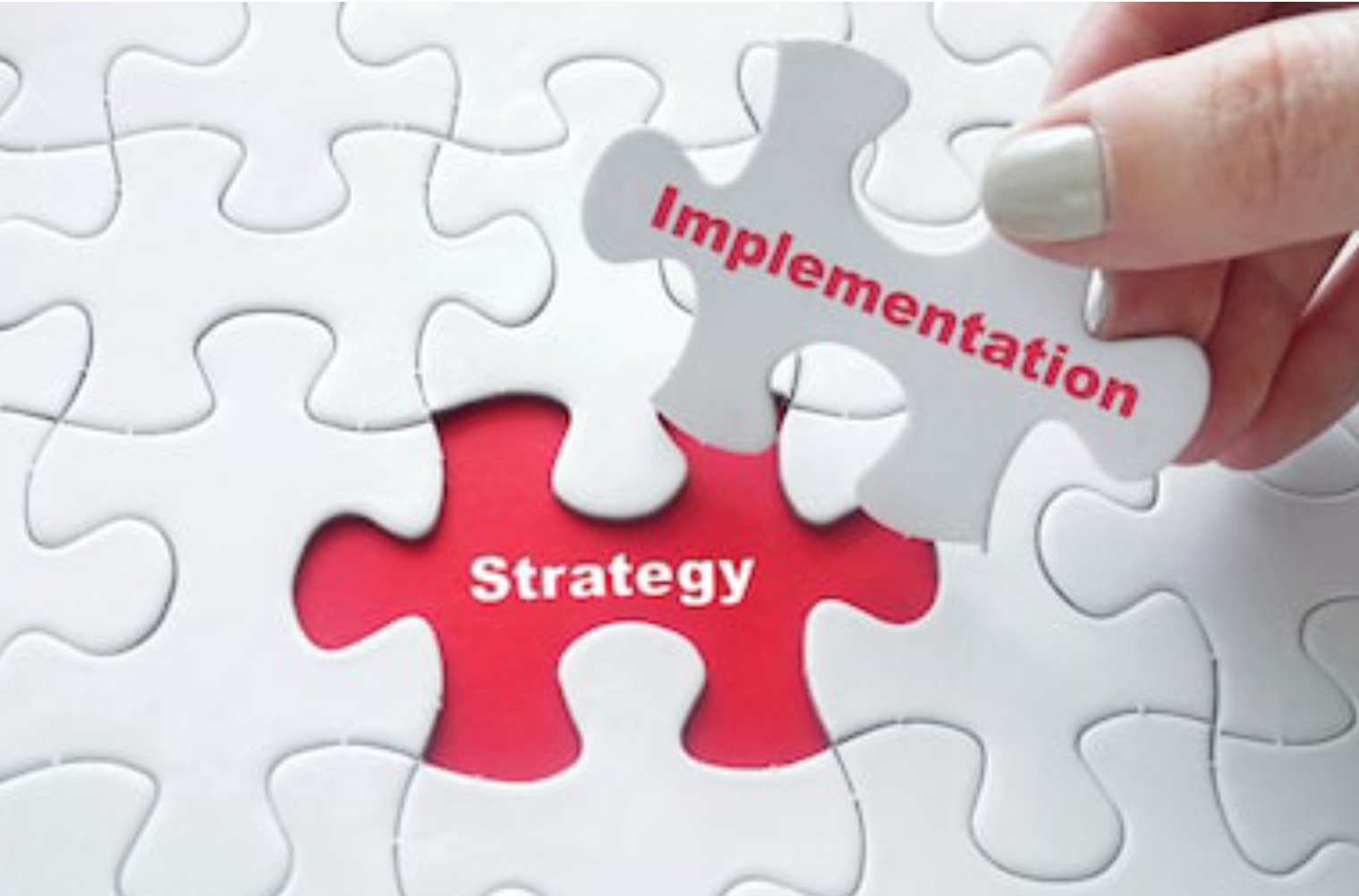
Loosen up on strategy development; tighten up on execution.
The strategy-building process I developed was necessary because although the field of experts who could help me develop a theoretically pristine direction was wide and deep, the number who actually could help in plan execution was close to zero.
The process I developed was simple, fast and time efficient. And unlike its brethren, it used the knowledge and experience of the planning team members rather than going with a third party planning expert — added benefit was the team building that went on during the process.
My process — the strategic game plan — was based on discovering the answers to 3 questions; the answers defined the strategy.
Growth — HOW BIG do you want to be?
Most planning processes end with financial results. They calculate the growth results of executing the strategic direction chosen.
My process starts with your growth intentions, and builds the strategy from HOW BIG you want to be. The reason is simple: more aggressive growth goals require a more aggressive — and risky — strategy, and more moderate growth goals need a more incremental — and less risky — strategy.
The traditional planning approach forgets that there is an extremely tight relationship between revenue growth and strategic intent; my strategic game plan doesn’t and that’s what makes my approach DiFFERENT than others.
Customers — WHO do you want to SERVE?
You have a goal to grow revenue 25% annually over the next 36 months. The next question is where are you going to get it? Where are you going to invest your scarce resources of time and money.
It boils down to selecting a group of customers who collectively have the potential to generate the revenue you have decided to go after.
To get the right answer to this question requires an intimate understanding of the various customers you serve. You can’t choose the customer group to generate the revenue you covet if you don’t understand the propensity of your various customer segments to buy from you — discover their secrets and success will follow.

Competitors — HOW will you compete and WIN?
It would be nice if you were the only provider of products and services to the customer group you’ve chosen, but that’s not likely to be the case. There is likely to be healthy aggressive competitors targeting the same customers you want to target, so the challenge you face is to determine how you will differentiate your organization from all others you will be competing with.
Why should people choose your organization when they have other choices available? What makes your team special in view of the alternatives available?
HOW will you compete is intended to explore the competencies of your organization that you can exploit to gain competitive advantage, with emphasis on how you can be positioned in the customer group you’ve chosen as the ONLY one that does what you do.
By answering these 3 questions using the expertise of those in the room you will have your strategy quickly (less than 3 days) and inexpensively (a personalized experience for your team). And it will be owned by every person who has contributed to it which means execution will follow.
Cheers,
Roy
Check out my BE DiFFERENT or be dead Book Series
- Posted 7.17.17 at 04:10 am by Roy Osing
- Permalink
July 10, 2017
8 practical ways great leaders get ideas from people

8 practical ways great leaders get ideas from people.
What exactly is a “great idea”?
How would you know one if it stared you in the face?
The fact is, an idea is judged to be great only when it is viewed in retrospect in terms of whether or not it led to success. Most new products like iPhone, for example, weren’t deemed to be amazing ideas until they were a hit with consumers.
The challenge is how leaders can generate so many new ideas in their organization, that the chance of hitting the mother load is maximized
Leaders should consider these tactics to build momentum for new idea creation in their organizations.
Core values
1. Begin by declaring that new idea creation is an essential ingredient of the organization’s DNA; new ideas are necessary to sustain the organization over the long term.
Ensure employees understand that this is not another ‘program of the month’ initiative that can be taken lightly.
2. Implement an idea collection portal for individuals to submit new ideas. Make it simple and easy to use. Invest in resources to quickly evaluate whether submissions have value to warrant further investigation.
Keep the idea originator in the loop with the status of their idea.
3. Ensure the core values of the organization includes creating new ideas. A core value is an activity or behaviour that is vital to the organization achieving its strategic game plan.
New idea generation must be included if any traction is to be made. If you are silent on the subject it won’t happen.
Job descriptions
4. Change every manager’s position description to include extracting new ideas from their team members. Every team leader must be held accountable for encouraging the innovation process.
Make tries an essential element of every team member’s daily routine.
5. Include new idea generation in the performance plan of every team member. Be specific to encourage the right behaviour - come up with 10 new ideas on how to improve the performance of product “A” by year end.
Review progress every 90 days with each individual.
6. Organize new idea conferences and invite all employees. Bring in outside business leaders who have a track record of monetizing new ideas.
Learn how they practically transformed an idea into reality; an idea with no execution is worthless.
Customer engagement
7. Ask customers for new ideas affecting your business. These people use your products and services, so what better source of new applications, new features and competitive drawbacks could there possibly be?
I realize that market research is the most commonly used tool to determine what customers are thinking, but it doesn’t go far enough. I’m talking about one-on-one conversations with your users as the best way to trigger new ideas.
8. Focus new idea efforts on the priorities of the organization. If finding and trying new ideas isn’t one of the top 3 priorities of the organization, don’t expect a flow of innovation. Leaders must declare the importance of building new boxes and dedicate resources to supporting the effort.
A great new idea may just happen by chance, but the probabilities are slim
Innovation cultures are created when leaders implement simple tactical steps that, operating synergistically, increase the likelihood that they will happen.
Cheers,
Roy
Check out my BE DiFFERENT or be dead Book Series
- Posted 7.10.17 at 04:17 am by Roy Osing
- Permalink