



Roy's Blog
November 11, 2019
5 of the most miserable things that suck in business

Source: Unsplash
5 of the most miserable things that suck in business.
The fundamentals of running a business haven’t changed all that much over time. Sure, business tools — the micro technologies applied to specific functions in a business — have been revolutionized by the Internet and the new capabilities it has spawned.
The ability to personalize offers and advertising messages, for example, has introduced an entire new dimension in marketing and sales that wasn’t possible a decade ago.
But the basic business principles espoused by some of the more noteworthy thought leaders of the past are still held to have just as much relevance today as they were then.
For example, Peter F. Drucker had simple yet compelling views of how businesses should be led and his guidance remains as vital signposts for business leaders to follow.
▪️ “There is only one valid definition of business purpose: to create a customer.”
▪️ “The aim of marketing is to know and understand the customer so well the
product or service fits him and sells itself.”
▪️ “Effective leadership is not about making speeches or being liked; leadership is defined by results not attributes.”
But there are some things that are practised in business today that need to stop; these remnants from the past — and many of them remain as examples of what leaders ignored from icons like Drucker — continue to find their way into business plans and marketing strategies and are a drag on business performance.
These are the five worse things that suck in business and they need to be expunged from how organizations are run.
1. Scale thinking sucks
Most business leaders ask the question “How can it be scaled?” when presented with a new business opportunity for a product or service. What they want to know is how the new product can be economically supplied to as many people as possible.
How the supply chain can be ramped up to produce the maximum number of units within an acceptable cost envelope.
The problem with scaling is that it takes an idea that was likely hatched from an analysis of a single customer or small customer group with narrowly defined needs and wants and is transformed into one which will be force fed to the largest population possible.
The demand-centric idea is subsumed by supply and cost considerations; the customer is lost in the process.
The reason scale thinking sucks is that supply should never rule the roost; demand should. And the real question that should be asked by leaders is “How can we efficiently provide this new product to its intended audience at a price that reflects its intrinsic value?”
2. Copying ideas sucks
Truly unique ideas in business are few and far between, notwithstanding the emphasis given to organizational programs around how to generate new ideas and how to be more creative.
The fact is that a new idea being adopted in one organization is most likely an old idea in another. Many businesses pride themselves in being competent in spotting best practices and adopting them; in fact the process of benchmarking best in class and robbing their ideas is often expressed as a core competency of a firm.
Innovation and creativity can’t be achieved by stealing an idea belonging to someone else; all that you really achieve is you increase the herd of copycats by one.
The reason copying sucks is that the process works against the natural process of discovering new ideas that might improve performance. As long as employees are on the hunt for an idea they can copy (under the guise of innovation) they will NEVER apply themselves to finding something revolutionarily new for their customers and their business.
3. Planning sucks
There is a misguided notion in business that if you have a great business plan, success is a stone’s throw away.
As a result, strategic planning, marketing planning, sales planning and ‘everything planning’ is given a high priority and employee education is littered with planning techniques and boilerplates to ensure the process is as sophisticated as possible and that it employs all the tools espoused by the planning experts.
My observation over my career is that the lions share of leadership time is spent charting the right course for an organization with little time left to ask the question “How can we execute the plan?”
Plans are only good intentions unless they immediately degenerate into hard work — Drucker
The reason planning sucks is that it trumps execution in most organizations; it assumes implementation will happen by serendipity. The reality is, however, it almost never happens because it requires people to do it with their vagaries of individuality and diversity.
If individuals don’t believe the plan will satisfy their own unique wants and desires — if they can’t buy in — they won’t be advocates to the change and the plan will die.
Success doesn’t come from throwing the plan over the wall and expecting employees to dutifully and effectively execute it. It comes from leadership spending 80% of their time on figuring out how to execute an imperfect plan and to find a way to engage the hearts and minds of every employee to make it their own.
4. Crowds suck
Businesses love crowds; the attraction that a large population or mass market brings to profitability potential if it can be converted to a large volume of product and service sales.
Whereas scale addresses how supply can be economically increased to provide large volumes, crowd or mass market thinking addresses how a product or service can be designed to appeal to the greatest number of potential buyers.
This infatuation with the masses tries to find the lowest common denominator solutions that appeal to everyone — to the average individual.
The market reality is, however, is that watering down the features and benefits of a product to try and meet the needs of the many, makes it appeal to no one. It’s bland and insipid. It’s value proposition is vague and unclear.
The reason mass marketing sucks is that it forces the business away from individuals who each have special wants and desires to the herd and numbers that define a potential opportunity. A people-focus is replaced by a superficial numbers one. Furthermore it results in a culture of pushers rather than creators of special value based on what individuals desire not on what you suspect the herd wants.
5. Precision sucks
In business, there is a thirst for precision; to be as accurate as it can be in the solutions it creates to meet the challenges it faces. It’s a fallback to the scientific method which postulates that a finite number of independent variables can be combined in a unique way to produce a predictable outcome.
The d = s x t thinking in business produces, for example, forecasting models that predict consumer demand and market share in a world of chaos and randomness.
The truth is, markets can’t be formularized; outcomes can’t be represented by the results of combining inputs in any particular way. At best, outcomes can be extrapolated or approximated but must always be taken with a grain of salt because before you know it, something unexpected happens that rocks your world and renders your good intentions invalid.
The reason precision sucks is that it sets up unrealistic expectations that things will work out the way they were intended. And it furthermore reduces the capacity of the business to respond and adapt when they don’t (and they never do).
Successful businesses definitely have a “Plan A” that is constructed with the best analytical tools at leadership’s disposal, but they also have contingencies in the wings to draw on when things start to go awry.
And they invest heavily in tracking and monitoring to know when Plan A is at risk; they never let their defences down.
The successful businesses I know:
▪️ are good at anticipating but GREAT at responding to unforeseen events;
▪️are comfortable with an imperfect let’s head west strategy;
▪️view the ability to execute as a competitive advantage;
▪️focus on the individual and creating value that satisfies their special needs;
▪️build a culture to create original and different ideas; they see themselves as best in class.
They’ve found a way to get rid of what sucks.
Cheers,
Roy
Check out my BE DiFFERENT or be dead Book Series
- Posted 11.11.19 at 04:55 am by Roy Osing
- Permalink
November 4, 2019
Why a high salary in the six-figures is absolutely the wrong career goal

Source: Unsplash
Why a high salary in the six-figures is absolutely the wrong career goal.
When it comes to one’s career plan, money is the way we keep score; the amount of money we earn is the way we judge whether or not we are successful.
And it’s the way we compare ourselves to others; if our annual salary is higher than a colleague’s, we conclude that we are more successful that they are.
And there seems to be a salary threshold that differentiates “good money” from making an average wage. People talk about earning a six-figure salary as the threshold for success; once you’re into six-figures you’ve made it and anything lower gets less attention.
The result is that six figures is the target for most people who want to aspire to greatness in their career and how to achieve it becomes the challenge that occupies people’s focus, time and energy.
But it’s the wrong question.
The question isn’t “How do I achieve six-figures?” but rather “What do I have to do to earn six-figures?”
If you do the right things consistently, the six-figure reward is the natural result.
There’s no fast track to six-figures; at least I’ve never seen one in my 30+ year career. Yes, every once in a while someone gets a lucky break and their salary soars but this is the exception rather than the rule.
Most of us must grind out a six-figure future. We have to consistently deliver value to the people around us — value that is both compelling and relevant, and that addresses what people want and desire.
These are 5 actions I took over four decades that both rewarded me with a fulfilling career, established my personal brand as different from the crowd and provided me with satisfying financial returns.
1. Do whatever is required in the moment
Be that “go-to person” who can be pulled into action when there is a crisis in the organization; when someone must be called upon to fix something that is broken.
Don’t be encumbered by your position description; be prepared to stop what you are currently working on to jump into a project that the organization deems to be a high priority.
I knew many people who resisted responding to an unanticipated project; who viewed what they were currently working on as their primary mandate. They faltered in their career because they didn’t help the greater cause; they couldn’t be enlisted when the organization needed them.
2. Build alliances inside and outside
Successful individuals rarely do it on their own; they need people around them who support their efforts and talk them up to others. Having colleagues “spread your word” is essential to being noticed and rewarded for your efforts.
It takes a community to create a winner, so be prepared to devote time and energy into creating communities of support and follower-ship. Make a point of meeting someone for that after-work libation as a way to maintain relationships and update them on your current activities.
3. Be different
You don’t find successful people in a crowd where they look the same and perform their roles the same as everyone else.
The crowd is a home for those who like the safety and comfort of not taking risks; who follow what others do and who love the consistency of crowd activity which lacks up and down variability — these attributes don’t apply to individuals who have successfully moved upward in any organization.
Take every opportunity presented to you as a gift to be different. I have a trick to keep my be different mantra constantly in front of me. I ask myself “How can I do this differently?” as the context for how I approach a new project, role (or a vacation for that matter) I have been given.
So, for example, when I was elected president of our home owner’s strata corporation, the first thing I considered was how I could do the job in a way that most other people don’t. And this led me to apply more business principles and processes to the decision making process, making it more productive and raising the strata council’s performance.
4. Choose a mentor wisely
Most people are attracted by another professional who has a long list of academic credentials and consider the person with a plethora of abbreviated degrees behind their name to be prime prospects to provide advice and guidance.
Successful people know that it is important to be influenced by people who have strong schooling, but they also realize that it is not sufficient.
Organizations perform in seas of unpredictability and uncertainty and achieving results in this environment is not all about what you know; it’s about what you DO and how you adapt to unexpected events that show up when you least expect it.
Make sure your mentor portfolio includes a healthy number of mentors who have actually done something unique and special in the real world rather than someone who has discovered a formula that explains some empirical phenomenon.
The reality is that it may be interesting to know how to solve a differential equation, but it’s unlikely you will ever find a business problem where that specific mathematical tool will be key to finding a workable solution.
5. Spot missing competencies
Every organization confronts the need to change as market dynamics impose new opportunities and threats. New technologies open up completely new product categories, regulations change to attract more competition in home markets and customers generally have more choices and therefore more power to exert on their service provider.
Each of these forces begs the question “Do we have the necessary skills and competencies to respond and capitalize on them?”.
Successful people are constantly watching for discontinuities in the market that will force their organization to change, and they develop a profile of the employee needed to survive and thrive in the new chaos.
An order of magnitude increase in the number of competitors in your market, for example, might require marketing and sales skills that you don’t currently have; a new technology might need a new specialized knowledge base to convert this technology into high performing product solutions.
If you are perceive to be on the cutting edge of change, with the ability to translate new challenges into the required skills and competencies, six-figures will be within your reach.
A six-figure salary requires a proven five-step performance plan.
Consider these actions to be your priorities if you are serious about reaching your goal.
Cheers,
Roy
Check out my BE DiFFERENT or be dead Book Series
- Posted 11.4.19 at 04:40 am by Roy Osing
- Permalink
November 2, 2019
How doing digital marketing will make you an unbelievable winner
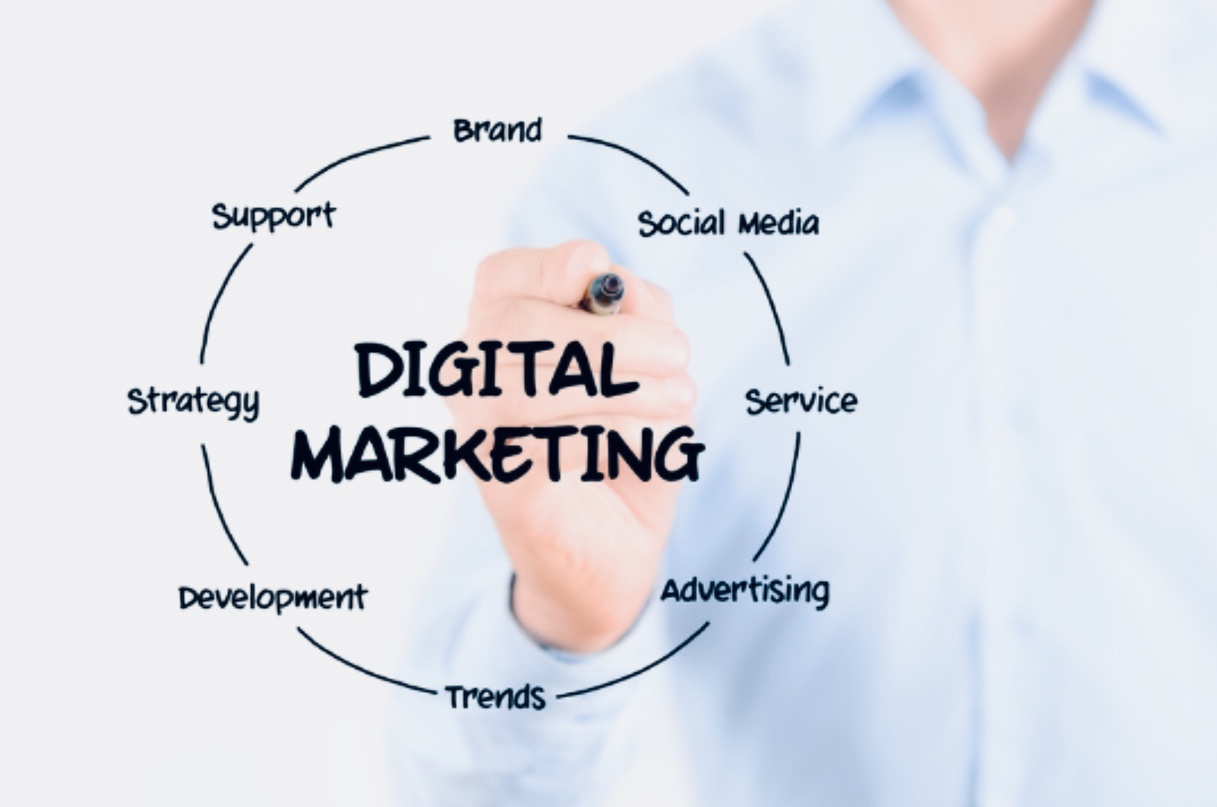
How doing digital marketing will make you an unbelievable winner.
When it comes to making your marketing efforts a success, standing out from the crowd is a key aspect of how you can ensure you’re going to be seen. Consumers are constantly flooded with a sea of various advertisements right now. If you aren’t joining in and using great digital marketing techniques you’ll miss out on this huge opportunity.
Digital marketing is essential to grasping a customer’s attention and getting them to your website to buy your products or services. If you haven’t put a lot of time and effort into why digital marketing is so important, that’s understandable. It can be overwhelming to think about, but now is the time to take the plunge and make some time to learn more.
There are a lot of great ways digital marketing can help you stand out, grasp attention, and beat out your competition. If you’re doing things correctly you’ll find a lot of success as a result of your digital marketing efforts. Pros from companies like Nelson Internet Marketing can help you learn more.
Here are five proven ways digital marketing will make you stand out from the crowd.
1. You’ll get the chance to amaze your customers
Customers can be picky (and who can blame them?) so you need to make sure you’re taking every chance you can possibly get to amaze them. Digital marketing is one way you can amaze both current and future customers. You can use social media posts, videos, or even a blog post to grab their attention and wow them.
With digital marketing, you can create an ad that isn’t easily ignored. You can make something that your customers will be actively interacting with. If you post on social media they’ll be compelled to comment. If you create a blog post they’re going to be spending time reading it. A video will be something they can play and watch intently.
All of these things add up to you being able to grab their attention and stand out from the crowd. You’ll need to make sure you’re creating great, engaging content, but that’s not something that should deter you from using digital marketing.
You can always get help with creating good content if you need to.
2. You’ll get the chance to reach a wider audience
Being online and using digital marketing opens you up to a world of possibilities you may not have considered before. There are obvious things like social media platforms where you can post and engage with your customers, but you also have a few opportunities you may not have considered.
Social media influencers are a huge benefit to businesses using digital marketing to stand out. You’ll be able to use someone who has a personal touch and direct connection with their followers to advertise your product. Your social media reach will increase exponentially by using the right influencers based on your product or service.
There are some great marketing tools out there to help you figure out which influencers would be ideal for you to contact. Yes, you could just reach out to anyone with a large following, but that’s not going to give you the targeted traffic you’re hoping for.
Using the tools to your advantage and finding the right influencers will be a key step in social media marketing.
3. You’ll get the chance to add a personal touch
Customers love knowing they’re valued and that the people getting their business are also real people who truly care about their customers. With digital marketing, you’ll get the chance to add that personal touch with every strategy you use. This goes beyond posting and engaging with your followers on social media, although engagement is definitely important too.
When you put yourself in a greater position of being an online digital presence you get the chance to add a personal touch to your brand. That could be anything from a video highlighting the people who work for you to a better chance to respond to customer complaints more efficiently through reviews or social media posts.
Whatever you put out there as a digital marketing effort is going to reflect who you are as a brand and a person. That extra personal touch is what will make your product or service more appealing to customers than anyone else out there. Who you are as a person will shine through and that will make you stand out.
4. You’ll get to put a face to a name
This goes along with your personal touch but it’s still a little different. Digital marketing gives you a chance to put a face to your product or brand’s name. That’s a new way to stand out that your competitors might not be using. If they’re using outdated marketing techniques you’re going to stand out because your brand now has a face.
Being a memorable face in a sea of similar products is going to be a great chance for you to gain new customers. They may not click your link and buy right away but if the product is something they need they’re likely to remember you over other similar products because you put a face to your name. It’s another chance to enhance that personal touch. Use it.
5. You’ll get to have some fun
Digital marketing is a fun way to market. It doesn’t have to be as complicated or overwhelming as you might be thinking it is right now. You’ll get the chance to exercise some creative muscle and have some fun creating posts and content your customers will love. Having fun is another way your customers are going to remember you and how you stood out from everyone else.
Think about the last time you saw a post from a brand like Wendy’s on Twitter. They’re known for having a great time online and they’re getting a huge boost of traffic to their social media accounts and their stores because of it. This is just one way to have some fun and make digital marketing a way to stand out from your competition.
You don’t have to steal the Wendy’s playbook and use it word for word, just think of the general idea. It’s an account that doesn’t cost anything to start, and posting on the platform is free. They’re just having some fun with everyone that sees their tweets and it’s working for them. You can use that idea and make it work for you too.
Conclusion
Digital marketing truly can help you stand out in a myriad of ways. If you’ve underestimated the chances you have to pull away from the pack and stand out before now, it’s time to realize the power digital marketing has.
You don’t have to use every digital marketing strategy out there but finding the ones that work for your business can make a huge difference in your bottom line. Take the plunge and start working on your digital strategy. You won’t regret it.
— Gabe Nelson is a content specialist of over 7 years of experience. Just out of highschool he set off crab fishing on the bering sea in Alaska. From there he went back home to finish his college degree at the University of Montana. He has a passion and keen understanding when it comes to Amazon inside and out. He has written hundreds of content pieces in numerous niches. Currently, he lives in Missouri with his wife and kids enjoying the peaceful town of St. Joseph.

- Posted 11.2.19 at 04:22 am by Roy Osing
- Permalink
October 28, 2019
5 secrets I wish I knew before my career started

Source: Unsplash
5 secrets I wish I knew before my career started.
I’m often asked what lessons I learned over my career that I wish I would have known when I started out.
If I could take what I learned over my formal 33+ year career and was able to apply it when I started my journey there is no question I would have had an easier time.
I would have been able to avoid some common pitfalls I encountered, I would have been more productive and a better leader. I would have been able to add more value to the organization than I did.
In no particular order, I wish I knew these 5 things when I started out.
1. Education matters less than you think
A slight overstatement, perhaps, but I wish I knew then that there is too much fuss made about one’s academic pedigree and the belief that the MBA (or whatever) would guarantee success.
So of course everyone who wanted to aspire to greatness rushed out to take as many courses as they could to get another piece of paper with the mistaken belief that the more you knew, the higher up the ladder you would go.
I learned that it’s hogwash. Yes, you need a good (not great) academic background to even be in the game of advancing your career, but the thirst for more knowledge with the papyrus to prove it is an ineffective use of one’s time and resources.
There are other things that matter more in terms of influencing whether one succeeds or not.
2. Non-compliance breeds success
This is a tough one, because schooling teaches us to comply; to follow the instructions we are given and if we do a real good job at following the rules we just may get rewarded with an “A”.
I wish I knew then that compliance is not the formula for success; it makes you the same as everyone else; you are buried in the herd of people who all look alike and who are all aspiring to be the best copycats there are.
If I had understood that the opposite is actually a better determinant of success — i.e. not conforming with best practices and the standard ways of doing things.
You see the thing is, if you decide to be a conformist, you’ll likely never be noticed. Why would anyone spot you when you look like the person next to you in every way?
It took me a while to figure this out, but once I did I always asked myself the question when confronted with a challenge: “How can I do this differently?”
Not understanding this truism probably cost me at least 5 years if progression in the early part of my career.
3. The perfect anything doesn’t exist
From the first day on the job day we are told that we must produce the perfect plan; that the studies that we are asked to do are complete and accurate — a.k.a. perfect.
Well guess what? I wish I knew then that no plan, strategy or study ever produces the results that are intended (they teach you the opposite at school). At best they produce variations on the theme because the underlying assumptions don’t pan out in the real world.
The problem is that we end up spending a disproportionate amount of time getting the plan or study right rather than getting it just about right and trying it out in the real world of fickle customers and hungry competitors.
I learned that trying an imperfect ANYTHING (and modifying it as you go) gets results. It led me to make more tries than my peers, make more mistakes than their conservative bent and beat them to the top.
4. Reacting is more productive than anticipating
I wish I knew then that with unpredictability and uncertainty the new normal in world affairs, winning in the market was more about what one’s organization did in reaction to unexpected events that shocked them than it was on sticking to their original plan.
That the real objective of trying to maximize the chances of success was to be as good as you can at anticipating future events, but be GREAT at reacting when the future doesn’t unfold as it should.
We wasted time and suffered market position by having to rethink our plan when it suffered a blow due to the unexpected, instead of having a backup contingency waiting in the wings to perform in the moment things went south on us.
5. It’s what you DO not what you know
I wish I knew then to spend more of my time and energy on accomplishing things — actually getting things done — rather than in trying to improve the intellectual quality of my business plans and proposals.
In retrospect, I wasted precious time and energy trying to fancy-up my proposals by more analysis using sophisticated tools to predict specific outcomes rather than on cutting short my up-front analysis and getting to implementation sooner.
I learned that people succeed on the basis of what they produce not on the level of their academic competence. Theories and principles are fine, but unless they are accompanied by passion, energy and perseverance nothing gets done and no one is rewarded.
There is no reason people have to learn the hard way when others have already absorbed the pain and found out what works.
I hope my 5 secrets will help you avoid common pitfalls that befall everyone in every career path.
Cheers,
Roy
Check out my BE DiFFERENT or be dead Book Series
- Posted 10.28.19 at 04:34 am by Roy Osing
- Permalink