



Roy's Blog: August 2021
August 7, 2021
Why forecasting is for businesses that really can’t live in the moment

Source: Pexels
Why forecasting is for businesses that really can’t live in the moment.
Forecasting has long been standard practice for businesses across all industries and sectors.
Every business-related publication, including the likes of well-respected blogs like Harvard Business Review, has dedicated thousands of words to explaining exactly why proper forecasting is necessary—and indeed crucial—to the financial and operational success of your company.
Traditional business strategies claim to provide us with the ideal tools and methodologies to build the perfect, airtight plan. They offer us analysis in demand and forecasting models, structured SWOT analysis, decision-making frameworks, and a host of other seemingly essential approaches.
I agree that these are mature and logical strategies that can assist businesses to chart their future paths. But unfortunately, that’s as far as my support for forecasting reaches.
Even Harvard Business Review has admitted in one of its effective forecasting guides that prediction is only possible in a world in which actions have been preordained.
This world-leading business publication states outright that no amount of present action can influence future outcomes, as the future unfolds in significant and usually quite unexpected ways. The occurrence of the Covid-19 pandemic is a perfect example.
Considering this, I believe that while forecasting can be a mildly helpful tool in charting future courses for growing businesses, it’s definitely not a useful approach for predicting or adapting to the future.
In short, forecasting is for businesses that can’t live in the moment, and instead spend their team fruitlessly attempting to predict the future. All while forsaking current opportunities and advantages in their paths.
Here’s why.
Reaction to the unexpected is an ideal business plan
According to Roy Osing, the traditional approach to forecasting doesn’t touch on the principle of responding to the unexpected —and that doesn’t work to your advantage.
Successful companies are those who can adapt rapidly to surprise events they weren’t anticipating at all. Companies that die are the ones that fail to adapt, regardless of how proficient they were at drafting forecasts.
Chances are you’ve never seen a plan unfold in exactly the way you expected it to. This simply isn’t possible, nor is it realistic. Instead of forecasting, try Osing’s planning on the run model — Plan, Execute, Learn, Respond, Execute — with the present instead of banking on an uncertain future.
Quick reactions trump planned reactions
The world of business is fluid, imperfect, and ever-changing. It can’t be predicted or even explained by trend analyzes, which is why even your best-made plans will hardly ever work.
Businesses that are always trying to live in the future instead of in the moment will simply never be able to keep up.
The ability to react quickly and proactively to change will fare better for your business than trying to make the ‘perfect’ moves based on shaky forecasts. As long as you’re making many imperfect moves at a rapid pace, you’re setting yourself up for growth. Or at least progress in a positive direction.
Failure is a valuable teacher — and forecasting can’t prevent it anyway
Let’s face it. Businesses research the future and constantly create forecasts in a desperate bid to evade the risk of failure. It’s completely understandable that every entrepreneur wants to achieve success. But at the same time, success only encourages you to stay within your current boundaries and parameters.
If you’re achieving success in the present, you may feel the temptation to rest on your laurels. You may assume that you can achieve the same level of success in the future by doing exactly the same thing.
In most cases, nothing could be further from the truth. The truth is that no amount of forecasting can prevent failure, so it seems fruitless to avoid it.
Forecasting is prone to all sorts of corrupting influences anyway, including bad data, excessive optimism, and a general lack of transparency.
Failure forces you out of your comfort zone and prompts you to devise innovative and often unexpected solutions to challenges and crises.
I’m sure you can imagine which scenario promotes faster, more sustainable growth in the long run. Live in the moment, try your best to adapt to current challenges, and remain willing to learn from your failures at all times.
Accept uncertainty and live in the present
So, what’s a business to do in the face of uncertainty if they have no control over predicting the future?
According to Forbes the only way forward is to be better prepared for disasters and unexpected developments. Statistical modeling can give you a general idea of what to expect in the coming weeks and months. But don’t get carried away. It really is just a general idea and nothing more.
Businesses are better off accepting that the world is uncertain, learning how to use data to assess the current levels of uncertainty they face, and augmenting this uncertainty range. This can be done using innovative and time-appropriate solutions.
The rest, as they say, is up to fate.
— Addisson Shaw is a passionate writer with a background in data science. Her writing focuses on the wonders of technology in marketing and business management. During her free time, Addisson loves exploring the outdoors and enjoys going on hikes with her friends.

- Posted 8.7.21 at 06:51 am by Roy Osing
- Permalink
August 2, 2021
5 simple ways to ‘bond’ with a person and why it’s better than employee engagement

Source: Unsplash
5 simple ways to ‘bond’ with a person and why it’s better than employee engagement.
First of all a leader can’t bond with a crowd. You can influence the crowd and you can get them collecting leaning your way as supporters.
But it’s virtually impossible to bond with individuals who are in a crowd; they share a common denominator which is exercised along with everyone around them.
This is why I have difficulty with company employee engagement programs created by human resource professionals.
These programs generally are designed to address the employee population at large with little regard for the unique engagement needs of specific individuals.
Analysts conclude what the ‘average employee’ (no such thing though) needs to be thoroughly engaged around the organization’s goals and strategies; they build a program around their conclusions and lay it on the masses.
These general programs do positively impact some people, but miss the mark with others.
Employee engagement nirvana is much more than simply engaging people; it’s more about bonding with them in a way that not only gets their support for corporate goals, it does so by arousing their passion.
Rather than more passive support, the bonded employee looks for ways to implement the organization’s strategy and, with “fire in their belly”, advocates the same level of commitment to other employees.
Personal bonding is employee engagement on steroids.
My experience shows that bonding is a personal act that takes place between two people one-on-one. It’s the only way to unleash the passion and emotional energy in people.
I learned these 5 ways to do it.
1. Find influencers in the workplace
You need to be strategic in how you launch your bonding effort. Wandering into the workplace and randomly starting the process with anyone you bump in to has its limitations in terms of the final result; it means you will most likely have to touch each person in order to make a difference.
The process that worked for me was to begin by targeting the influencers in specific teams; people who were listened to and viewed as thought leaders by their peers.
Influencers are respected and followed by others when they support a new cause, and if you can bond with them, they will likely be able to convince their colleagues to join them in your journey.
2. Be with them where they work
Bonding doesn’t happen when you beckon people to come to you for a conversation; you must show up where they do their thing everyday.
The leader’s presence has a number of benefits: it shows they care enough to learn what is going on throughout the organization, it provides the opportunity for them to listen to what needs to be improved, and it empowers employees to voice their views.
The old mantra was ‘managing by wandering around’; the new school is leading by ’serving around’ where the key question leaders ask is “How can I help?”. A one-on-one conversation on what can be done to make someone’s job easier and more rewarding is the magic bonding agent.
3. Explain in detail their role in implementing the organization’s strategy
Bonding isn’t about making a BFF. The leader’s job is to engage employees to fulfill their organization’s destiny.
And the only way it can happen is if each person clearly understands what they need to do to deliver the declared strategic goals — the things they need to continue to do and the things they need to do differently.
If they don’t have a clear line of sight to the objectives the organization is trying to achieve, typically inconsistency and dysfunction set in (as individuals decide themselves the action that needs to be taken), and little progress is made.
4. Treat them as individuals
It’s a trite expression: no two individuals are the same, but it’s amazing how often company programs are developed with the ‘average’ employee in mind. The most common employee need is used to create a program rather than customizing it to reflect the special wants of the individual.
A good example is employee recognition programs where recognition events and rewards are standardized for everyone. Everyone attends a common event where their efforts are applauded and they are all provided with the standard token of appreciation.
Bonding with a person means that first you have to accept them as unique and special in some way and THEN discover what specific motivation and incentive will influence them to support company goals.
It’s much more difficult to personalize your bonding pitch for each person, but the success rate, compared to a one-size-fits-all approach, is far higher.
5. Provide the tools they need
This is the most basic need of every employee; if they don’t have the tools to do their job, they are constantly fighting an uphill battle to deliver the results expected of them. And yet, many organizations are unwilling to make the investment required to make it easier for people to do their jobs.
“They don’t need a tablet”, “We can’t afford to give everyone that high end calibration tool” are the kind of statements that extract bonding value in an organization.
People see leadership’s desire to increase employee engagement and the unwillingness to help them do their job as conflicting and disingenuous. Don’t micro analyze the payback on investing in your employees basic job needs; provide what they say they need and watch the bonding magic.
Bonding is an emotional connection that produces a incredibly powerful motivation to serve the organization.
Expunge the term ‘employee engagement’ from your lexicon and replace it with ‘personal bonding’ (only if you want folks to follow you to the ends of the earth).
Cheers,
Roy
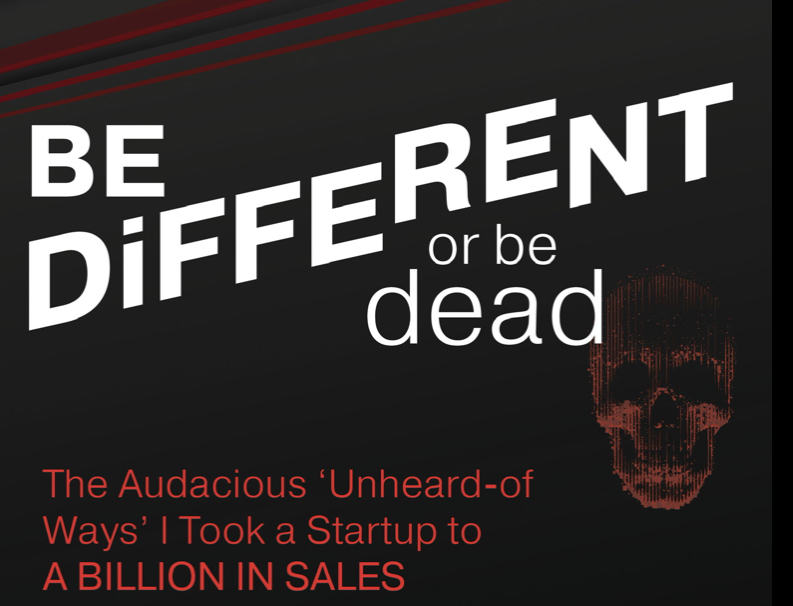
Check out my BE DiFFERENT or be dead Book Series
‘Audacious’ is my latest…
- Posted 8.2.21 at 01:49 am by Roy Osing
- Permalink