



Roy's Blog: Customer Service
June 8, 2015
Why playful organizations actually have a competitive advantage

Source: Unsplash
Why do organizations that ‘play’ have a competitive advantage?
Most organizations search for ways to differentiate themselves from their competition at a very high level: operational excellence, technology and products. Some actually believe price is a differentiator but I won’t spend nanosecond on the subject.
There is one dimension that rarely gets included in the conversation - playfulness.
It seems that organizations that are playful and have fun seem to do well against their ‘tight’ competitors.
Playful businesses allow their employees to express themselves as individuals; to talk to their customers in an informal way as opposed to following a script crafted by someone in a staff group somewhere in head office.
They expose the office fun to their customers. The banter that goes on among employees ‘when no one is watching’ is presented to their customers with no hesitation.
On Westjet all of the flight attendants are introduced, and ‘the lovely Marsha’ in the mid-cabin section always gets a deserved round of applause.
Employees of playful organizations step out of their formal role and do something unexpected of them.
I recall the pilot of a Westjet flight introducing himself to the passengers before stepping into the cockpit and giving us the details of the upcoming flight in person as well as their plan to introduce new streaming video technology to replace the traditional way of viewing movies.
He said he liked to do things differently than others.
Very unexpected and memorable. I have never seen any pilot from any other airline do this (and I don’t expect I ever will).
Playful organizations inject humour in carrying out their official tasks. Ever hear a Westjet flight boss give pre-flight safety instructions? Their speech covers the required details but it is laced with a casual humour that makes the process of seeing once again how to fasten a seat belt more interesting and enjoyable.
Playful organizations seem more human than others, and are rewarded with customers who care about them and stay with them through thick and thin.
Sounds like a #CompetitiveAdvantage to me…
Cheers,
Roy
Check out my BE DiFFERENT or be dead Book Series
- Posted 6.8.15 at 04:10 am by Roy Osing
- Permalink
March 9, 2015
Why the receptionist behind the counter gets absolutely no respect

Source: Pexels
Why the receptionist behind the counter gets absolutely no respect.
The receptionist is the most undervalued position in any organization, and leaders need to deal with the matter and make it right.
I take no issue with marketing analysts, sales people, finance specialists and business development managers getting attention.
But the lonely receptionist gets very little attention, and it’s just not right.
Consider the facts.
The receptionist position is generally reserved for a new employee.
They are generally hired with minimum compensation and few traditional job skills and credentials are required. They generally possess satisfactory communications and computer skills and have a pleasant disposition about them.
They enter an organization and soon discover that they are undervalued in terms of the impact they have on the organization. Yet they have literally no internal currency.
The it’s only a receptionist attitude pervades. The position occupies the low rung on the hierarchical ladder.
The receptionist is a position with relatively low perceived strategic value. And that’s shameful.
Really?
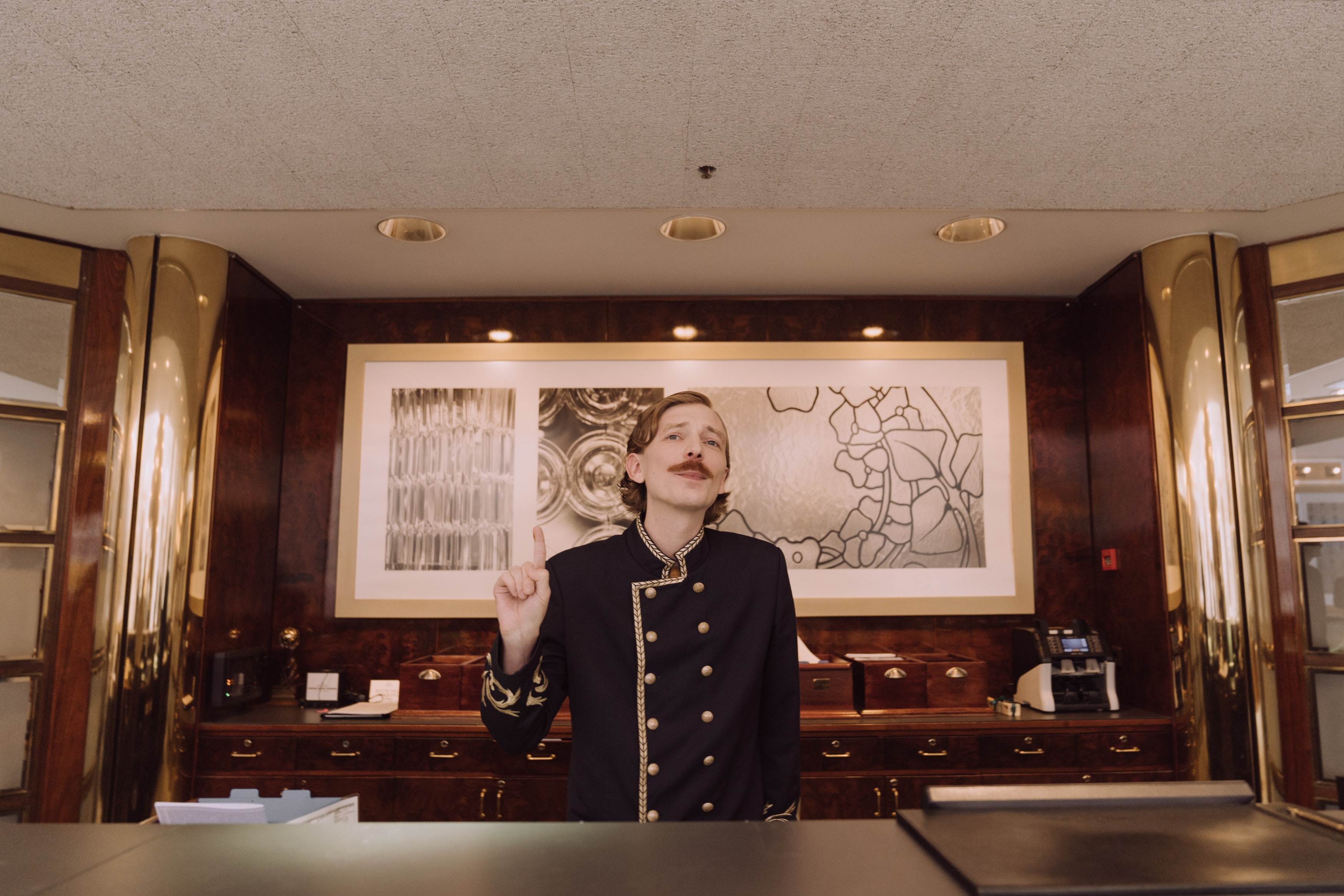
Who is the face of the organization when someone walks into your offices?
Who is the first voice they hear when they call in? Your lowly receptionist, that’s who.
They control the impression that someone has about who you are and what values you stand for. They control the experience someone has when they engage with your organization particularly when there’s a problem that they have to chase to resolution.
They literally personify the organization’s humanity that is projected to customers and business colleagues. If the receptionist cares, the customer concludes your organization does as well.
Source: Pexels
The receptionist deserves to be viewed in higher esteem and have a voice in how your organization is run.
Ever ask them how your business could be improved?
These are the questions they could answer that will give leaders clues on how performance could move to a higher level:
— What do people generally think of you?
— What rules and policies should be changed to make it easier for people to deal with you?
— How do people feel about the customer service you provide?
— How do you compare with the competition?
— How do people feel about the attitude of employees?
— Do they like the company’s products and services?
— How well do you think employees cooperate in solving a problem a customer has?
— Who in the organization is really helpful in dealing with customer issues?
The answers to these and other questions can be provided by the lowly receptionist if leaders would only include them in strategic and operations matters.
You would be surprised with their answers and the insights they give you to improve your business.
Cheers,
Roy
Check out my BE DiFFERENT or be dead Book Series
- Posted 3.9.15 at 04:54 am by Roy Osing
- Permalink
February 23, 2015
5 really easy ways to make WOW! customer service

Source: Unsplash
5 really easy ways to make WOW! customer service.
Providing a WOW! customer experience is the end game of many organizations who want to create a base of loyal customers.
Some make progress.
And some fail; instead of WOW! they deliver OW!
For those in the OW! state, here are 5 ways to move your customer service to WOW!
Discover what annoys your customers
OW! is created when a customer smacks into an aspect of your business they can’t live with. It could be a policy, rule or an unfriendly employee attitude.
Reach out to them regularly for input and suggestions for improvement and follow their advice. Have the guts to put yourself at risk and ask “What sucks about us?” No pain, no gain.
Simplify how you do business with the customer in mind
Look at your business processes. Do they make it EASY for your customers to engage with you? If not, revamp them. People want “easy”; if it’s a hassle dealing with you, they won’t.
Treat each of your customers as an individual not as a face in the herd
Concentrate on discovering their unique needs; fashion your marketing efforts accordingly. We live in a “me” society where people expect products and services to reflect their individuality. Those that play to ME will be rewarded with WOW!
Show your fans regularly how much you appreciate them
De-emphasize traditional customer appreciation events which tend to mostly attract the looky-loo and offer no real value to long term loyal customers.
And personalize any recognition you do. Offering the same trash or trinkets to everyone is an insult and will result in OW!
Learn how to take a punch when you when you have a service slip-up
It’s not a matter if mistakes will happen, it’s a matter of when they will and what you do in response.
Here’s the formula: Recovery = ‘I’m Sorry’ + Fix It + Surprise! People remember how you recover from one of your mistakes; they will forget the original mistake if you do it well.
The move from OW! To WOW! depends on how much humanity you are willing to inject into your organization.
Build it to serve humans = WOW!
Build it to serve yourself = OW!
Cheers,
Roy
Check out my BE DiFFERENT or be dead Book Series
- Posted 2.23.15 at 04:22 am by Roy Osing
- Permalink
November 17, 2014
Why customer policies should always be made with saying yes! in mind
Source: Unsplash
Why customer policies should always be made with saying yes! in mind.
‘Dumb rules’ have an extremely negative impact on your customers and your brand; they make you say NO!
Dumb rules are rules and policies that are internally focused, serve an internal purpose and make no sense to customers.
They infuriate people and can make them leave, screaming to their friends about the terrible customer service they have experienced.
Rules, policies and procedures are necessary in any organization. The question is for what purpose? Most rule systems in organizations today, however, exist for management control purposes.
The need to ensure consistent behavior. The need to satisfy Internal Audit that costs are being controlled. The need to ensure that the internal standards are being observed.
The problem is, people don’t really care about the rules. They just want to be served in an effective manner to get their wants satisfied. The rules are the organization’s problem.
What if we created YES! rules for customers?
▪️Rules that are built to allow customers to get what they want in the manner they want.
▪️Rules that empower frontline employees to Say Yes! to whatever reasonable request the customer makes.
▪️Rules that allow frontline employees to create a dazzling service experiences for their customers.
▪️Rules that recognize that every person is different and unique in some special way.
▪️Rules that recognize that your brand is ultimately controlled by customers and the conversation they have about an organization.
Sure, rules to control are necessary to ensure the business is run effectively. Financial reporting and cost management require a degree of oversight to meet specific external requirements.
But these control rules are so prevalent in organizations today that they can drown the customer experience and leave customers angry and frustrated.
The rules evolve to take precedence over the customer.
The rules suck the humanity out of many organizations. The internal rule dominates.
Why not engage the customer in designing The rule? Ask them if your approach would dazzle them or annoy them. Ask for their input.
Open your organization to them. Expose your humanity.
Get to YES!. Your customers will return the favour.
Cheers,
Roy
Check out my BE DiFFERENT or be dead Book Series
- Posted 11.17.14 at 04:57 am by Roy Osing
- Permalink