



Roy's Blog: August 2019
August 5, 2019
Why brilliant customer service cannot have stupid rules and policies

Source: Unsplash
Why brilliant customer service cannot have stupid rules and policies.
One of the most effective ways to create memories for your customers and earn their loyalty is to break your own rules to favour them when it makes absolute sense to do so. This opportunity normally arises when your rules clash with what the customer wants; they simply don’t want to play by your rules.
Stupid rules
‘Stupid rules’, are given birth usually by some control freak in the organization with a nonsensical purist view that a customer should behave in a certain way that serves the organizations purpose with little regard for whether or not a customer will react favourably to getting treated in the prescribed manner.
One of my favorite dumb rule stories took place at The Mirage Hotel Resort and Casino in Las Vegas. There is a wonderful deli in the casino that serves the best rueben sandwiches ever but the customer friendliness of their policies sucks.
My wife and I show up late one night and asked the hostess for a booth and were told flatly that our request was not possible since it was their policy to offer booths only for parties of 6 or more.
I get that management wanted to maximize the check value from these specific seats, but in this case the store was empty save my wife and me! Maximizing revenue beyond the two of us was an impossibility!
In my experience the fathers and mothers of dumb rules can be found in staff type jobs whose role is to develop and implement operating procedures to govern, among other things, customer transactions. In these circumstances the objective is to meet internal requirements like efficiency and productivity rather than ensuring rules enhanced the customer experience.
And, unfortunately where customers are not considered the prime target for the rule or policy they become collateral damage in the rule’s application; they are mistreated and tell hundreds of other people how crummy the organization’s service is.
But there is a way to both have your cake and eat it to. You can both realize efficiency gains by applying the rule to the masses and bending or breaking the rule for those few customers who don’t accept it and push back on you.
The apply-the-rule scenario gets you the productivity gains you want from the majority of your customers who are ok with it; the bend-or-break scenario avoids the pain of an unpleasant customer encounter and impresses them and makes them more loyal to your organization.
When loyalty suffers
You’re in loyalty do-do when apply-the-rule is winning. If your frontline employees spend a great deal of their time enforcing the rules, policies and procedures of your organization and, as a result, are constantly saying ‘no’ to your customers nothing good comes of it — loyalty is threatened — and employee engagement is in jeopardy because being a rule enforcer is not a rewarding role to play in any job.
Job frustration can eventually lead to employees finding another organization where day to day existence isn’t so painful.
Employees can’t create delightful moments for customers when they are constantly trying to get someone to tow the line on something they don’t agree with — empower your frontline to ‘say yes’.
I’m not suggesting that a frontline person should break a rule that would violate the law, but they should have permission to bend-or-break an internal policy that has no significant negative long term consequences for the organization.
Test your policies and trust your frontline
Rules and policies impact people differently; each person will react to an enforce-the-rule encounter in a different way: some will be ok with having to comply with the rule while others will go postal.
One way to anticipate how your customers will likely respond to one of your rules is to ask them before it is implemented. Unfortunately I’ve never witnessed a process where detailed due diligence is done to brainstorm the negative reactions that customers may have to a particular rule or policy that is being considered, but there should be.
Given that customers are likely to respond to a rule in ways we never imagined, the only solution (if you want to protect and grow customer loyalty) is empower your frontline people to bend one of your standardized rules, policies or procedures when the customer needs a different treatment; when their needs are quite reasonable but out-of-bounds to what the policy manual says.
To those who think that empowering frontline folks will result in them giving away the shop, stop worrying. They won’t.
In my experience, empowering them to use their judgment and determine when and how a rule should be bent-or-broken actually produces a greater degree of rule enforcement as they typically reserve flexible treatment for those customers who truly need it. Once given the latitude to apply flexibility to policy enforcement, they actually take a more active role in advocating the company’s position behind the policy.
When frontline people are allowed to control the bend-or-break process, the organization is rewarded by a customer who is blown away by how they are being treated and how humane the organization is. And they tell others how truly great you are.
Dumb Rules Committees
How do you go about identifying and killing these ugly loyalty threateners?
Go ask your frontline what dumb rules they are constantly having to deal with. They know them but do you have the courage to listen and do something about them?
I created dumb rules committees in the operations areas of my organization and appointed a dumb rules leader for each committee whose responsibility it was to seek out and destroy (or otherwise modify) rules that made no sense to customers and drove them crazy.
Fun was had by all over this concept. Everyone, particularly the frontline, welcomed this initiative; they all were passionate about the purpose; we made real progress.
We had contests among the committees to see who could come up with the most dumb rules to kill, and we celebrated the winners. The committees were expected to not only identify rules, policies and procedures that annoyed customers, they were also charged with the responsibility of eradicating them by taking whatever action was necessary to get it done.
My role and that of my senior leaders was to remove any roadblocks preventing the committees from getting a rule dealt with.
At least make stupidity customer friendly
Certain rules are required by law or regulatory governance.
First of all do your due diligence to make sure that the claim is real and not the posturing of a champion who doesn’t want their rule or policy removed. If the rule is necessary, however, then at least look for ways to make it customer friendly.
And reconsider how the rule is enforced with a customer; what communications strategy is used. Is it friendly and helpful or is it demanding and intimidating?
Take the time to design the customer communications content to minimize an adverse reaction; it’s not always possible but it is worth considered doing nevertheless.
If you are able to expunge even 20% of the dumb rules you have in your organization, your customers will reward you with their loyalty and your reputation will soon attract new customers as well.
Cheers,
Roy
Check out my BE DiFFERENT or be dead Book Series
- Posted 8.5.19 at 09:07 am by Roy Osing
- Permalink
August 2, 2019
7 simple techniques to get more things done at work

It can be hard to focus on your job when you can’t seem to find your mojo.
However, it doesn’t have to be that complicated. In fact, there are many simple techniques that you can do try to get more things done at work.
Below are several of these techniques that you can try:
Prioritize your goals
The reason you might not be getting work done as much done as you should is that you find yourself overwhelmed with all the things that you have to do.
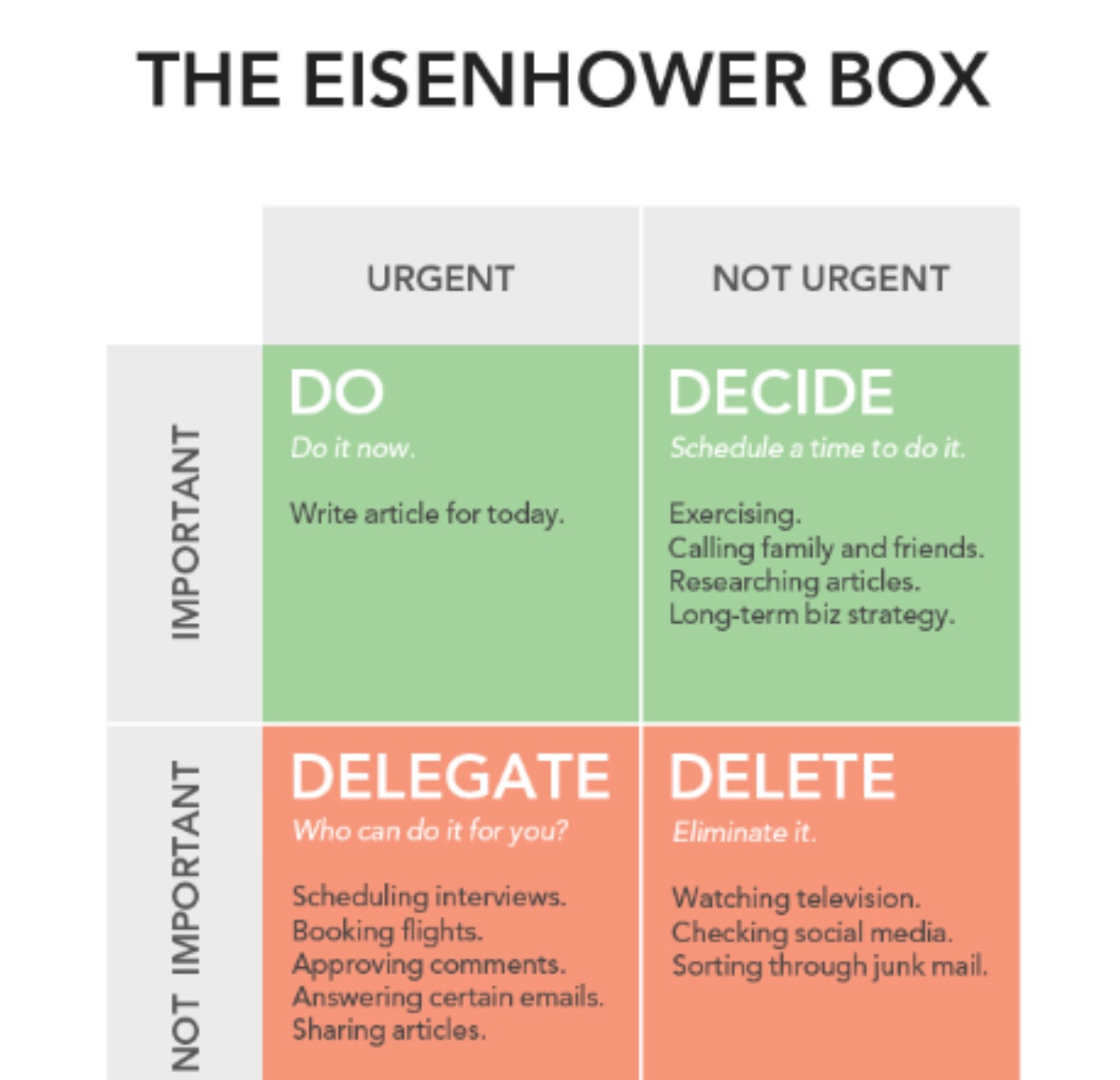
All these tasks can make you panic. So you should prioritize and qualify each task based on which ones are more urgent.
You should rank them based on urgency and importance. You might have seen this way of structuring goals where you do the urgent and important tasks first, then the important but not urgent tasks, and so on.
This technique is called the Eisenhower Matrix, and it has been useful for a lot of people when it comes to categorizing their goals.
Get organized
Another simple change that you can improve your productivity at work is to organize your desk.
The clutter around your workspace may be hindering you from doing the best job that you can.
You might be spending more time trying to look for all the things you need to start working instead of actually working.
Although personal decorations on your desk are okay, try to reduce it as much as possible. Items that don’t relate to your work should be minimized on the workspace so that it doesn’t distract you from doing your job.
Apply the Pareto Principle
Another principle that you can try incorporating in your life is the Pareto Principle.
It is a way of prioritizing tasks by means of identifying the ones that will give you the highest result or impact.
Focusing on tasks that give the strongest impact can make you move faster and more efficiently because you aren’t caught doing needless tasks that have no bearing to your job. Plus, you get to do tasks that are actually important to your work, so you aren’t procrastinating and rushing deadlines.
Utilize tools to help you work more efficiently
Perhaps the reason you aren’t as efficient as you could be is that you are trying to accomplish your tasks manually.
Nowadays, there are plenty of tools that you can use to finish your work faster. Sometimes, you might need to ask yourself this question: “Is there an app for that?”
Maybe you’re spending too much time doing administrative tasks instead of more important work. Check online if there is a software for that to help provide faster means for you to do your job.
Don’t be afraid to continuously optimize your daily work process to be as efficient as you can be.

Batch your tasks
There are other ways that you can prioritize or categorize your work tasks. One of these is by creating specific categories and batches for your tasks.
Maybe you want to organize your tasks based on the amount of energy that you need to be able to accomplish them. Or you might want to categorize them based on other factors that you like.
No matter what you choose, the context should be relevant to your experience. It isn’t too complicated, and yet it can give you a better picture of how your workday or work week will be going.
Use the Pomodoro technique
Pomodoro technique is a popular technique that allows you to focus and be more productive.
Instead of categorizing your tasks, it compartmentalizes your time between work and breaks. With the Pomodoro technique, it manages work time in bursts of 25 minutes that is split by short breaks of five minutes. This chunk of time is called a Pomodoro. After four pomodoros, you can then take a 15 to 20-minute break.
If you’re a person who struggles with managing their time because they are easily distracted by small breaks, then you may want to give the Pomodoro technique a try.
Learn to delegate
Last but not least, one other factor that may be the reason you aren’t getting more things done at work is that you aren’t delegating your tasks enough.
If you’re a leader in the workplace, then you must know that task delegation is an important part of your day. Remember that you have a team working behind you so you shouldn’t always take it upon yourself to do every bit of work.
Trust your team and let them work with you.
Wrap up
Many simple principles and techniques can aid your work productivity. Those mentioned above are just a few of those techniques. Don’t be afraid to experiment and find out which one works best for your work style. Good luck!
— Raymond Chiu is the Director of Operations for MaidSailors.com, the # 1 commercial cleaning services in NYC. Maid Sailors provide a wide range of cost-effective, yet high-quality office cleaning services that are sure to delight their customers.

- Posted 8.2.19 at 05:05 am by Roy Osing
- Permalink
July 29, 2019
How a small business can be better than their competitors

How a small business can be better than their competitors.
If you own or operate a small business, how much time do you spend developing your business strategy? If you’re like most small business owners, not much.
Every small business leader is busy working IN their business; they don’t necessarily spend enough time working ON their business.
I often hear “I don’t have time to plan, I’m too busy running my business”, or “Everything is so unpredictable these days I don’t see the point.” They are consumed by day-to-day priorities and crises and have little time and energy left to develop a strategy for their business.
In addition, developing a strategic plan is often viewed as an expensive, complicated and time consuming activity that is an interruption to the “normal” flow of business.
The truth is that every business needs a strategy; otherwise progress can’t be measured and success never achieved.
Building your strategy doesn’t have to be a complicated time consuming exercise; I have developed an approach that results in having your strategy in not more than three days, and you can begin executing it on the fourth.
To not have a plan is to aimlessly bump and grind along, accepting whatever performance you can deliver.
My strategic game plan — SGP — makes it easy for you to plot your future. It can be created in less than 2 days with your small business leadership team in an informal and fun setting.
It’s called a ‘game plan’ because the focus is to build a just about right direction that can be executed rather than waste time trying to create the perfect plan which looks good on paper but no more.
My process is based on discovering the answers to 3 questions; the answers define the strategy.
#1. Growth — HOW BIG do you want to be?
Do you want $1 million in revenue within 24 months or do you want to be more aggressive and go for $5 million?
Most planning processes end with financial results. They calculate the growth results of executing the strategic direction chosen.
My process starts with your growth intentions, and builds the strategy from HOW BIG you want to be. The reason is simple: more aggressive growth goals require a more aggressive — and risky — strategy, and more moderate growth goals need a more incremental — and less risky — strategy.
The traditional planning approach forgets that there is an extremely tight relationship between revenue growth and strategic intent; my strategic game plan doesn’t and that’s what makes my approach DiFFERENT than others.
#2. Customers — WHO do you want to SERVE?
You have a goal to grow revenue 25% annually over the next 36 months. The next question is where are you going to get it? Where are you going to invest your scarce resources of time and money?
You have a choice here; customers are not all created equal and you need to focus on those who have the potential of satisfying your growth goals and that leverage the core competencies of your business.
It boils down to selecting a group of customers who collectively have the potential to generate the revenue you have decided to go after.
To get the right answer to this question requires an intimate understanding of the various customers you serve. You can’t choose the customer group to generate the revenue you covet if you don’t understand the propensity of your various customer segments to buy from you — discover their secrets and success will follow.
#3. Competitors — HOW will you compete and WIN?
It would be nice if you were the only provider of products and services to the customer group you’ve chosen, but that’s not likely to be the case. There is likely to be healthy aggressive competitors targeting the same customers you want to target, so the challenge you face is to determine how you will differentiate your organization from all others you will be competing with.
Why should people choose your organization when they have other choices available? What makes your team special in view of the alternatives available?
If you can’t give your chosen customers relevant, compelling and unique reasons why they should buy from you and not your competitors then unfortunately you have no other option but to compete by offering lower prices than everyone else, which is rarely a viable long term strategy for a small business with limited economies of scale and scope.
HOW to WIN is intended to explore the competencies of your organization that you can exploit to gain a sustainable competitive advantage over others who compete with you for the customers you’ve chosen to serve — the WHO.
My method is to create the ONLY statement that defines precisely what you and only you provide the customers you are targeting.
SGP soundbite — The final step in my process is to integrate the answers to all three questions as the high level summary of the strategic intent you’ve chosen.
“We will (HOW BIG) by focusing our scarce resources on (WHO to SERVE). We will compete by (HOW to WIN).”
Here’s an example:
“We will grow sales revenue by 25% over the next 36 months by serving the needs of four seasons vacationers in Washington State. We will compete and win by being the only organization creating personalized experience packages that incorporate the many activities that Whistler has to offer.”
The traditional business planning process has its limitations for small business. It generally requires more time than the small business leader has to devote to the task, and it costs more than most small businesses are prepared to pay.
3 questions; 3 answers that will define an effective strategy for your small business because it recognizes the special challenges that small businesses face.
Give it a try.
Cheers,
Roy
Check out my BE DiFFERENT or be dead book series
- Posted 7.29.19 at 01:06 am by Roy Osing
- Permalink
July 27, 2019
6 ways to build your digital brand on a small budget

People research businesses online before deciding to make purchases and therefore creating an appealing digital brand that stands out from competitors is crucial to your success. If you have a modest budget and are overwhelmed by the cost of marketing, don’t panic. It’s possible to build brand awareness and increase exposure without a lot of resources.
Here are six cost-effective marketing techniques that will help you grab and hold the attention of your online customers.
Share compelling human stories
In order to create long lasting relationships with your customers you have to declare what makes your brand different. People drive brands; separate yourself from the rest by revealing something special about your company.
Creating opportunities for more personal interactions with your customers will encourage a sense of trust. People generally feel trust as they get to know someone, and they do this by sharing stories. Other brands will seem like just a logo when your company shares stories that emphasize human elements like vulnerability, honesty and emotion.
Instagram is a great platform for storytelling. Use ‘Instagram Stories’ to share video narratives about why you started your business, testimonials from happy customers or behind-the-scenes footage of your team or product.
You can also try content related to your product. YETI, for example, is an outdoor sporting company whose series of videos highlight human stories with values that align with their company’s lifestyle goals.
Collect and distribute user-generated content (UCG)
Inexpensive and engaging content doesn’t always have to come from you. UCG can promote your business and drive brand awareness. There are many ways to invite UGC, contests are one of the simplest.
Designing an effective online contest is as easy:
1. Identify your goal: what type of content do you need? Customer videos? Photos? Tweets?
2. Pick a prize that is attractive enough to entice people to submit
3. Create a unique hashtag to monitor submissions and the conversation around your contest.
4. Promote your contest and clearly articulate the rules (I.E.: ‘mention the company name and hashtag to enter’)
5. Select the winners and share their submissions on your brand profile
Greeting card company Boomf, asks consumers to capture their loved ones’ reactions for a chance to win as well as be featured online. This means they have an endless stream of content without needing to invest a lot of resources.

Collaborate
Creating co-branded content is a low-cost way to establish a partnership with a new business and, a new audience. Collaborating with a partner allows you to share resources and expand your reach by accessing your partner’s followers while exposing a new audience to your brand.
Working with another company sets you apart from other brands by exemplifying your business’ sense of community, partnership and team-spirit: qualities not always associated with online brands. In addition, collaboration allows both parties to hone their strengths and get help with weaker points.
Vlog
Vlogging is like blogging but better because it features video. Videos resonate more than static photos because they involve action, visuals, sound and information delivered in a personal way.

Vlogs are an excellent way to deliver high quality recorded content that emphasizes your brand’s knowledge (a ‘buyer beware’ video, for example).
If you focus on specific and local information that directly affects your customers, your vlog will be more useful than the brand-next-door who delivers generic, international information. For example, an accountant might vlog about changes to state taxes that directly affect his clients.
Reuse content
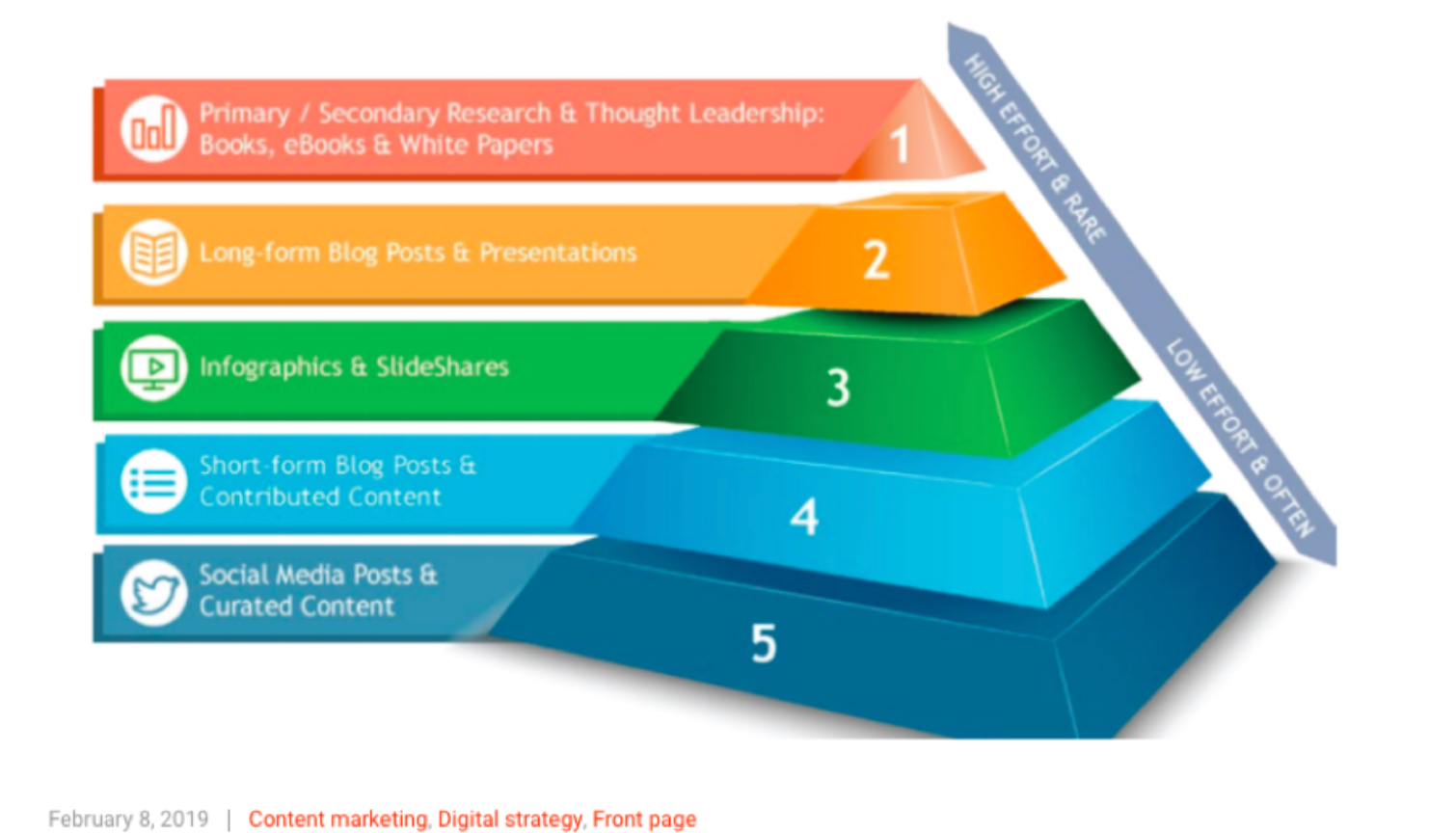
Once you have successful content you can repurpose it by presenting it in a fresh new way. For example:
Articles: If you have content with multiple tips, you can repurpose those tips into separate vlog posts.
Infographic: Present information as an image by designing an infographic from your old content.
Video: Make an animated video with narration that mirrors the original.
Facebook post: present tips in individual Facebook posts. Create a call-to-action, driving your fans back to your website.
Twitter tweets: use key takeaways as new tweets, include your website URL and account within the 140 character limit.
Join online conversations
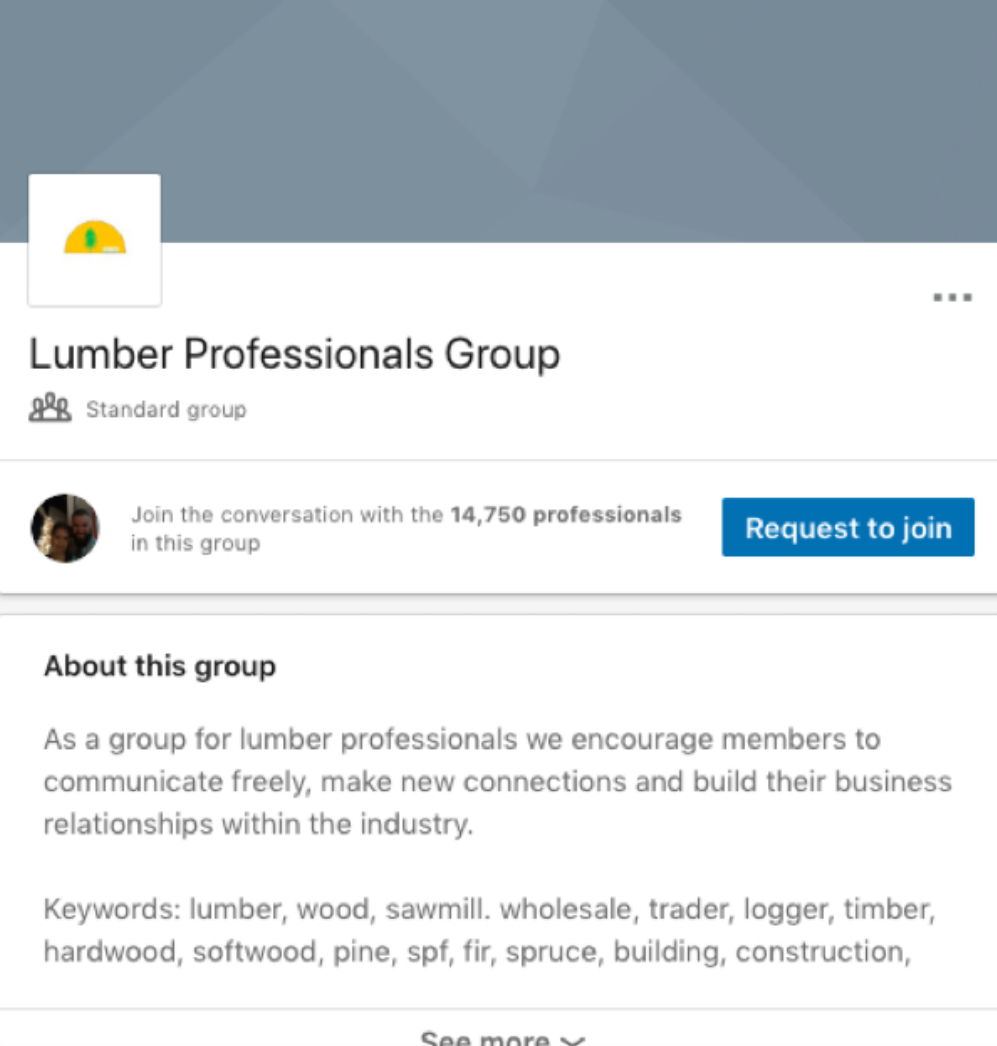
A great way to increase brand awareness is to add value to online conversations by offering your opinion, advice or thought-leadership. To further enhance your credibility within your industry, you can also create and share valuable, relevant content to industry groups on Facebook, Twitter, LinkedIn etc… If you can’t find a suitable group for your business, start your own!
While it might seem daunting, with these tips, and a little guidance from a digital branding service, you are ready to begin building a knockout digital brand (without breaking your bank).
— Natasha Ponomaroff is the Senior Marketing Director of Instasize – a content creating tool kit for anyone editing photos and online content on mobile. A weekly contributor on the site’s blog, Natasha tracks social media trends and updates the millions of “creatives” who are currently using Instasize to curate awesome online content. When she isn’t writing up the latest trend, Natasha is overseeing a team of 10 over at the Instasize HQ – ensuring that the marketing content on the app’s various social platforms is ready to go. Visit Natasha on LinkedIn

- Posted 7.27.19 at 04:04 am by Roy Osing
- Permalink