



Roy's Blog: Leadership
November 13, 2021
3 necessary actions business owners should take to deal with a scandal

Source: Pexels
3 necessary actions business owners should take to deal with a scandal.
The potential for scandal has always been a concern for business owners. However, this is somewhat more pronounced in the contemporary commercial landscape.
The tools of our digital age have not only made information more readily available for consumers to scrutinize, but social media has made problems more shareable. Information about a scandal in your business can spread around the world in seconds.
It’s important to handle a scandal swiftly and correctly. An unaddressed controversy can haunt your business. But it can be challenging to know how best to go about this.
Let’s explore a few ways you can best approach handling a scandal.
#1. Prioritize transparency
Among the most common mistakes businesses make following a scandal, is to desperately try to minimize it. This could involve attempts at a full cover-up or perhaps delivering messaging to suggest the impact of the scandal is not as serious as it is in reality.
However, whatever the nature of the scandal, it is vital that your first step is to be honest. While the event itself may be embarrassing, full transparency is the only way to meaningfully rebuild trust with your consumers, staff, and the community.
This begins with clear communication. Make a straightforward announcement across all your channels — this should include your social media accounts and website, as well as traditional platforms.
Be open about what the initial knowledge is about the problem and the effect it may have. Importantly, you then need to set expectations for further communications. This could be setting timelines for any further investigations that need to occur or the progression of mitigating actions.
If there are any elements of the unknown, be clear about this and establish how you’ll approach information gathering. Give your staff, consumers, and the public confidence that you are keeping them in the loop.
Along with your communications, you need to put in place access to key materials to support greater transparency and could prevent future similar scandals.
A good example here is the problems that can occur when a private party or business is suddenly in receipt of a large amount of wealth.
It can be easy to make mistakes revolving around the treatment of these funds, particularly in meeting the relevant tax obligations and protecting stakeholders’ assets.
Following a mismanagement scandal, it can be helpful to make resources about the true financial status and actions of the company available to relevant stakeholders.
Provide yearly reports to the public. Businesses are often hesitant to share this kind of information, but it can do wonders for establishing trust.
#2. Adjust your practices
Successfully handling a scandal isn’t about paying lip service to culpability or placating disappointed stakeholders. You can’t just hold out until the worst of the situation has passed and then put your efforts into marketing your way back into prominence.
Contemporary consumers and employees expect to see real and lasting change from businesses following this kind of setback. Understanding and implementing these adjustments is an area where you should be focusing your efforts.
Look inwardly at your company’s culture and ethics. While individual actions may have been directly to blame for a scandal, it is often an ineffective or weak set of core company values that gives such behavior space to breed and thrive.
By examining your approach to your business ethics and being willing to adjust you have a route to affecting meaningful cultural change. This not only manages the current scandal but also lays the groundwork for preventing them in the future.
It can be helpful to engage with a professional that specializes in business ethics so your company can gain greater clarity on how employee interactions, fair treatment, and corporate social responsibility should factor into operations.
Whether they’re an external consultant or a new member of leadership, their insights into designing and implementing ethical frameworks can be instrumental in your recovery. Importantly, their insights should be treated not just as an immediate solution.
You need to work with them to make sure changes are sustainable over the course of years and design periodic assessments to gauge efficacy.
#3. Be accountable
Perhaps above all else, it is vital you fully accept responsibility for the scandal as a business owner. No matter what kind of leadership style you favor for your business, at the end of the day all business owners share a single trait.
You hold ultimate responsibility for the actions of your company and employees. You need to treat a scandal within your organization as though you as a business leader have caused it personally.
To start to recover from the problem, consumers want to see you’re being accountable for the controversial behavior.
Take your lumps with gratitude. Accept that the fallout of this issue isn’t just something your company could have been damaged by. It has also given you the tools and impetus to make it better. Seek out meaningful ways you can make reparations (205) to those who may have been injured or otherwise negatively impacted by the events.
An important part of addressing a scandal is to consider it from the mindset of the customer or employee affected. Seek to understand what they need from your company in order to be indemnified for their losses or address their trauma. Part of your recovery is helping them recover.
Even once you’ve addressed the immediate impact of the scandal, you have to remember that accountability should be an ongoing practice.
Establish an open dialogue with your consumers and staff members. Invite them to reach out if they feel you or the company is not upholding its ethical standards. This shows that you accept the faults of your past and appreciate their role in helping you be better in the future.
Conclusion
Unfortunately, experiencing a scandal is a reality for many businesses and it can be a damaging influence. It’s important to understand that handling these issues is about making genuine efforts.
This includes being transparent in your communications, adopting meaningful change, and establishing a culture of accountability. It’s not easy to get past a scandal, but when you do the work you can not just move on from the problem but come back stronger.
— Jori Hamilton is an experienced writer residing in the Pacific Northwest U.S. She covers a wide range of topics but takes a particular interest in covering topics related to wellness and mental health. To learn more about Jori, you can follow her on Twitter and LinkedIn.

- Posted 11.13.21 at 04:43 am by Roy Osing
- Permalink
September 27, 2021
20 really simple human traits of an amazing leader

Source: Pexels
20 really simple human traits of an amazing leader.
A brilliant leader is made of simple stuff really; here are some of the things they do to make them unmatchable among others.
They:
1. Create discontinuity in their organization to expose opportunities for competitive advantage and growth.
2. Make getting employee input their #1 priority everyday.
3. Are intolerant of being the same as others in the marketplace.
4. Are at ease with uncertainty; they see it as a major source of innovation.
5. Inspire people to get out of their comfort zone and make mistakes.
6. Learn voraciously and contunuously.
7. Practice the art of ‘constructive emulation’ — building on someone else’s idea to make it even better.
8. Are not incremental thinkers; they are always looking for breakthrough change.
9. Are rarely charismatic; their appeal to others comes from their honesty and integrity.
10. Are customer addicts and model this behavior to the rest of the organization.
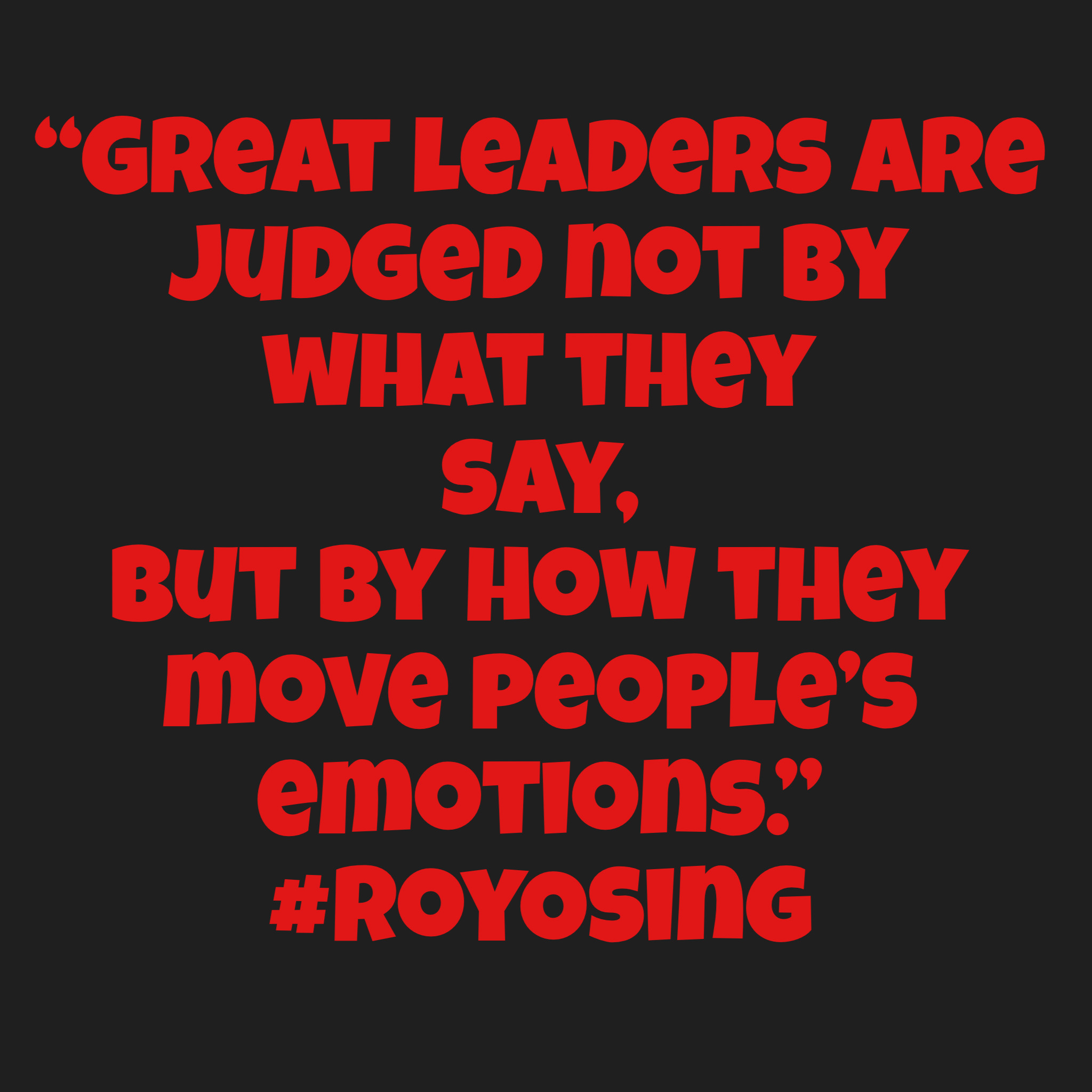
11. Serve people not command them to action.
12. Are consummate story-tellers, breathing life into the organization’s strategy by providing examples of successful execution.
13. ‘Bash barriers’ and remove obstacles to progress on the inside to make it easier for people to get their job done.
14. Constantly and passionately communicate the organization’s vision and strategy to capture the hearts as well as the minds of people.
15. Ask “How can I help?” rather than order people to ‘do this’!
16. Give hope to people in times of chaotic change.
17. Are obsessed with making tries as the route to innovation and creativity.
18. Are mindless about executing the business plan of the organization.
19. Make decisions with incomplete and imperfect information.
20. Are good at anticipating future trends and events, but are great at responding to the random and the unexpected.
If you can check-off all twenty, consider yourself an amazingly brilliant stand-out leader.
If you can honestly say that you exhibit half of these leadership dimensions you are well ahead of 99% of other leaders in business.
Well done and now focus your work on the remaining 50%.
Cheers,
Roy
Check out my BE DiFFERENT or be dead Book Series
- Posted 9.27.21 at 06:15 am by Roy Osing
- Permalink
September 23, 2021
How great leaders ‘nudge’ their organization to stay on course

Source: Pexels
How great leaders ‘nudge’ their organization to stay on course.
A one-liner that resonated with me from the movie ‘Waiting for the Barbarians’ was in answer to a question posed to The Magistrate on how he managed to keep his frontier outpost safe and ‘orderly’:
With a ‘nudge’ here and a nudge there I kept the world on its course.
My leadership belief exactly.
Effective and sensational leaders are really good ‘nudgers’; they are relentless and unyielding at moving their organizations forward—‘slightly west’—with constant prodding to keep it from slipping off the chosen path.
Nudgers understand that it’s not reality to have a business plan that is developed, dropped on the organization and left alone to ‘live its life’ successfully without help.
A misinformed leader announces their grand plan and expects everyone to understand and execute it precisely — it never happens.
The 5 key roles of the Nudger:
1. Key functions
Identify and prioritize the functions of the organization that deliver the key strategic imperatives of the business plan.
Not every department will have equal weight when it comes to their contribution to strategic goals; it’s important to identify and rank the prime contributors and pay an inordinate amount of attention to them and leave the balance alone.
This is a critical piece of work because it demands that Nudger knows the strategy at the most detailed and granular level in terms of what behaviour specifically is required to deliver the output that will allow the organization to achieve the intent of the business plan.
“Who are the key players and what do they have to consistently deliver”? is the question the Nudger answers.
The Nudger’s formula: if (this behaviour); then (this successful outcome).
2. Key processes
Since meaningful results are rarely produced by a single functional team in an organization, it is essential to identify and prioritize the key processes that are summoned to create strategic value.
These are processes that work across the organization and involve several separate functions. It could be the product fulfillment process, for example, involving the call center, inventory management, logistics and billing.
If one link in the chain breaks, the customer is certainly unhappy and might just leave for another supplier. The process must work every time it’s used to deliver.
Meaningful strategic results are produced by teams working together across—not down—the organization.
The Nudger typically looks more intently at the critical processes in the strategic value chain.
2. Influencers
It’s critical to identify the people in the organization who control the key functions and processes. These are the leaders without whom control and adherence to the organization’s strategy and direction will not happen.
These people need to be convinced of the new plan and be prepared to put their heart and soul into it.
They must be the ’warriors’ who will determine success or failure so the Nudger spends a copious amount of time getting them on board and securing their commitment.
3. Serving
Nudgers know that the high performance expected of the functional and process leaders can’t be achieved by a one-of meeting.
The Nudger must be in constant contact—serve around—with each leader, monitoring their progress and assessing whether or not they’re achieving the expected results.
And asking “How can I help?”. Nudgers ‘bash barriers’ getting in the way of people doing their job; if the inside grunge isn’t cleared, little progress is achieved and organizational dysfunction occurs.
4. Nudging ‘on the run’
A single nudge doesn’t do it; it won’t achieve miraculous success by putting the organization back on the right path when it deviates from its original game plan because of events encountered that were not envisioned when the plan was assembled.
In view of this constant barrage of unforseen body blows, successive nudges from dauntless leaders are required ‘on the run’ in order to mitigate the downside of these events and maintain a high performance course.
The Nudger is always online with strategy execution, aware of the progress being made and of the issues being confronted by employees, and taking corrective action ‘in the moment’.
Execution runs through the veins of the Nudger
5. Performance moments
Consistently high levels of performance need reinforcement of the behaviours that caused it, and this is where the Nudger adds stunning value.
The Nudger is always alert to catching someone in the act of committing a superlative deed, providing them the recognition they deserve and communicating it to everyone else in the organization. In addition, the Nudger used these moments as an opportunity to coach and mentor as appropriate.
The Nudger lives with employees who are critical in achieving the strategic intent of the organization. They are ambassadors and advocates of the frontline, and will do anything to support their needs.
‘Nudging’ is not a role that is discussed in leadership doctrine but in my experience it is a fundamental trait of outstanding and spectacular leaders.
How much nudging time do you spend as a leader?
Cheers,
Roy
Check out my BE DiFFERENT or be dead Book Series
‘Audacious’ is my latest…

- Posted 9.23.21 at 06:35 am by Roy Osing
- Permalink
August 30, 2021
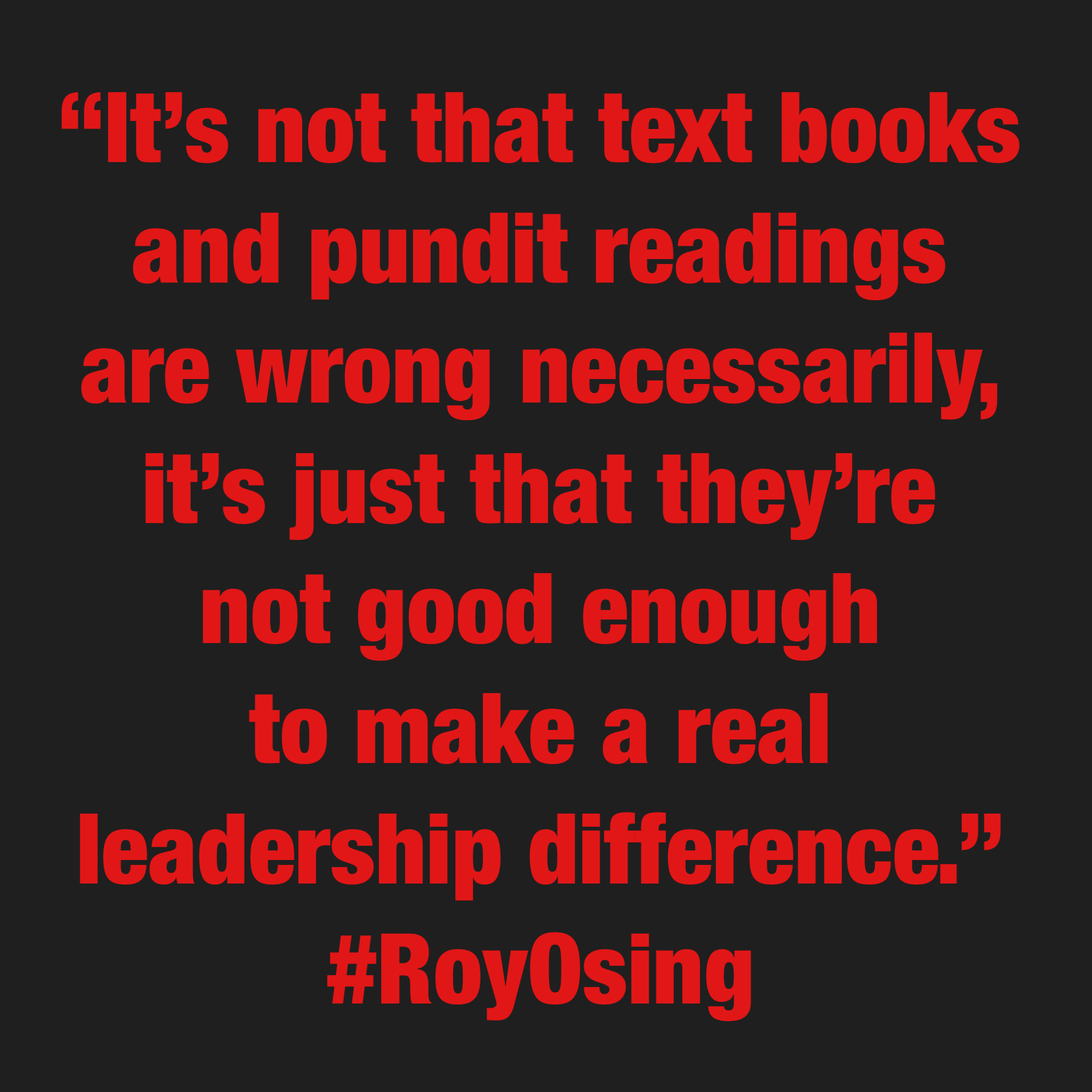
Do textbooks on leadership really do a good enough job?
Cheers,
Roy
Check out my BE DiFFERENT or be dead Book Series
‘Audacious’ is my latest…
- Posted 8.30.21 at 04:22 am by Roy Osing
- Permalink