



Roy's Blog: Leadership
October 31, 2022
Why competitive advantage, as taught by most ‘experts’, is usually (mostly) wrong
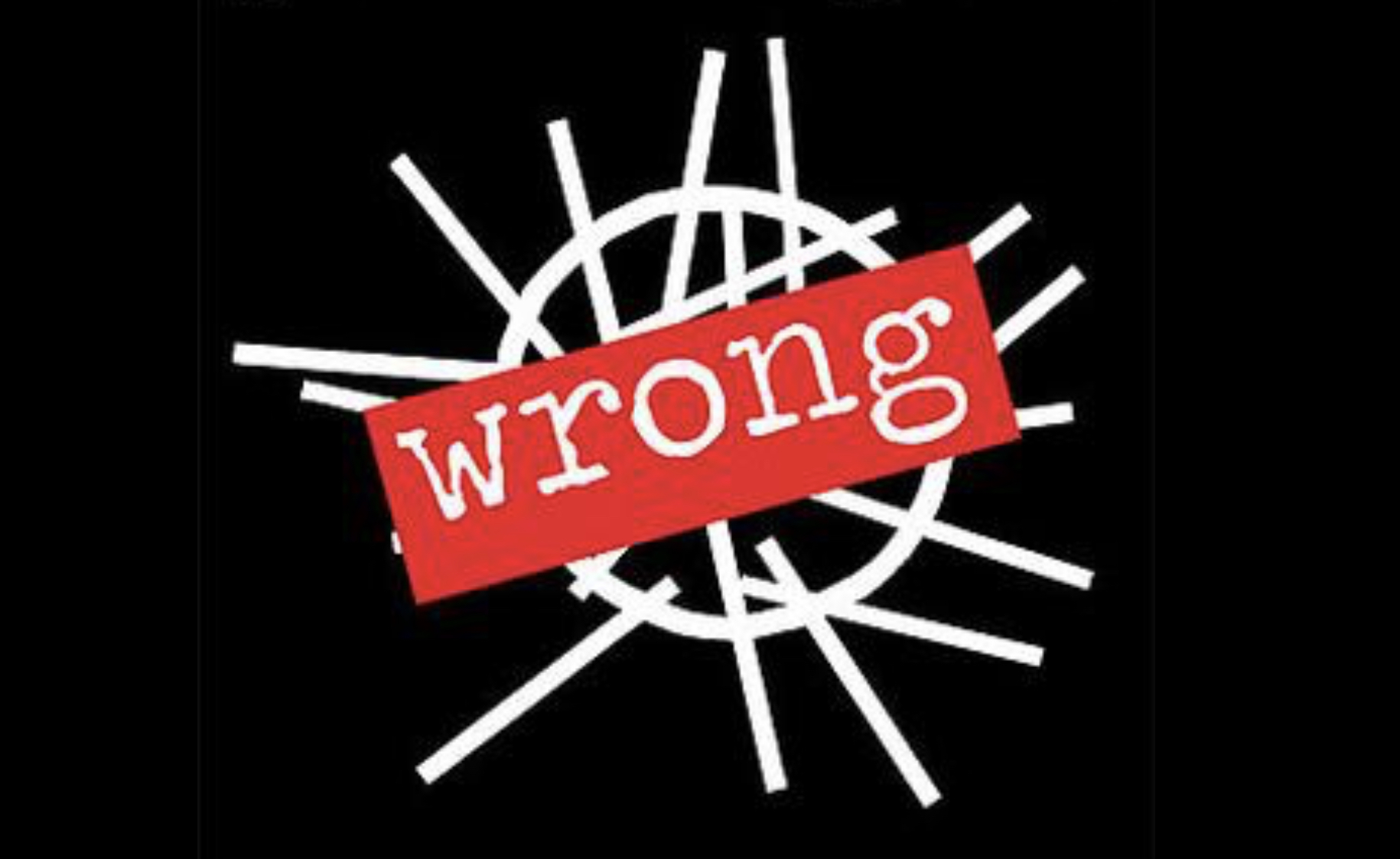
How to declare a competitive advantage, as taught by most ‘experts’, is usually—mostly—wrong.
This article is typical of how people are taught to create a competitive advantage for their business.
“Crafting Your Statement — Your statement of competitive advantage has four components: your name, your company, a statement about a problem in your market, and how you and your product solve that problem.
Essentially, it is a 30-second statement explaining what differentiates your company in the marketplace.”
This author teaches us that if we have a solution to a problem, it—our solution—defines our competitive advantage. And in the last sentence it concludes that this four component statement “…differentiates your company in the marketplace.”
BOOM. PROBLEM SOLVED. EASY-PEASY.
WRONG.
This approach is not only an oversimplification, it’s misleading.It DOESN’T establish competitive advantage in any way, shape or form.
And, unfortunately, the approach is not an isolated example of how businesses are being coached on how to define what makes their organization unique and special among their competitors.
And I would say 99.9% of the ‘experts’ out there promulgate the same type of gibberish.
If I come up with a solution to the distracted driving problem does that automatically mean my solution gives me a competitive advantage?
“YES”, the previous ‘experts’ would say.
“NO”, Roy says it’s gibberish.
All it means is that you figured out ONE solution among many to the distracted driving problem. Your solution doesn’t give you ANY advantage, for example, unless it’s unique in some way compared to what other solutions are out there.
Where is the notion of solution comparison to the competition in the gibberish? It is MIA. Not mentioned. Not important apparently.
Look, the gibberish is helpful to a point. It correctly advises that you must find a solution to a problem that someone has if you want to have a chance for success.
Find out what’s keeping people awake at night and find a solution to their dilemma and help them rest.
That’s a good start. But it’s not the end which the gibberish implies.
You need to determine HOW to make your solution DiFFERENT from everyone else’s solution in a way people care about if your solution is to ‘have legs’ in the market.
So, let’s transform the gibberish advice into something meaningful and relevant.
“Crafting Your Statement — Your statement of competitive advantage has four components: your name, your company, a statement about a problem in your market, and how you and your product solve that problem in a way no one else in the market does.
Essentially, it is a 30-second statement explaining what differentiates your company in the marketplace.”
Your takeaway from a guy who took an early stage internet company to A BILLION IN SALES — create solutions that standout and are unique among the competitive hordes if you want to be honest with yourself that you really DO have a competitive advantage.
Ignore the gibberish.
Develop The ONLY Statement for your solution.
“Our solution (brand it, like ‘Distracted Driving Resolved’) is the ONLY real solution to the distracted driving problem killing the lives of millions of children, parents, grandparents and friends each year.”
Cheers,
Roy
40+ Podcast Shows I’ve done that unpack my work.
Check out my BE DiFFERENT or be dead Book Series
‘Audacious’ is my latest…
- Posted 10.31.22 at 05:16 am by Roy Osing
- Permalink
October 17, 2022
3 audacious moves you can make when you don’t have a business plan

3 Audacious moves you can make when you don’t have a business plan.
Some organizations don’t have a Business Plan to follow.
They’ve simply decided for whatever reason not to devote the time to develop one. Some business leaders say they don’t have the time to do the work and others say it’s too expensive.
Whatever the reason, their business is left rudderless.
Of course, I try to encourage every business to create strategic context—my Strategic Game Plan—for themselves to steer their ship; to determine the actions they take to achieve their goals and attain superlative performance levels.
But if you’re determined NOT to invest the minimal time and resources to build your strategic game plan, there are some simple things you can do to enhance the performance of your business.
There are a number of ’Out-of-context Moves’ that will help you build your business. They were incredibly successful for me and will definitely work for you.
#1. Focus on the customer experience.
It’s a proven fact that people don’t repeatedly buy on the basis of a product, they are loyal buyers because of how they feel—the experience—when they engage with the organization and make the purchase.
I deal with a particular retailer not necessarily because they have a unique product line (in reality most retailers in a given space all provide the same thing); rather I deal with them because I FEEL GOOD when I engage with them.
Think about yourself in the ‘experience’ business not the product business if you want a consistently high level of performance.
Product suppliers are a dime a dozen and flogging products won’t make you special.
Everyone flogs products; few are amazing experience creators so play in that space.
To get started, define how you want your customers to feel when they engage with you and pick 3 behaviours you need to consistently demonstrate to invoke these feelings.
Practise with your staff and make sure they are clear on the outcomes expected.
#2. Recruit ‘human being lovers’.
If you don’t provide epic customer service you’re simply not in the game. If your customers don’t like the experience they have when they engage with you, they are less likely to do business with you (and they tell all their friends and family how shoddy your service is).
And the key ingredient of a memorable service experience is the individual engaging with and taking care of the customer.
If the care provided is thoughtful, kind, respectful and empathetic, the service experience for the customer takes their breath away. But if the experience is impersonal, cold, rude, discourteous, disrespectful and indifferent, the customer is frustrated and annoyed and has no desire to ever engage with you again.
Hiring people who ‘give a damn’ about others is the right thing to do regardless of your business plan.
So, make a point of hiring people who have the innate desire to serve others. Make this requirement THE most important consideration when hiring someone. You can always teach them the business and specific skills they need in your particular line of work, but you can’t teach them to ‘love’ others.
You can teach them to ‘grin’ and ‘have a smile in their voice’, but you can’t teach them respect and empathy.
Breakaway from the traditional way of recruiting people and hire for goosebumps.
#3. Draft your ONLY Statement.
Determining how your business is different from your competition (in a way your customers care about) is critical to business performance.
The usual way organizations do this is by using meaningless (to the customer) CLAPTRAP expressions like ‘We are better’, ‘We are the best’ and ‘We are the leader’ to define how they are different from others.
But they’re not helpful in answering the question ‘Why should I do business with you as opposed to your competitors?’. Who defines what ‘best’ is? How can you prove that you’re ‘better’?
The truth is, using CLAPTRAP to try and differentiate yourself from others is narcissistic; it’s YOUR view of yourself as opposed to the objective proven facts that customers tell you about why they chose you over your competitors.
My solution to CLAPTRAP is to use my ONLY Statement as the simple way to declare how your business is different.
‘We are the ONLY ones who…” is the killer way to define your uniqueness.’
ONLY is always a draft, so don’t be concerned to get it 100% right (because you never will).
Draft your ONLY based on how you uniquely deliver the value your customers expect from you.
Test it with them (does it address what they really care about, and is it true?), start using it and revise it on the run as you learn how it’s working.
The bottom line: business plan or not, these three actions will establish your business as a contender for superlative performance and the rewards that go with it.
Cheers,
Roy
40+ Podcast Shows I’ve done that unpack my work.
Check out my BE DiFFERENT or be dead Book Series
‘Audacious’ is my latest…
- Posted 10.17.22 at 05:39 am by Roy Osing
- Permalink
October 3, 2022
Why claptrap and copying will never make you audacious or unique

Why claptrap and copying will never make you audacious or unique.
There are many challenges facing leaders who are in the hunt to grow their business.
Some are beyond the leader’s direct control, like economic fluctuations and specific competitor attacks.
But there are other challenges that are under direct leadership control that, if successfully met, make a HUGE impact on the growth trajectory of the business.
I pay attention to the actions organizations take to grow, and through my blogs and podcasts I share what worked for me as a leader of an early stage business that we amazingly grew to A BILLION IN SALES.
But there are two tactics businesses continue to employ on a regular basis that drive me crazy, despite the fact that in my 4 decades of leadership experience they detract from creating competitive advantage and adding strategic value.
#1. CLAPTRAP COMPETITIVE CLAIMS
There is an extreme lack of clarity in organizations in terms of how they declare their uniqueness over their competitors, i.e. their competitive advantage.
And the answer to the question “Why should I do business with you and not your competitors?” is lost in the fog of aspirations and good intentions.
The customer is left to their own devices to filter through the CLAPTRAP to discover what’s real and what’s pure fabrication.
Everyone declares who they are and how they are different from their competitors using words—CLAPTRAP—like:
“BETTER, BEST, #1, LEADER, PREMIUM, MOST COMPELLING, MOST RELIABLE, GREAT TASTING, FIRST EVER, LOWEST COST”
But how can these words be believed? What do the words even mean? And if everyone uses them, how can they benefit any of the users?
It’s business obfuscation at play and it drives me nuts!
I would say—based on observation—that literally 99% of businesses these days use expressions like:
- “We offer the best coffee and espresso drinks for consumers who want premium ingredients and perfection every time.”
- “We work hard every day to make us the world’s most respected service brand.”
- “Canada’s largest and most reliable 5G network.”
- “We are on a mission to make neighborhoods safer. Our suite of affordable solutions make smart security accessible to all.”
- “We provide premium, real ingredients for customers looking for delicious food that’s ethically sourced and freshly prepared.”
- “We are the market leaders in communications technology.”
- “I develop sustainable business models and marketing strategies to fuel small business growth.”
- “I help manufacturing organizations improve their processes to reduce waste and grow profits.”
- “Helping you build a big brand with your small business.”
These CLAPTRAP-ridden statements may have some redeeming value to leadership who want to advocate and promulgate organizational values for employees to model and exhibit, but they do little to declare to customers the unique value proposition an organization has over its competition.
And many also take CLAPTRAP up a notch and use ASPIRATIONS to further contaminate the work of distancing one organization from another:
- “We’re in business to save our home planet.”
- “To inspire humanity – both in the air and on the ground.”
These are at best helium-filled statements that don’t separate companies and add little to meeting the challenge of differentiation.
CLAPTRAP and ASPIRATIONS need to be expunged from the leadership tool kitbag.
My solution, one that has been successfully used in our journey to A BILLION IN SALES is The ONLY Statement, my way of applying ‘precision to the promise’ of what separates you from your competitors.
“We are the ONLY ones who…” is specific, understandable, binary and measurable
ONLY examples:
✔️ ”Kimberly Lebbing is The ONLY High-Performance Success & Mindset Expert Helping Business Owners, Entrepreneurs, and Their Teams Get Mind-Blowing Results in as Little as 4 Hours.”
✔️ “ONLY TELUS PureFibre has upload speeds as fast as download speeds, and a 100% fibre optic connection that runs direct to your home—so you can binge without buffering.”
✔️ “The North Delta Business Association is the ONLY team that: Links you to other businesses, connects you with experienced & knowledgeable people to help you lead & grow your business, and constantly challenges you to do things differently.”
✔️ “St John Ambulance is the ONLY First Aid Advocate that provides safety solutions anywhere, anytime.”
✔️ ”We provide the ONLY permanent solution that prevents biohazard contaminants (such as used syringes) and all other debris from entering manholes.”
✔️ ”We are the ONLY team that provides integrated safety solutions that go beyond the needs of our customers ANYTIME, ANYWHERE. We are committed to growing our customer’s business. We ONLY serve safety.”
✔️ ”Roy Osing is the ONLY author, entrepreneur and executive leader who delivers practical and proven Audacious Unheard-of Ways to build high performing businesses and successful careers.”
✔️ ”Roy is the ONLY coach and advisor who offers The ONLY Statement as a practical and proven tool to create a competitive advantage for organizations and individuals.”
#2. BENCHMARKING
The second thing organizations do that keeps me up at night is benchmarking, landing on ‘best in class’ and copying them.
Benchmarking is problematic on several levels:
#1. Copying sucks. — It’s ‘sucking up’ to an organization or individual recognized (by someone presumed to be the thought leader) to be the best at performing a particular function and is therefore the organization you should aspire to be.
It doesn’t make you special. It may help you improve your position in the crowd of hungry competitors by being more efficient at something, but it won’t help you stand out from them by being more relevant or unique to your customers.
Copying is the enemy of being different. The maximum benefit you can achieve by copying is best in class levels of performance which may return better operating results than previously obtained but unless you vault beyond these levels true differentiation won’t happen.
#2. Being in the herd sucks. — The herd is a place where organizations go to blend in with others; to conform with what others do and to lose the DNA attributes that make them special.
Even if you are the ‘best of breed’ you’re still in the herd. It’s just that you execute a process better than any other herd member; you’re still rubbing shoulders with your sameness brethren.
And because you’re tagged ‘the best’, you have no motivation to break away from the herd; you find consolation in it.
The world is becoming a home for best practice addicts and as a result it’s boring and benign.
#3. Conforming sucks. — Benchmarking results in conformance; it sucks any unique thinking you may have out of your system and replaces it with the need to capitulate to the leader of the herd.
Rather than look for a unique solution to your problem, you look for another herd member that has put in the work to create a solution that works for them and you assume you can boilerplate it and it will work for you.
When you copy someone or something, you relegate—subordinate—yourself to them. You roll over, put your ‘paws in the air’ and subsume yourself to the leadership of someone else. Looking up when you’re lying on the ground isn’t a very liberating place to be.
#4. Being like your competitors sucks.— It has no strategic value in moving the organization to a position in the marketplace that ONLY you occupy.
“What are our competitors doing?” is often asked when organizations are thinking about improving how they conduct business, and the benchmarking process ensues — adding zero space between them and their competitors.
And, of course, if you’re chasing another organization, you’re adding nothing to the kitbag of things that make you ‘special’ in the eyes of your customers and encouraging them to spread your word to others and attract new business.
If you copy someone, all you do is lower the bar and increase the herd by one.
#5. Not trying new things sucks. — If you’re a copycat, you’re not an innovator. Benchmarking does little or nothing to stimulate innovation and creativity which seem to be values organizations covet in today’s world of uncertainty and constant change.
In fact benchmarking kills real innovation because it has performance improvement using the standard of another as its end game as opposed to revolutionary changes that determine new strategic outcomes.
We need to get our thinking straight.
Few organizations today stand out, which is sad; few are deemed to be really special by their customers.
Being remarkable isn’t a strategy on the radar of most, or if it is, it’s an elusive goal because leaders allow people to use traditional tools — like benchmarking best of class — to do their jobs.
Uniqueness, remarkability and being special come from being different than your competitors, not copying what they and others do, even if they perform certain functions more efficiently than you do.
We need to change our ways and put copying where it belongs.
Let’s:
▪️Start thinking about being different from best in class, not copying best of breed.
▪️Covet being ‘different from breed’, not best of breed.
▪️Think about doing what others are not doing, not looking to other’s successes.
▪️Go in the opposite direction that others are going, not following in their footsteps.
▪️Define best in class to be the highest bar to be different from, not emulate.
▪️Purge boilerplates from our toolbox and break new ground (and maybe be the author of a new boilerplate).
Copying is the enemy of being special and remarkable.
And as audacious leaders, let’s change the conversation in our organizations; purging the notion of benchmarking and copying as ways of achieving strategic progress by asking these types of questions of our teams:
▪️”What can we do to be different from the crowd of competitors?”;
▪️“How does what you’re proposing make us stand out from the competition and be special to our customers?”.
▪️“What crazy ‘insane’ thing is a different business to ours doing and how can we use the basics of the idea to morph it into a special idea for us?”
I can’t sleep at night when the world continues to be infatuated with CLAPTRAP, ASPIRATIONS and COPYING.
Do me a favour and STOP! doing these two things so I can get at least 4 hours of ZZZ’s every night.
Thanks.
Cheers,
Roy
Check out my BE DiFFERENT or be dead Book Series
‘Audacious’ is my latest…
- Posted 10.3.22 at 05:01 am by Roy Osing
- Permalink
September 12, 2022
11 simple and proven ways to scale your business for amazing results

11 simple and proven ways to scale your business for amazing results.
There’s much talk these days about the need to scale a business; in fact I recently did a podcast show dedicated to the topic.
So, let’s start with some basics. What do we mean when we say we want to ‘scale’ our business? In the simplest sense, scaling a business seeks to grow revenue faster than cost. If revenue increases at 10% over time and cost increases at 5%, we can say we’ve successfully scaled our business. If revenue growth = cost growth or if revenue grows at a slower rate than costs, we’ve been unsuccessful and our business has NOT been scaled.
Successfully scaling a business results when top line revenue growth is disproportionate to cost growth.
I think there is some misunderstanding around the subject because I hear people talk only about the cost side of the equation.
They focus on cost infrastructure only, and driving the supply costs down to scale their business without considering the revenue component of the equation.
This approach has serious consequences:
▪️It could fail at scaling because cost growth could still exceed revenue growth even though costs have been reduced under a different infrastructure plan. Overall costs may have been reduced by 25% but they are expected to continue to grow at 5% in the face of a revenue growth of 4% — the business has not been scaled.
▪️The second potential issue is that by unhooking cost from revenue driver, you could actually be building infrastructure that is disconnected to a degree from sales, furthering impairing the ability to grow revenue.
A scaling strategy should START WITH REVENUE, to look for the optimum ways to grow in a way that is sustainable over time. Cost options—including supply infrastructure—should then follow to determine the lowest cost growth option to deliver revenue goals.
Remember: both cost objectives must be satisfied: low overall cost structure AND cost growth rates less than revenue growth.
These are some revenue strategies that helped me scale a business to A BILLION.
#1. Business strategy — The ability to scale starts with the right business strategy and my Strategic Game Plan—SGP—practice that delivers the right strategy built to EXECUTE.
Scaling requires a focused game plan that enables flawless execution.
#2. Business processes — Process follows strategy. Create/align internal business processes to serve the SGP explicitly and be targeted to its strategic priorities.
Your business process elements must work harmoniously together in order to generate the kind of revenue needed to scale your business.
#3. Team — Structure follows process. The right organization structure is required to effectively use the business processes established to execute the SGP and to allocate resources for maximum strategic return.
For maximum impact on revenues, insource customer facing functions; if you must outsource anything, outsource back end functions.
#4. Customer loyalty — Existing customers will give you more revenue at lower incremental cost than trying to acquire new customers.
And referrals come to you at close-to-zero cost of sales.
I’ve spoken at length about how you can build a loyal base of fans, but here are a few snippets:
— Create your Customer Service Strategy with CORE vs DAZZLE elements.
— Build a Recovery Culture so when mistakes happen, loyalty is strengthened not destroyed.
— Offer special deals for existing customers to reward their loyalty. Resist the temptation to use discounted promotions to attract new customers.
— Add ‘Customer Managers’ to your organization to ensure to focus on ‘The Loyal Ones’ rather than having simply a product focus.
#5. Sales relationship building — Morph your sales force to concentrate more on building long term customer relationships and less on flogging products.
This will not only reduce churn in your customer base, it will also enable premium priced solution sales due to the high trust factor and the more intimate understanding sales has of the customer’s operations.
Strong long term relationships breed more revenue at less cost.
#6. Premium pricing — Package your products and services into holistic solutions that can be provided at premium prices. Avoid the bundling mentality of bundling products together and offering the bundle at discounted prices.
Target your packaging efforts at customer segments that have a strong ’CRAVE Factor’,driven to buy on what they desire and want rather than on what they need.
CRAVE segments have lower price sensitivity and fewer competitors hence the revenue potential and lower costs is huge.
#7. Process Leadership — Assign leaders cross-organization process ownership as a way of increasing effectiveness—lower costs—of cross functional delivery systems.
For example, the marketing executive could be the owner of the product and service fulfillment process and would be accountable to deliver more output at lower cost.
The problem in organizations today is that no single executive owns a cross functional process because of the silo structure where everyone has their own piece of the action and no one owns the whole process.
To increase the revenue leverage of cost inputs we need process ownership at the highest level.
#8. Recruitment — Recruit the right people to build long term customer relationships and more customer loyalty.
As the priority, hire people who ‘love’ humans. Give customer facing—demand—units in the organization the priority.
#9. A ‘clean’ inside — Effective execution—hence more revenue and less cost—occurs not only when internal systems and processes run smoothly as referred to earlier, but also when the organization is focussing on the things that NEED to be done.
Often, legacy activity lingers throughout the organization, consuming cost and offering little on the revenue line.
Leaders must stop doing the stuff that is no longer a strategic priority. They must CUT the CRAP and eradicate the GRUNGE that gets in the way of flawless execution .
A new form of innovation must be introduced—‘DELETE’ Innovation—to eliminate unproductive activity and assets in order to release more unit revenue and less unit cost.
#10. Dumb Rules — A version of #9, this initiative is required to eliminate the rules, processes and policies that make no sense to customers and threaten their loyalty.
What is needed is a cultural mindset that seeks to ENABLE the customer to do business with you on their terms rather than one which falls victim to internal control.
A healthy balance—however skewed to what the customer expects—is needed with a customer control outcome not a company control one.
#11. Line of sight leadership — To achieve precision in strategy EXECUTION, everyone needs to understand their precise role, because if they don’t, dysfunction results and scaling suffers because costs outrun revenue generation.
To avoid this situation, leaders must provide line of sight from what employees to to what the strategy of the organization expects.
Line of sight leaders translate the strategy into what it means to marketing, sales, customer service, and every other function in the organization to get their teams marching in unison.
When this happens, maximum output for minimal input results and SCALE is achieved.
Cheers,
Roy
Check out my BE DiFFERENT or be dead Book Series
‘Audacious’ is my latest…
- Posted 9.12.22 at 04:03 am by Roy Osing
- Permalink