



Roy's Blog: Leadership
May 8, 2023
4 exciting breakaway moves to leave ‘the herd of sameness’

4 exciting breakaway moves to leave ‘the herd of sameness’.
The herd of sameness.
The undifferentiated mass where everyone’s the same.
Where compliance rules.
Where conformity reigns supreme.
Where risks are avoided.
Where no one stands out.
Where commonness and average describe its constituents.
Where momentum from the past defines its direction.
Where innovation is missing in action.
What I mean by ‘breakaway’.
▪️divergence.
▪️radical change,
▪️sudden attack or movement,
▪️’violent’ exit away from the herd.
For those of you who have followed my work—books, blogs, podcasts—you know that I advocate choosing a journey that others don’t.
Finding a way forward that serves others in ways that others don’t.
Discovering your ‘sweet spot’ in a world where copying runs rampant and originality is a lost art.
Some might say that’s what ‘pivoting’ is all about.
No it’s not.
A pivot is a change of direction from the past. It’s an incremental move away from past momentum. It’s a shift making use of the competencies that have been developed in the past.
A breakaway move is disruptive.
It reinvents the playing field by virtue of the move you make. It dismisses the past in terms of reliance and usefulness; it isn’t used to inform the future.
I took a startup to A BILLION IN SALES by creating these 4 breakaway moves intended to create something NEW that could drive miraculous performance.
Move #1. BE DiFFERENT!
▪️Don’t COPY.
Copying what others do keeps you in The herd of sameness. Look for ways to CREATE, not copy. Purge ‘best in class’ from your vault of business tools.
▪️Avoid CLAPTRAP.
Stop thinking of yourself as faster, better, best, leader or #1.
“We provide the best customer service.” is pure conjecture offered by the company spewing the words.
Start thinking of how you can become The ONLY One that does what you do in satisfying what is compelling and relevant for people.
▪️Shed ASPIRATIONS.
Ground yourself when it comes to defining what makes you special. A helium-filled 10,000-foot aspirational declaration doesn’t help convince people to do business with you.
“We are in business to save our home planet” may make the organization feel good about itself, but it does little to make it perfectly clear why they, and no one else, should have your business.
The ONLY Statement puts precision to your promise. It’s clear, measurable and understandable. It’s your Ground Zero.
Move #2. EXECUTE!
Academics and other so-called ‘experts’ have convinced us that the strategy is the critical element of high performing organizations.
They preach that the Plan must be elegant—by using their quantitative toolset—and it must be ‘perfect’—by accurately predicting the outcome of the Plan.
As a result, we spend 80% of our time trying to get the Plan absolutely ‘right’ in an imperfect world with stochastic events relentlessly bombarding us.
Stop! My experience in marching to A BILLION is that EXECUTION is the planning element that needs more attention than the Plan itself.
Get the Plan ‘just about right’ and execute it flawlessly is the real prescription for unbelievable performance.
My Strategic Game Plan is based on the view that a perfectly workable Plan is to ‘head west’.
Start executing. Learn from how well you’re executing. Learn from any unpredictable events—‘body blows’—that have rocked you. Adjust the Plan. Keep executing.
Move #3. SERVE!
Actually, the leadership herd of sameness is large and growing.
Most leaders are rote practitioners. They follow the leadership pedagogy promulgated by theorist academics and HR pundits who all espouse the same fundamentals.
Tactics of leadership are encouraged as the things leaders should do in order to transform themselves into ‘great’ leaders.
And so, tactics dealing with communications, delegation, team building, planning and others rain down on the leadership crowd with everyone getting washed with the same soap.
This is a BIG problem in my view.
Tactics should always be informed by strategy; tactics without strategic context serve no productive purpose other than satisfying the ‘expert’ pushing the tactics under their definition of ‘the right thing to do’.
My leadership guide was always to enhance the ability of the organization to EXECUTE! our Strategic Game Plan pristinely and hence improve performance and results ever higher.
My prime focus was to embed myself in the workplace—I call it ‘Leadership by SERVING Around (LBSA)—asking one simple question: “How can I help?”
The ‘gold’ I discovered from my breakaway move for the most part was what had to be done to remove the mud and grunge in the organization that was preventing effective execution: ‘dumb’ rules, policies, processes, systems and procedures that didn’t enable strategy execution, they prevented it.
Drawing a direct Line of Sight for people between their specific job responsibilities and the strategy was another SERVING Leadership role I played. Simple reason why it was important: if people understood exactly what they had to do to effectively execute the strategy, chances are their actions would deliver the strategic outcomes expected.
LBSA didn’t make me a ‘better’ leader, it made me a DiFFerENT leader from everyone else in ways which were required to drive performance through the roof as we marched to A BILLION IN SALES.
Move #4. DO-IT-YOURSELF!
There are certain tasks that should be delegated, but there are also some things the leader should do themselves regardless of what the books say.
’Strategic Micromanagement’ is my way of describing the fact that certain tasks associated with the execution of the organization’s strategic imperatives should be owned by the leader. No delegation. Period!
Audacious breakaway leaders NEVER delegate the stuff relating to the execution of their strategy.
These are some of the actions I took personally.
▪️ I ‘put my fingerprints’ on architecting ‘The Customer Moment’, the customer engagement process required to deliver amazing service experiences. Defining the behaviors required to ‘dazzle’ a customer were led by me. I took on the job of ensuring the organization knew what ‘Moments’ looked like, and trained everyone to deliver them.
▪️ Selling the organization’s Strategic Game Plan to employees was MY responsibility. I didn’t delegate it to anyone. It was my way of hearing first hand what people thought of the journey we decided to take and what they needed to fulfill it.
I had to answer the tough questions about why we chose the path we were on and how we were going to be successful.
▪️ I took on the role of ‘Strategy Hawk’ for my organization. It was my personal responsibility to monitor how effectively our strategy was being implemented and what remedial actions had to be taken to get us back on track when our results strayed from objectives.
▪️ I personally participated in the recruitment process for frontline managers and, on occasion, frontline employees as well. Panel interviews were held with potential candidates and I played an active role asking questions and selecting who got the job.
My objectives were twofold: first, to ensure that people in positions ‘close to customers’—I consider the frontline manager to be one of the most important positions in any organization—had the right Leadership By Serving Around skills and attributes and, second, to model the interview dynamics—questions and probing—for the other managers in the room.
Frontline people are key to executing a strategy; I wanted my fingerprints on the frontline recruitment and selection process.
Conclusion
Inertia plagues the ability of organizations and individuals to achieve superlative levels of performance which can only be achieved by a desire to breakaway from the momentum of the past.
My breakaway roadmap worked for me, and I guarantee it will work for you if you trust it.
✔️ BE DiFFERENT!
✔️ EXECUTE!
✔️ SERVE!
✔️ DO-IT-YOURSELF!
Cheers,
Roy
My 50+ Podcast Shows that will change your life.
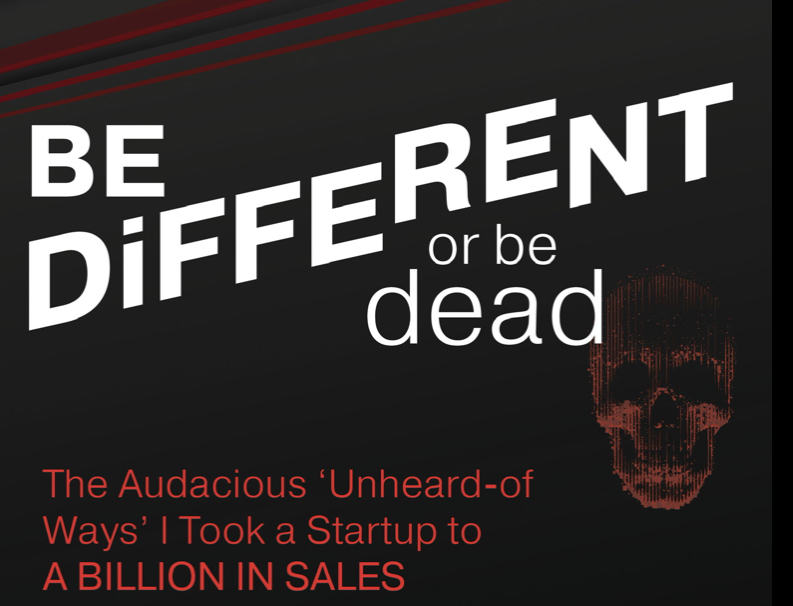
Check out my BE DiFFERENT or be dead Book Series
‘Audacious’ is my latest…
- Posted 5.8.23 at 07:00 am by Roy Osing
- Permalink
May 1, 2023
Why being imperfect FAST! is the secret to amazing business growth

Why being imperfect FAST! is the secret to amazing business growth.
Imperfection is the engine of innovation—trying different things. And in my experience perfection—however defined—is not needed to win.
We didn’t get to a BILLION in annual sales by being perfect in the classical sense. Check out the audacious ways we got there.
While you’re intellectually seeking perfection, you’re not DOING anything!
Pondering perfection is an excellent way to do nothing and fail.
You need to create your own version of perfection, that will be the solution—inelegant and messy probably—that works for you.
— What do you mean when you say a business needs to imperfect ‘FAST’?
Rarely does anyone achieve unbelievable success after one attempt; they will seldomly ‘get it right the first time’.
You will have to make many ‘tries’ before landing on something new that will work.
Failure is an essential ingredient of innovation. So ‘fail a lot’ is a strategic imperative.
Success depends on the number of tries you make (so many variables at play in a highly complicated and unpredictable world), which means that making many tries FAST is essential.
— How does being imperfect FAST make an organization different?
Because it leads to more innovation. A constant stream of tries will eventually create something truly special that raises performance to astonishing heights.
An ‘imperfect FAST’ culture sets the organization apart from others who are stuck in the ‘perfection seeking mode’ and making little progress.
It inspires employees so an adaptive organization culture is nurtured.
— What are the benefits of being imperfect FAST?
▪️It aids in the execution of your strategy.
▪️It ‘keeps your feet moving’, on your toes to take a turn when your plan isn’t working out the way you want.
▪️It avoids the impossible task of taking copious amounts of time seeking a solution that doesn’t exist—perfection.
▪️It effectively prepares you to deal with uncertainty and unpredictable change.
▪️It feeds the innovation organizational value. You can’t be innovative with the belief you can find a silver bullet that will miraculously do the job for you.
It doesn’t exist.
Speed is a competitive advantage.
▪️First mover advantage with imperfection makes you standout and puts you ahead of the herd.
— What actions can an organization take to be imperfect FAST?
✔️ Leaders must declare that it’s ok to be imperfect. That the number of ‘tries’ is the innovation journey that will define ultimate success.
✔️ Embed ‘tries’ in performance plans. Everyone should be expected to try new things. Trying must define the culture of the organization.
✔️ Celebrate ’triers’ constantly. What a great way to make trying matter. Have fun with it. Recognize trying heroes.
✔️ Create an ‘Imperfectionist Club’. I’m thinking the ‘Cult of Triers’ would be an excellent way to kick this journey off. Start small and build the cult to include the entire organization.
In a world of imperfections, why do we constantly try to be perfect?
Doesn’t make sense to me.
Want to stand out from the crowd and win?
Be imperfect FAST!
Cheers,
Roy
My 50+ Podcast Shows that will change your life.
Check out my BE DiFFERENT or be dead Book Series
‘Audacious’ is my latest…
- Posted 5.1.23 at 06:56 am by Roy Osing
- Permalink
April 17, 2023
Why offering special deals only to new customers is a bad marketing tactic

Why offering special deals only to new customers is a bad marketing tactic.
I am absolutely against offering special deals and promotions to attract new customers while not making them available to existing customers.
Yet many, if not most, organizations do it.
▪️“Come to us and we’ll give you a free iPad.”
▪️“Come join our team and we’ll give you 2 months service FREE!”
(small print: this offer is available for new customers only…)
These are the main reasons I have no time for this kind of marketing tactic.
#1. The economics of this type of marketing program are flawed to say the least.
Advocates say that each new customer acquired by “giving goodies” and additional benefits away to them generates new revenue for the company, and hence value to the bottom line.
NFW!
First, ‘New Deal Customers’ are fickle (because generally they left someone else to come to you) so expected revenues from them will likely fall short of expectations because they will leave you when they sniff out a better deal.
Second, the costs of acquiring these new customers are HUGE, and will likely never be recovered due to the short life cycle of New Deal Customers. They leave or spend far less than the marketing business case assumed.
So you may get a short term upward blip in revenues but margins—due to acquisition costs—suffer.
#2. It disregards the existing loyal customer. Focusing on New Deal Customers refuses to benefit those who have supported the organization and got it to where it’s at.
It’s insulting.
I find it interesting that organizations are starving to be inclusive, to support local communities and be advocates for the environment, for example, yet can turn their backs on their ‘loyalists’.
Hypocritical? I think so.
#3. There are conflicting internal cultural issues created when this approach is used.
On the one hand, most organizations espouse the importance of the customer, and to serve them in a way that engenders their sustainable loyalty. Many talk about creating memorable experiences for their customers as the vehicle to get there.
And yet in practice they push them aside to binge on attracting New Deal Customers.
No wonder employees are confused about what’s important. Leaders say one thing and do another.
#4. It’s a misallocation of investment. Costs of acquisition are HUGE in comparison to the costs of keeping a loyal customer which argues that investments should be targeted to the existing customer base FIRST.
#5. It’s an illusion to think that the new customer will be loyal. These are false benefits. Short term at best.
If the New Deal Customer came to you for the Deal, what makes you think they won’t leave YOU for a better deal elsewhere?
#6. It amounts to competing on price in a different form. Giving value away for free essentially drives down the price of the product or service being purchased.
#7. A focus on New Deal Customers damages your brand.
It signals to new customers that you want to appeal to them based on price, not building relationships.
It shows you’re willing to get new customers AT ANY COST.
It shows you’re an uncaring organization with no consideration for the customers who helped build your success.
If you must use freebies as bait to lure new customers to you, at least do the right thing by offering the deal to your existing customers FIRST.
Cheers,
Roy
My 50+ Podcast Shows that will change your life.
Check out my BE DiFFERENT or be dead Book Series
‘Audacious’ is my latest…
- Posted 4.17.23 at 05:06 am by Roy Osing
- Permalink
April 10, 2023
3 simple things entrepreneurs do to make their new idea a winner

3 simple things entrepreneurs do to make their new idea a winner.
There is a plethora of good business ideas out there being produced by many smart people.
The challenge, however, is how to make your idea a successful one. The one new idea that people salivate over. The one that captures their imagination and takes their breath away.
Successful entrepreneurs understand the principle that to win, their idea needs to stand-out in the crowd and it needs to:
Create VALUE that is RELEVANT (something people care about) and UNIQUE (something that ONLY you do).
1. Create VALUE — What your new idea DOES for people. The benefits you give to people. The emotion you elicit. The memories and experiences you create with your new idea.
Value has little to do with technology and the whiz-bang things it can do. If technology doesn’t evoke emotion or satisfy a craving, it’s worth nothing.
Delivering value does NOT involve flogging your product or service to the masses. If you want to intrude on and interrupt people, choose this strategy.
But you won’t last long.
2. Create Value that is RELEVANT — Talk to the critical few things that are important to your target customer. Things they care about.
Things that evoke an emotional response. Speak to them directly and intimately.
Avoid the temptation to push your agenda to the crowd. This is a lazy marketing tactic with no positive return on investment.
Sure, your message might illicit a positive response from a few people, but the more likely outcome is that most of the crowd will be annoyed that you injected yourself into their space, or will ignore you.
Speak to what people desire not what you want to flog.
3. Create Value that is UNIQUE — Providing something in some way that no one else does. Be the ONLY one that does what you do. The ultimate manifestation of being unique is the ability to create the ONLY Statement.
“We are the ONLY ones that…” is the claim you need to create for your new idea. It cannot be like anything else in the market if it is to succeed.
You don’t want to be best, #1 or excellent. These are CLAPTRAP aspirations at best and give your audience no specific reason why they should but your new idea as opposed to someone else’s.
Most organizations have a competitive claim that is vague and grandiose with little clarity in terms of why their new idea is unique. Don’t go there.
Here’s an ONLY example that I like:
“BCI Marine is the ONLY complete service partner committed to delivering solutions to grow a boat dealer’s business.”
Don’t fall victim to the grim reaper and risk failing like many in the entrepreneurial herd.
Break-away.
Cheers,
Roy
My 50+ Podcast Shows that will change your life.
Check out my BE DiFFERENT or be dead Book Series
‘Audacious’ is my latest…
- Posted 4.10.23 at 06:24 am by Roy Osing
- Permalink